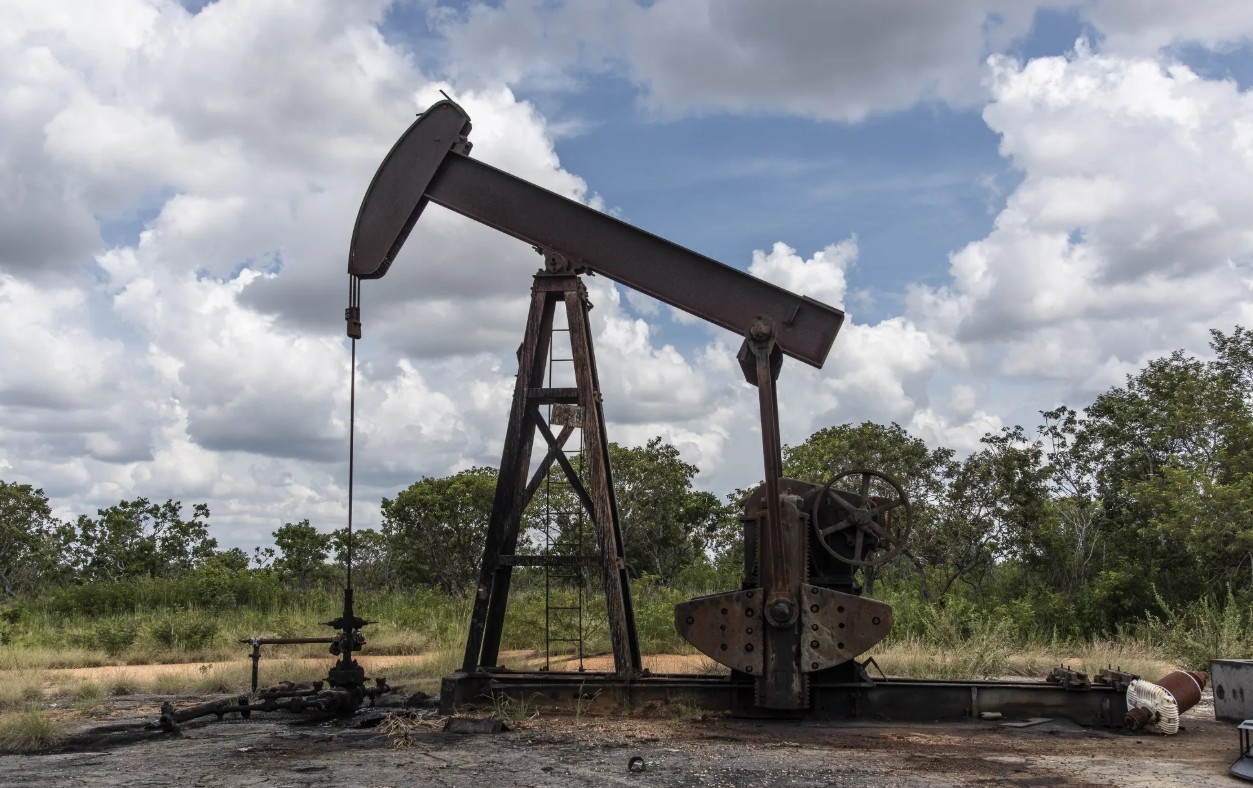
Any realistic plan to reconstruct Venezuela begins and ends with oil. But reviving the country’s shattered economy requires salvaging the energy sector in the Orinoco Belt, a task that presents a geological and financial nightmare for potential investors.
The Orinoco region accounts for roughly 80 percent of Venezuela’s production potential, yet the substance buried there is technically “bitumen,” not standard crude. Extracting it requires massive energy inputs and steam injection just to liquefy the material enough to pump it to the surface. From there, the sludge must pass through upgraders—complex facilities that stabilize the liquid—before being mixed with diluent so it can flow through pipelines to the coast.
Most Expensive
Per-barrel production cost on Earth
Peter Zeihan, a geopolitical strategist, suggests that restoring the Orinoco’s output to one or two million barrels a day would require capital investment ranging from tens of billions to $200 billion. The incoming Trump administration is unlikely to authorize such massive aid for infrastructure regeneration. Without that foreign capital, the country’s economic engine is effectively a rusted hulk in the jungle.
The Brain Drain
Context
American multinationals and French firms like Total originally built the complex infrastructure required to process this heavy crude. Over time, they trained the state oil company, PDVSA, to manage operations. That technical competence vanished after 2002, when Hugo Chávez purged the company following a failed coup.
“The resulting brain drain left the state firm barely holding together.”
— Peter Zeihan, geopolitical strategist
Today, the continued presence of Chevron is the only factor preventing a total collapse of these projects. Rebuilding the sector now requires doing the work of the Canadian oil sands but without easy access to capital, skilled labor, or the rule of law.
The odds of success are vanishingly thin.
Operators must effectively reconstruct the entire industry in the remote Amazon without a functioning physical pipeline network to the global market. Given the decay and the cost, Zeihan predicts that without a miracle, production will “eventually fall down to zero.”