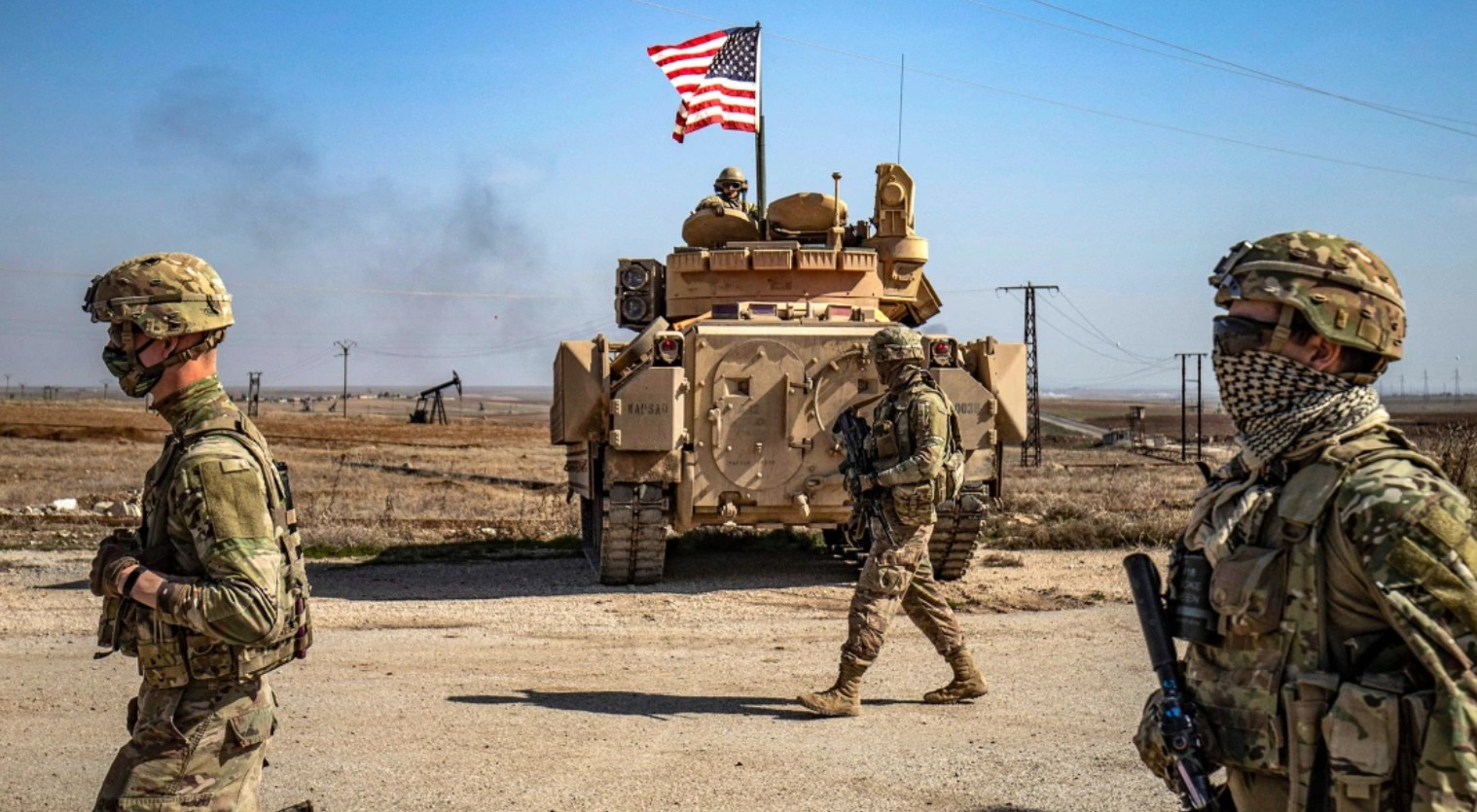
A recent attack by a lone gunman on American soldiers in Syria has exposed the fragility of the post-Assad landscape. While the Biden administration largely completed a withdrawal from the region, a small contingent of U.S. Special Forces remains to suppress the Islamic State. Geopolitical strategist Peter Zeihan attributes this lingering presence not to grand strategy, but to the new Syrian president’s ability to stroke the American ego. The former militant leader praised President Trump, securing a continued U.S. commitment.
That was enough.
The troops now face an open-ended mission in a region defined by its geographic hostility. The arid expanses west of the Tigris and Euphrates rivers function as a historic void, where civilization clings to thin strips of arable land surrounded by hard desert. Strong central governments in Baghdad, Ankara, or Damascus traditionally project power into these barrens to maintain order. When those capitals are weak, the vacuum generates radicalism.
“This has always been an area where the wackos live.”
— Peter Zeihan, geopolitical strategist
Six Millennia of Militancy
The Islamic State is merely the latest iteration of a six-millennium cycle of militancy. During the previous decade, the United States acted as an artificial third power, operating from Kurdish territories to check the group’s expansion. The collapse of the Assad government, however, fractured the country into isolated enclaves of Alawites, Christians, and Kurds. None possess the capacity to patrol the vast interior.
The desert is wide open.
Turkey’s Strategic Limits
Turkey stands as the only regional power with the military weight to impose stability. But Ankara is pulled in too many directions, managing interests in the Balkans, Ukraine, and the Mediterranean. For the Turks, the anarchy unfolding in the Syrian desert is a strategic irritant rather than an existential threat. They cannot do everything at once.
Unless the United States commits tens of thousands of troops to a region where it holds little strategic interest, the Islamic State will likely continue to consolidate. The future of the Syrian interior promises a return to its historical baseline of chaotic violence or, as Zeihan put it, a situation that is destined to remain “pretty blammy.”