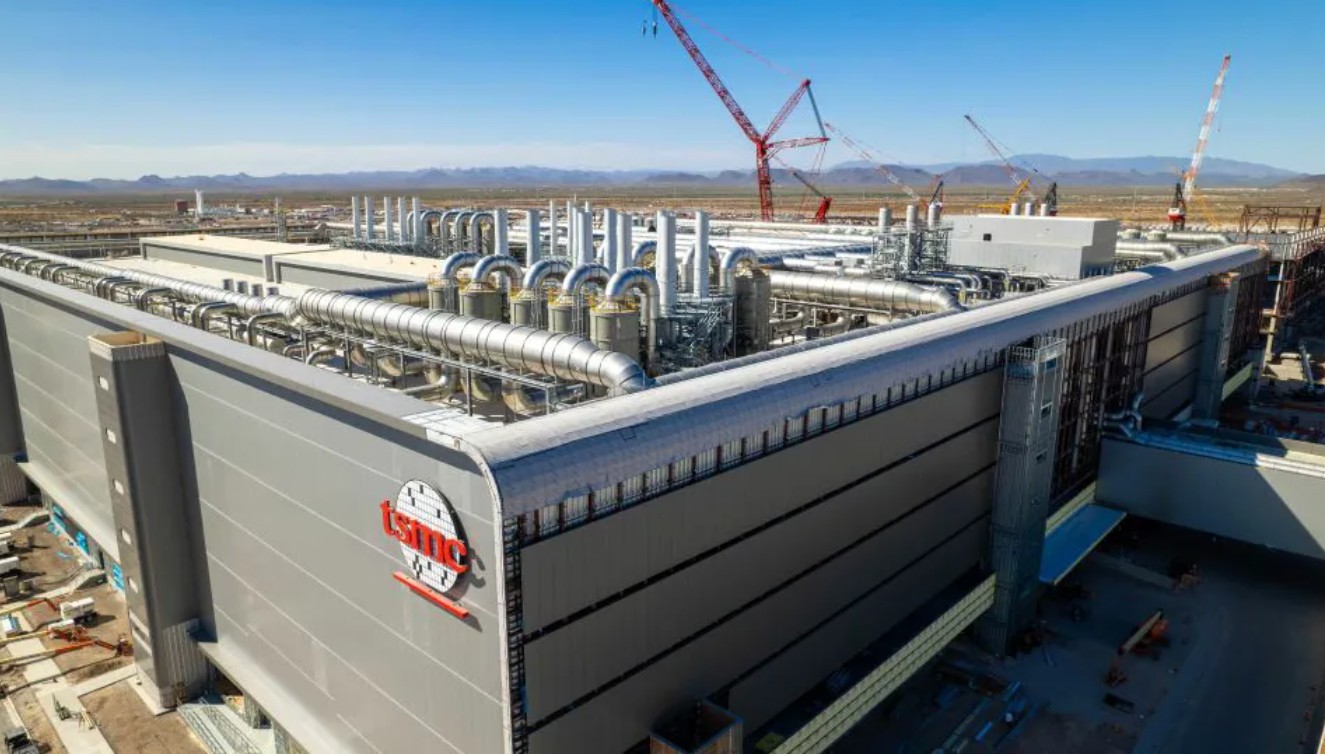
In the high desert north of Phoenix, a construction project of staggering proportions is currently underway, representing perhaps the most significant test of the United States’ ability to reclaim its status as a manufacturing superpower. The massive complex, built by the Taiwan Semiconductor Manufacturing Company (TSMC), was designed to be the crown jewel of the Biden administration’s push to bring critical technology supply chains back to American soil.
However, a recent investigation detailed by The New York Times on its podcast “The Daily” reveals that the project has morphed into a cautionary tale, exposing the profound regulatory, cultural, and logistical hurdles that complicate the vision of “Made in America.”
Peter S. Goodman, a global economics correspondent for The New York Times, visited the site, describing it as a project “on a scale that I’ve never even imagined.” Spanning “more than a thousand acres,” the site is populated by dozens of cranes and thousands of workers. It is intended to produce the advanced computer chips that serve as the “brains of just about everything,” from smartphones to fighter jets.
The initiative gained momentum following the COVID-19 pandemic, which exposed the fragility of global supply chains, and amid rising geopolitical tensions between China and Taiwan. The Biden administration’s CHIPS and Science Act provided billions in subsidies to lure TSMC to Arizona, aiming to create “insurance,” as Goodman termed it, against a potential blockade or invasion of Taiwan, where the vast majority of the world’s advanced chips are currently made.
Yet, despite the strategic imperative and heavy government subsidization, the project has been plagued by delays and ballooning costs.
One of the primary obstacles has been a bureaucratic labyrinth unknown to TSMC in its home country. In Taiwan, the company typically operates in government-supported science parks with streamlined oversight. In Arizona, however, the company faced a fragmented regulatory environment involving municipal, county, state, and federal agencies.
According to the report, TSMC had to write “18,000 rules” to comply with various codes, costing the company $35 million merely to draft the regulations. Goodman highlighted the absurdity of the red tape, noting that “just to move a mound of dirt… required 15 different permits.”
Beyond the regulatory friction, the project has sparked significant cultural conflict between the Taiwanese chipmaker and the American workforce. TSMC, accustomed to a “paternalistic” corporate culture where employees are expected to work long hours and respond immediately to emergencies, has struggled to adapt to American labor norms.
“The American worker comes at this from a much more contractual standpoint,” Goodman explained, noting that local workers prioritize work-life balance in ways that clash with TSMC’s expectations. This friction has led to lawsuits alleging discrimination and tensions with local unions, forcing the company to fly in specialized workers from Taiwan to keep construction on track.
Furthermore, the project has faced “NIMBY” (Not In My Back Yard) opposition from local residents. Retirees in the surrounding master-planned communities, concerned about water usage in the desert and the industrial disruption to their views, have successfully stalled or altered parts of the development. As Goodman noted, “These homeowners didn’t sign up for some sort of national crusade to advance American manufacturing.”
While the factory is eventually expected to produce roughly one-third of the world’s advanced chips, the arduous process raises questions about the viability of replicating this success elsewhere in the United States without significant systemic changes.
“This is not for the faint of heart,” Goodman concluded, characterizing the endeavor as a “messy beginning” rather than a seamless return to industrial dominance. While the project proves that re-shoring is possible with enough capital and political will, it also serves as a stark warning to other global companies considering a move to the U.S.: “Kids, don’t try this at home.”