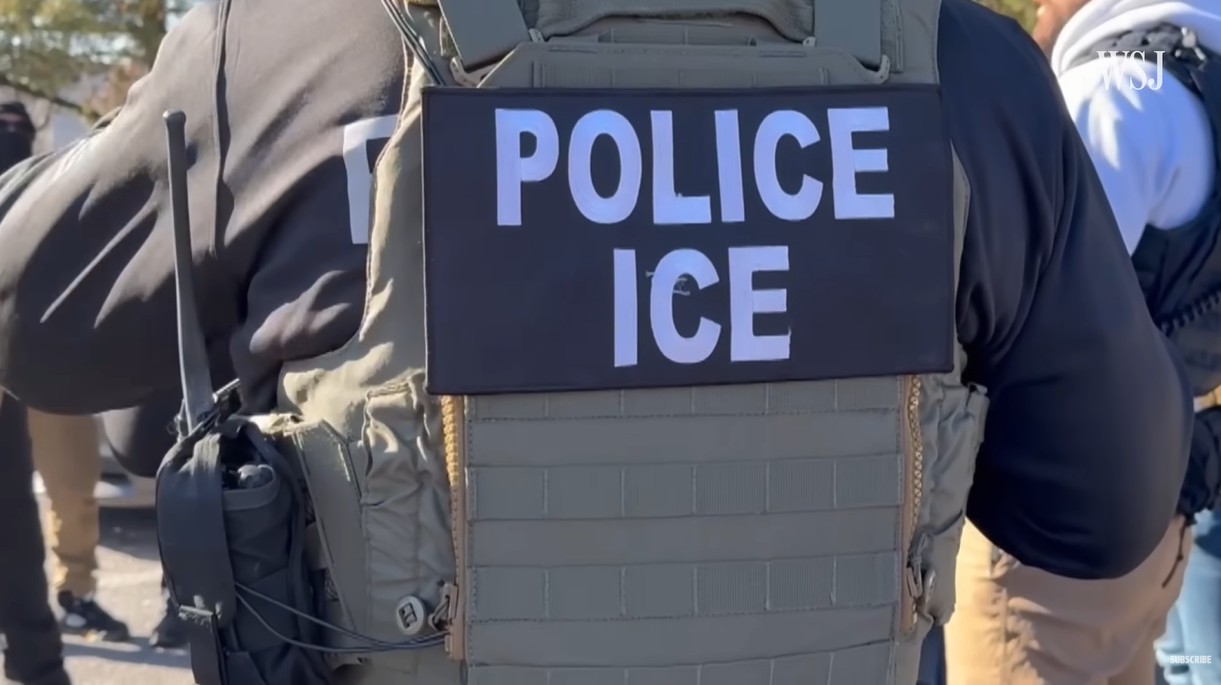
As President Donald Trump’s second term nears the one-year mark, his administration’s aggressive immigration enforcement agenda has transformed daily life in major American cities, with Chicago emerging as a primary battleground for federal operations.
According to a new report by The Wall Street Journal, the administration has moved swiftly to fulfill campaign promises of mass deportations, utilizing tactics that have driven illegal border crossings to “historic lows” while sending shockwaves through local economies and communities.
By December 2025, Immigration and Customs Enforcement (ICE) officials reported deporting more than 450,000 individuals. The crackdown has been particularly visible in Chicago, where the Department of Homeland Security launched “Operation Midway Blitz” in September. The operation involved deploying Border Patrol agents—who typically operate at the nation’s boundaries—into the interior of the country to conduct sweeps in neighborhoods with high immigrant populations.
“We went from worst to best,” President Trump said in a December address, touting the statistics as a victory for public safety. “We’re deporting criminals, restoring safety to our most dangerous cities.”
However, on the ground in Chicago, the operation has resulted in palpable fear and economic disruption. In Little Village, a predominantly Hispanic neighborhood, business owners report a sharp decline in revenue as residents fear leaving their homes.
Christina Gonzalez, co-owner of Taqueria Los Comales, told The Wall Street Journal that the atmosphere has become “surreal,” noting that widespread fear of ICE raids has kept customers away.
“The reality is that sales are down 30 to 40 percent,” Gonzalez said. “Smaller businesses, how long are they going to be able to withstand that?”
The ripple effects extend to the local housing market. Andrew Levin, a property owner in the Albany Park neighborhood, noted that tenants have become reclusive following high-profile enforcement actions, including a raid in September involving a helicopter landing on a residential roof.
“The publicity surrounding that, everybody knew about that story and was afraid that it could happen in their building,” Levin said. He added that while tenants are switching to electronic payments to avoid going out, delinquencies have “ticked up” as residents lose work hours or avoid commuting due to fear of apprehension.
The federal crackdown has also highlighted complex social tensions within the city. Before the raids intensified, Chicago struggled to accommodate a massive influx of migrants, leading to friction in historically Black neighborhoods on the South Side where residents felt neglected by the city’s resource allocation.
Juanita Craig, a congregant at the Concord Missionary Baptist Church, expressed the frustration felt by many long-time residents regarding the disparity in government aid during the initial migrant crisis.
“It’s like there were city entities and resources that were made available for the migrants,” Craig said. “In contrast, it wasn’t made available for the African Americans.”
Despite the criticism from local activists and the economic strain on specific neighborhoods, the administration maintains that the measures are necessary and lawful. Greg Bovino, a Border Patrol commander leading operations in the city, defended the tactics used by federal agents.
“Our officers act legally, ethically and morally in all law enforcement actions, whether it’s Los Angeles or Chicago,” Bovino stated.
For supporters of the administration, the heavy-handed approach is a fulfillment of a mandate. Chuck Hernandez, chairman of the Chicago Republican Party, welcomed the federal intervention, arguing that the city’s “sanctuary” status and defiance of federal law necessitated the response.
“The city of Chicago can easily turn these people over to the federal government and work with them,” Hernandez said. “But because they’re being defiant, we’re seeing that ICE is being forced to go into neighborhoods.”