President Donald Trump enters the second year of his return to power with his eyes fixed on a singular opportunity: the nation’s 250th anniversary. For a leader who prioritizes spectacle, the semiquincentennial in 2026 offers the ultimate stage.
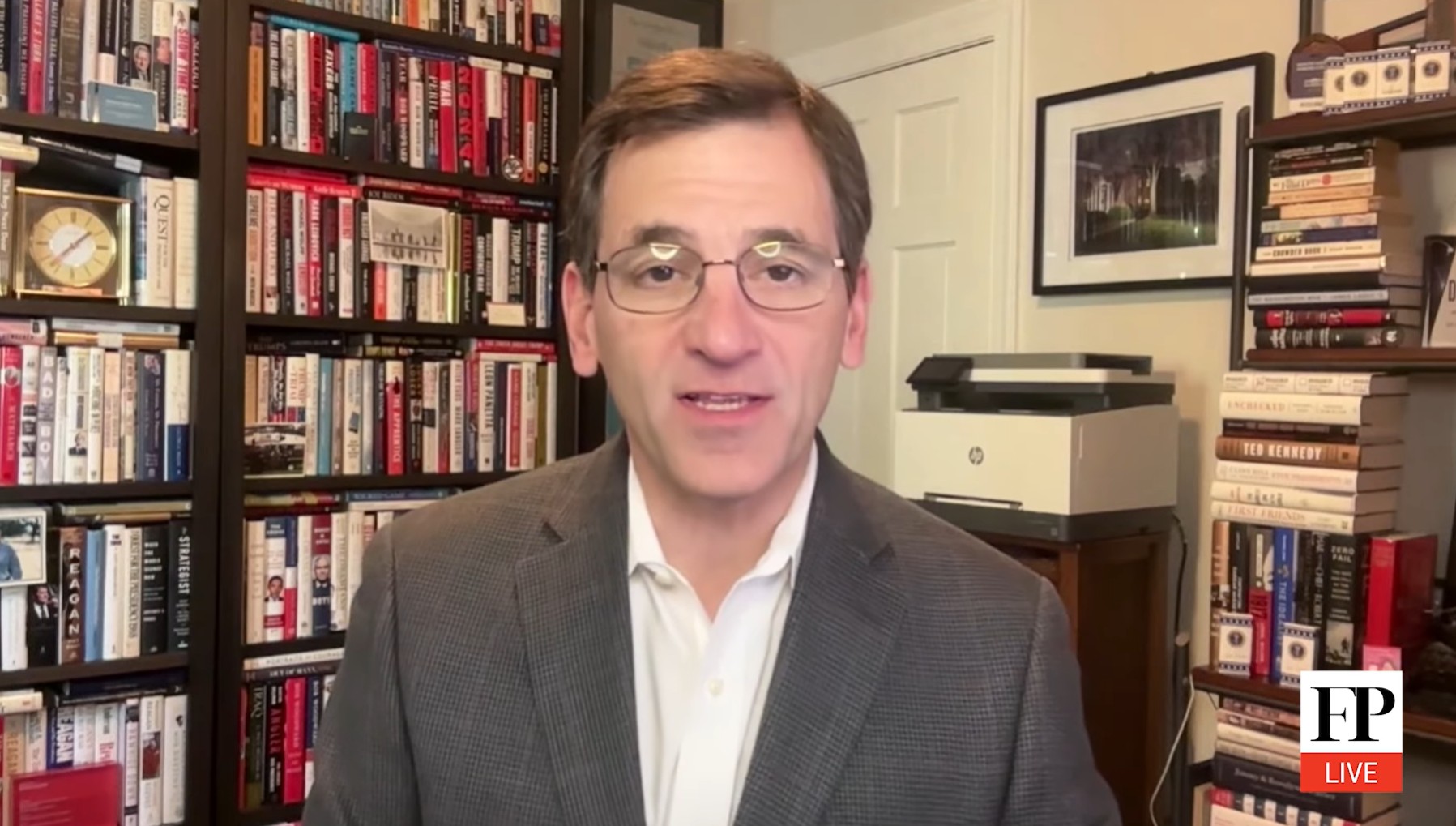
Peter Baker, the chief White House correspondent for The New York Times, told Foreign Policy that the president views the upcoming July 4 celebrations not just as a national milestone, but as a personal branding exercise. The administration is reportedly exploring placing Trump’s likeness on a commemorative coin, a move that follows his image appearing alongside George Washington on national park passes.
“He loves nothing more than a big show. He wants to associate himself with it.”
— Peter Baker, chief White House correspondent, The New York Times
Baker, who has covered the last six presidencies, suggested Trump intends to cast himself as the “custodian” of American patriotism.
A chill in Washington
But the atmosphere in the capital belies the celebratory planning. Baker, a former Moscow bureau chief, drew a sharp parallel between the current mood in Washington and the consolidation of power he witnessed in Russia two decades ago. The administration’s rhetoric about rescuing a nation from a “dystopian hell” mirrors the narrative Vladimir Putin used to justify his early tightening of control.
“The chill in the air in Washington to me feels a lot like the chill that we felt in Moscow.”
— Peter Baker
The comparison suggests a governance style built less on policy than on the fear of retribution.
Border sealed, enforcement turned inward
That chill extends to the administration’s signature issue. While the southern border has been effectively sealed, the focus has shifted to internal enforcement. Operations now target long-term residents and naturalized citizens, a strategy that has rattled communities far from the physical border.
This insular stance complicates the United States’ role as host of the 2026 World Cup. Travel bans and visa restrictions threaten to bar fans from specific regions, particularly Africa, from attending the matches. The administration appears unconcerned with the diplomatic fallout, prioritizing a message of exclusion over the global welcome traditionally associated with the tournament. Trump is telling the world: “We don’t really want you.”
Tariffs as a weapon
The economic outlook remains volatile. Businesses hoping for stability face a landscape defined by executive impulse, as the president continues to wield tariffs as political weapons rather than economic levers. He uses trade penalties to force compliance on non-economic issues, from narcotics control to migration cooperation.
Context
A looming Supreme Court decision on the International Emergency Economic Powers Act could theoretically curb this authority, but the White House has shown a preference for tools that bypass congressional oversight. Baker described the president’s use of these emergency powers as akin to “snapping your fingers,” allowing him to impose costs on foreign nations without findings or evidence.
For corporate America, the result is paralysis. Executives cannot plan factory investments when the cost of doing business might spike based on a morning social media post. Trump views tariffs as “the most raw exercise of power” available to him—and he has no intention of putting that weapon down.