The era of automatic transatlantic security is over, leaving European capitals scrambling to decipher whether the United States is merely disinterested or actively hostile.
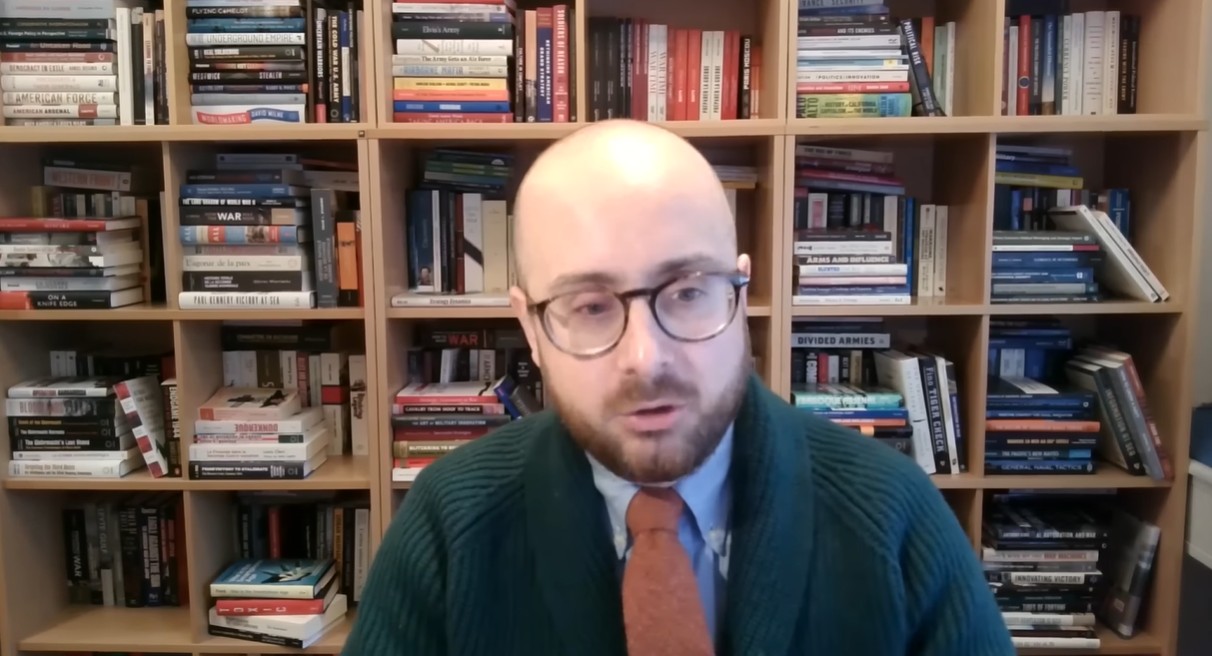
In a strategic assessment released on the Decoding Geopolitics podcast, Olivier Schmitt, head of research at the Royal Danish Defence College, argued that the continent must move beyond binary reactions of denial or panic. The old framework of the “West” as a singular geopolitical entity is dissolving, forcing a confrontation with uncomfortable new realities.
Context
Policymakers face three immutable facts, according to the analysis. Russia has fully reorganized its society onto a war footing with Europe as its primary adversary, China has likely caught up to U.S. power, and jihadist terrorism remains a persistent, if manageable, irritant.
Washington as the Wild Card
But the real uncertainty lies in Washington. Schmitt warned that European leaders must now calculate not just for American indifference, but for potential “active hostility” against liberal democracies. He pointed to rhetoric from the “MAGA movement” and figures like Vice President J.D. Vance as evidence that the U.S. might view the European Union not as an ally, but as an ideological rival.
“Transatlanticism is no longer a shared assumption.”
Scenario One: Independent Europe
Under one scenario, the continent manages to hold together despite an American withdrawal. Europeans would effectively “take over NATO,” maintaining the alliance’s command structures but filling them with continental personnel and resources.
Security would come at a steep price. Schmitt warned that replacing American enablers—air power, space capabilities, and intelligence fusion—would require massive diversion of funds from social welfare to defense. The result would be a strategically autonomous but significantly poorer Europe.
Scenario Two: The Budapest Pact
A darker alternative envisions a fragmented continent where Washington and Moscow pick and choose client states. In this “Budapest Pact” scenario, individual nations secure bilateral protection by offering economic or political concessions to great powers.
The researcher described a future of “vassalization,” where U.S. defense guarantees are traded for unregulated market access, allowing American tech giants to operate in Europe without constraint.
The Waiting Game
The inertia of Brussels bureaucracy often looks like a choice to delay these hard decisions until they are made by others.
While suggestions have floated—including from U.S. diplomats—that Germany should assume the role of Supreme Allied Commander Europe, the political will for such a shift remains absent. For now, the continent largely relies on hope that the worst-case scenarios remain theoretical.