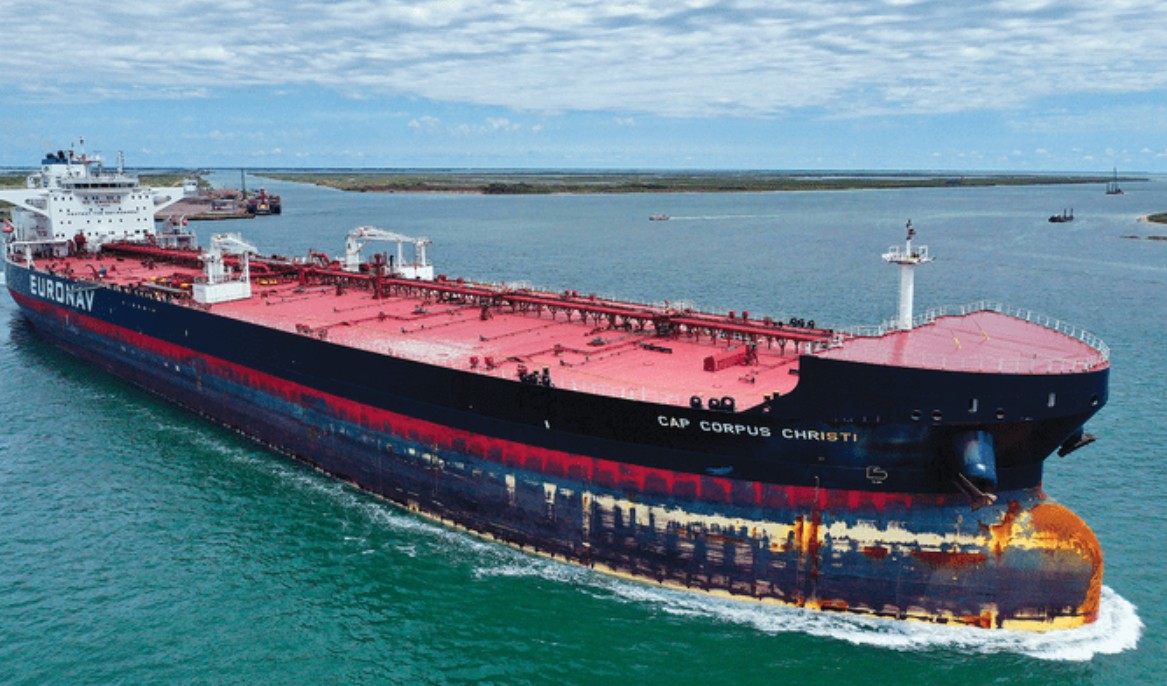
In a dramatic escalation of hostilities in the Caribbean, the Trump administration has shifted its strategy against Venezuela from military posturing to direct economic warfare, seizing multiple oil tankers in international waters. The move marks an unprecedented attempt to strangle the finances of the Maduro regime, according to reporting by The New York Times.
The aggressive new campaign began on December 10 when U.S. forces ambushed the Skipper, a tanker carrying approximately two million barrels of Venezuelan crude bound for China. According to a report on The New York Times podcast “The Daily,” U.S. Navy helicopters “swarmed the tanker,” boarded the vessel, and ordered the crew to redirect the ship to a port in Galveston, Texas.
Since that initial operation, the U.S. has targeted at least two additional vessels, with reports indicating that the U.S. Coast Guard is currently pursuing a third tanker in the region.
Anatoly Kurmanaev, a foreign correspondent for The Times, described the offensive as a significant pivot from the administration’s previous focus on interdicting drug trafficking boats. “The focus has shifted from a primarily military campaign to a primarily economic campaign,” Kurmanaev stated. He characterized the blockade as “the biggest economic pressure against a Latin American state that we’ve seen in decades.”
“Total and Complete Blockade”
While the administration initially justified the seizures as the enforcement of pre-existing sanctions, the rhetoric from the White House has hardened into an explicit call for regime change. President Trump recently announced a “total and complete blockade” of sanctioned oil tankers, justifying the actions by accusing the Venezuelan government of the “wholesale theft” of American assets—likely a reference to the nationalization of oil fields in the mid-2000s.
The goal appears to be the financial asphyxiation of President Nicolás Maduro’s government. By cutting off oil exports, which constitute the vast majority of the nation’s revenue, the U.S. aims to force Maduro’s ouster.
“The calculation is that the economic pressure, economic pain is going to make Maduro’s hold on power untenable,” Kurmanaev explained. “That is going to lead to an internal uprising, an internal coup by factions of the military that will ask him to leave or eliminate him.”
The response from Caracas has been volatile. Venezuelan officials have labeled the U.S. actions as piracy, with sources telling The Times that Maduro is enraged. However, the blockade has already paralyzed Venezuela’s export capabilities, with ships refusing to dock in Venezuelan ports for fear of seizure.
The Chevron Exception
Despite the “maximum pressure” campaign, the Trump administration has maintained a notable exception for Chevron, the American energy giant. The company continues to operate in Venezuela, a strategic decision intended to maintain a U.S. foothold in a country that sits atop the world’s largest proven oil reserves.
The administration fears that a total withdrawal of American companies would cede control of Venezuela’s energy infrastructure to adversaries like China. “The U.S. can control the supply of oil, can control the global oil prices,” Kurmanaev noted regarding the long-term geopolitical goals.
Fears of a Migration Surge
Experts warn that the blockade carries severe humanitarian risks. Venezuela, which was just beginning to stabilize after years of economic ruin, now faces a renewed collapse. Critics argue that deepening the poverty of the Venezuelan people could backfire on the Trump administration by triggering a massive new wave of migration toward the U.S. border.
“It is dramatically worsening economic conditions in Venezuela,” Kurmanaev said. “Which, if it continues, is going to lead to another increase in migration from the country.”
While allies of the Maduro regime, including Russia and China, have verbally condemned the U.S. actions, they have notably remained on the sidelines, offering no material intervention to break the blockade. For now, the Trump administration appears poised to continue the seizures, betting that economic shock will succeed where diplomatic isolation has failed.