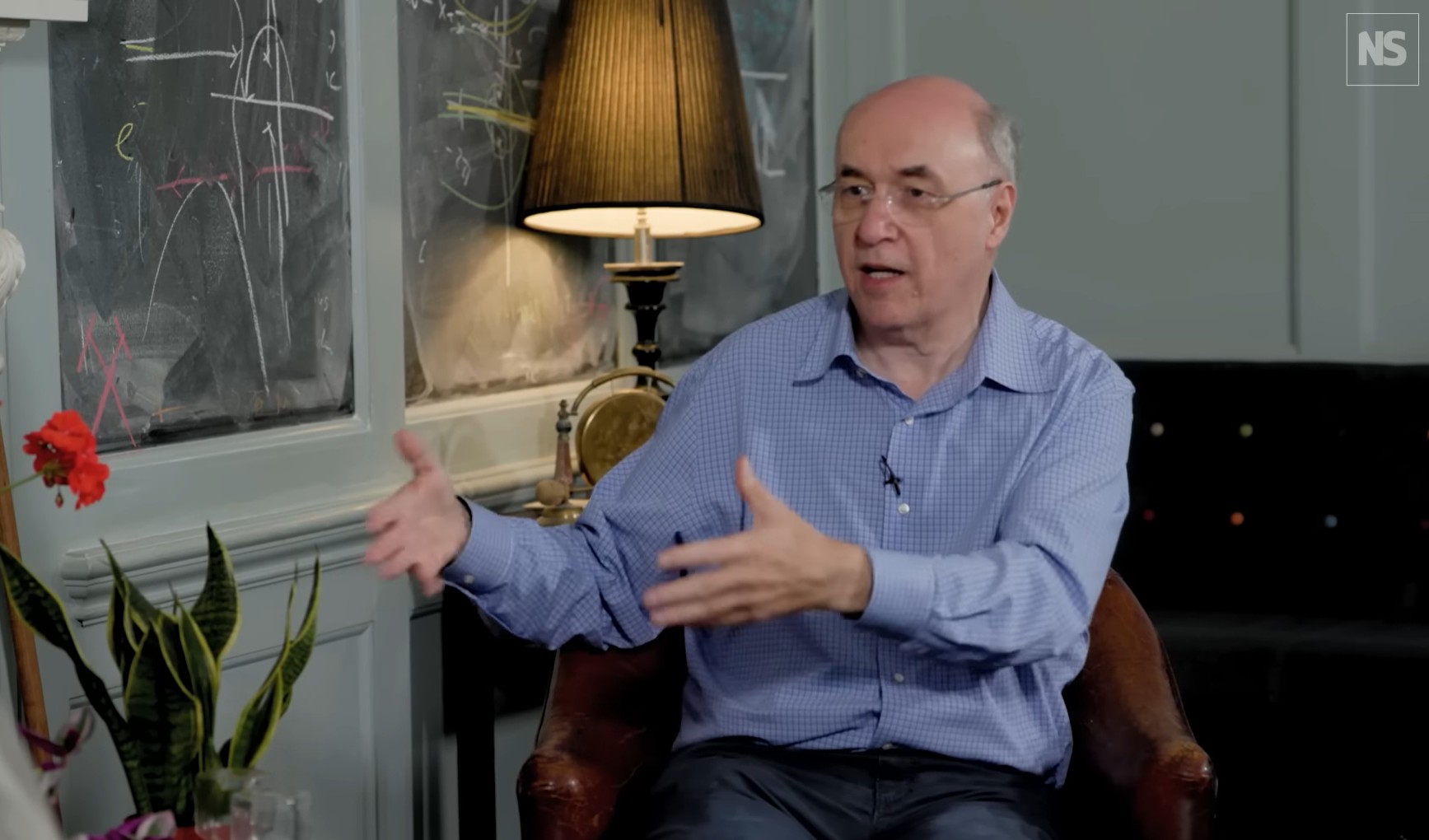
Sitting in the former study of 19th-century scientific giant Michael Faraday, Stephen Wolfram is contemplating a revolution. The physicist and computer scientist, known for his work in cellular automata and the creation of Mathematica, has spent decades hunting for a fundamental theory of physics—a “machine code” of the universe. In a recent wide-ranging interview with New Scientist, Wolfram detailed his computational approach to reality and explained why, despite the global hype, artificial intelligence has yet to truly stun him with scientific discovery.
Wolfram’s approach challenges the scientific tradition that has dominated since the time of Newton: using mathematical equations to describe the natural world. Instead, he champions what he calls “ruliology”—the study of simple computational rules and how they generate complexity. He argues that by observing how these simple programs evolve, “we can derive those laws of physics,” a feat he admitted he “didn’t think was possible” until making a breakthrough in 2020.
According to Wolfram, the universe is not a continuous fluid, but rather composed of discrete “atoms of space” connected in a vast network, or hypergraph. In this model, time is simply the progressive computation of these rules updating the network. He suggests that just as the chaotic motion of molecules smooths out to become fluid mechanics, this discrete computational structure smooths out to become the spacetime described by Einstein’s general relativity.
However, while his theory relies entirely on computation, Wolfram remains skeptical of the current generation of AI as a tool for deep scientific insight. “No AI has really impressed me,” he told New Scientist, specifically regarding the ability of models to crack the fundamental codes of reality or generate novel theorems that defy human intuition.
He views the “big breakthrough” of Large Language Models (LLMs) not as a leap in reasoning, but as a triumph of interface. “The main thing it adds is a layer of humanisation,” Wolfram explained. He argues that LLMs allow humans to cast their vague thoughts into precise computational code, acting as a bridge rather than an oracle.
Wolfram applied this computational lens to specific cosmic mysteries, such as dark matter. Drawing a parallel to how 19th-century physicists once misunderstood heat as a fluid (caloric) rather than the random motion of molecules, he suspects dark matter might be a similar misunderstanding of the “microscopic, heat-like behavior of the very small-scale structure of space.”
Operating largely outside the traditional academic establishment, Wolfram pursues this research as what he calls a “hobby,” funded by his technology company. Yet, he describes a sense of obligation to the work, believing that modern computational tools allow for progress where traditional physics has stalled.
“There are things which people almost did 100 years ago and got stuck. Now we can unstick them,” Wolfram said. “That’s really magic.”