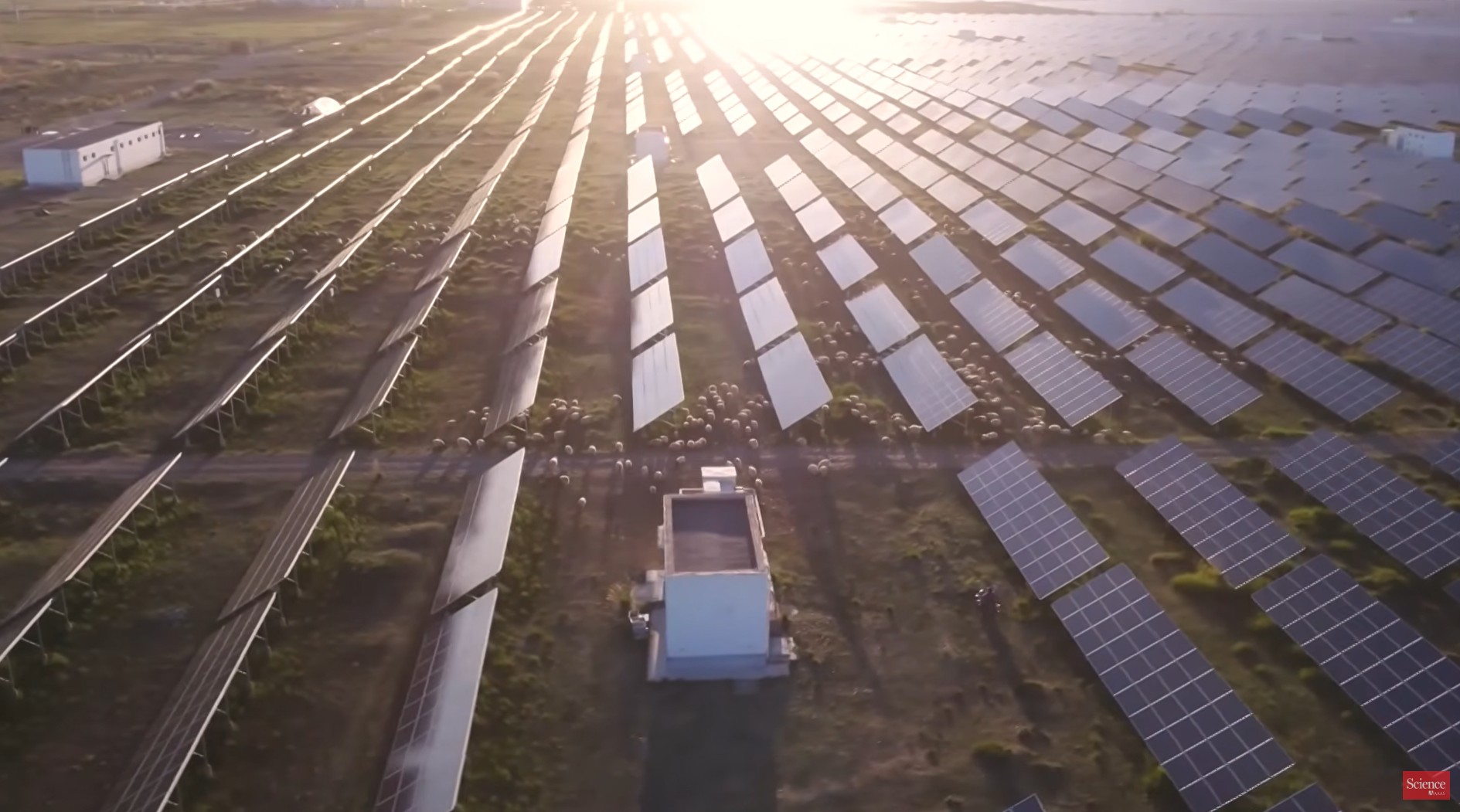
In a landmark designation reflecting a fundamental shift in the global economy, Science magazine has named the tipping point for renewable energy as its 2025 “Breakthrough of the Year.” While the award is typically reserved for specific research discoveries, editors chose to highlight a broader, systemic transformation: the year renewable technologies graduated from government-subsidized projects to becoming the dominant economic force in power generation.
For over a century, industrial civilization has relied on what Science News Editor Tim Appenzeller describes as “ancient solar energy”—the fossil fuels formed hundreds of millions of years ago. However, 2025 marked the moment where “current solar”—energy harvested directly from the sun, wind, and water—officially overtook the old guard.
“In 2025, renewables passed a couple of key thresholds,” Appenzeller said. “For one thing, the amount of electricity generated from renewables… was greater worldwide than the amount generated from coal.”
Additionally, for the first time, the explosive growth in green energy capacity was sufficient to cover the entirety of the world’s increasing demand for electricity. While fossil fuel use has not yet plummeted, it has ceased to be the engine of growth, signaling that global carbon emissions may have finally reached their peak.
The China Factor
The engine behind this transition is indisputably China. According to Li Shuo, Director of the China Climate Hub at the Asia Society Policy Institute, Beijing’s aggressive pivot to green technology began two decades ago, driven not just by climate concerns, but by energy security needs and a desire to curb domestic air pollution.
The economic results of that strategy are now reshaping the world. Renewable technologies currently account for 10% of China’s GDP. The country manufactures 80% of the world’s solar panels and 70% of its wind turbines and electric vehicles.
“No one probably could foresee that we could have ventured this far by 2025,” said Shuo.
This dominance poses a complex challenge for Western nations, particularly the United States and Europe, which are attempting to decarbonize their economies while simultaneously trying to “decouple” their supply chains from Chinese manufacturing. Shuo argues that these two goals may be mutually exclusive.
“Can we decarbonize and decouple at the same time?” Shuo asked. “My answer to that question is probably we can’t… given China’s dominating role.”
From Subsidies to Survival
Perhaps the most significant development highlighted by Science is the shift in who is adopting renewable energy and why. In the early 2000s, solar panels were largely the domain of wealthy nations utilizing heavy government subsidies. Today, adoption is driven by raw economics and energy security in the Global South.
Appenzeller notes that renewables are “not just the virtuous thing to do; they can be the profitable thing to do.”
Nations like Ethiopia are pivoting from unreliable hydropower and expensive imported natural gas to solar arrays to ensure energy independence. In Pakistan, households are bypassing unreliable local grids and installing rooftop solar simply because it is the cheapest way to keep the lights on.
Infrastructure Challenges Remain
Despite the momentum, the path to a zero-carbon future remains fraught with logistical hurdles. Renewable energy is intermittent, requiring massive investments in battery storage and high-voltage transmission lines to move power from sunny or windy regions to population centers. While China has successfully built dozens of these transmission lines, other nations face difficulties replicating that scale of infrastructure development.
Furthermore, while the renewable boom is historic, experts warn it may still be too slow to limit global warming to the ambitious 1.5 degrees Celsius target set by the Paris Agreement. However, the economic forces unleashed are now self-sustaining.
“The economic forces, the practical reasons for using wind and solar are very strong and unlikely to go away,” Appenzeller concluded. “We are shifting to current solar, the energy that streams from the sun every day.”