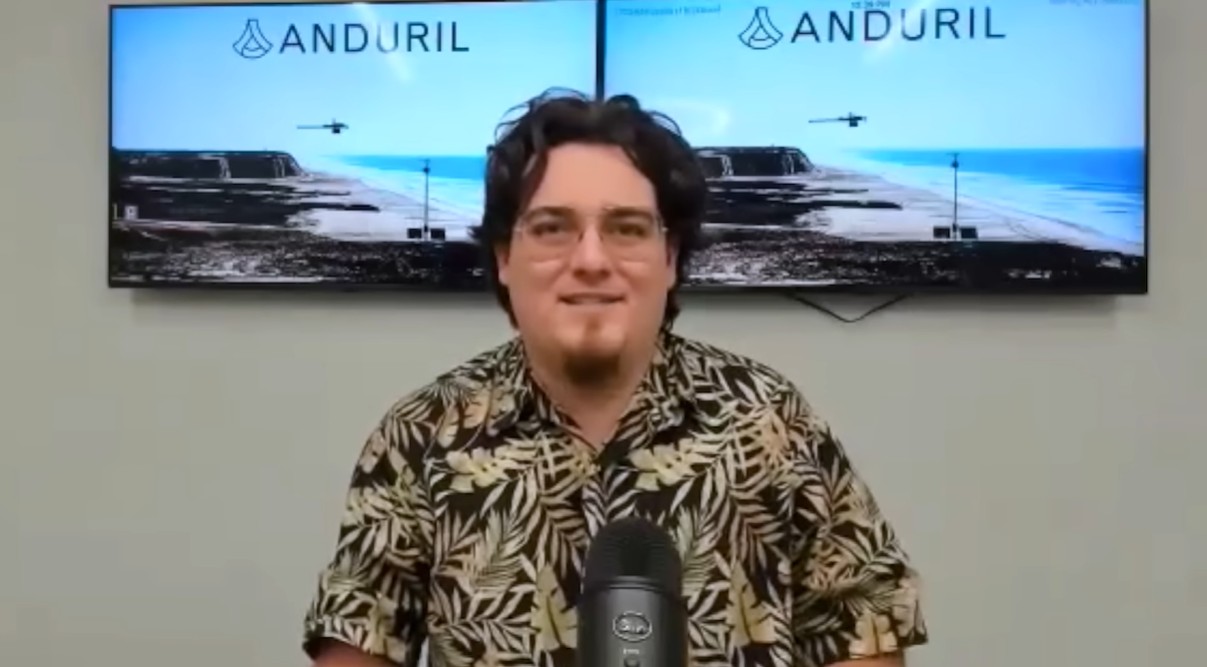
Palmer Luckey has a theory about why Silicon Valley turned its back on the Pentagon. It isn’t about pacifist engineers. It’s about market access in Beijing.
In an interview with investor Joe Lonsdale, the Anduril Industries founder argued that the schism between American technology companies and the US military is a historical anomaly caused by corporate cowardice. While China and Russia integrate their best technology sectors directly into their defense capabilities, Luckey said American firms have largely opted out.
He attributed this disconnect to a fear of retribution from the Chinese Communist Party. By keeping global corporations on a “hair trigger,” Beijing ensures that any cooperation with the American defense apparatus risks access to Chinese capital and consumers.
“If we end up crippling ourselves by putting our best people to work on search engine optimization and ad delivery, how can we possibly expect to compete?”
— Palmer Luckey, founder of Anduril Industries
Luckey pushed back against the narrative that the tech workforce itself is anti-military. He estimated that the vast majority of industry professionals want the United States to maintain military superiority. The friction is executive, not rank-and-file. Corporate dynamics have made it more profitable to appease foreign markets than to secure the home front.
Innovation Theater vs. Deployed Hardware
Luckey was equally critical of the domestic defense industry, describing a sector plagued by “innovation theater.” Established contractors frequently generate press releases and panel discussions for technology that never reaches the field.
Context
Anduril focuses on deploying functional hardware, such as autonomous sentry towers. These systems use artificial intelligence to process sensor data, filtering out environmental noise—like local wildlife—to identify human or vehicle threats without constant human monitoring. This automates tasks that previously required immense manpower, such as “cutting sign,” the tedious process of physically tracking footprints in the dirt.
The company is also fielding the Ghost, a man-portable helicopter drone designed to be nearly inaudible and invisible at combat ranges.
Lethality as a Humanitarian Feature
When pressed on the ethics of weaponizing such technology, Luckey rejected the idea that refusal to build arms constitutes a moral victory. He argued that precision technology is the only way to reduce collateral damage in inevitable conflicts. Refusing to innovate merely leaves soldiers relying on older, less precise, and more destructive forms of violence—a utilitarian argument that reframes lethality as a humanitarian feature.
Luckey noted that US adversaries face no such internal ethical debates. State actors are already weaponizing commercial drone technology and integrating lethal systems without hesitation.
“The US Army is a weapon. There’s no high ground in saying, ‘Oh, I’m just the guy that found the target… and then let something else go after the guy.’”
— Palmer Luckey