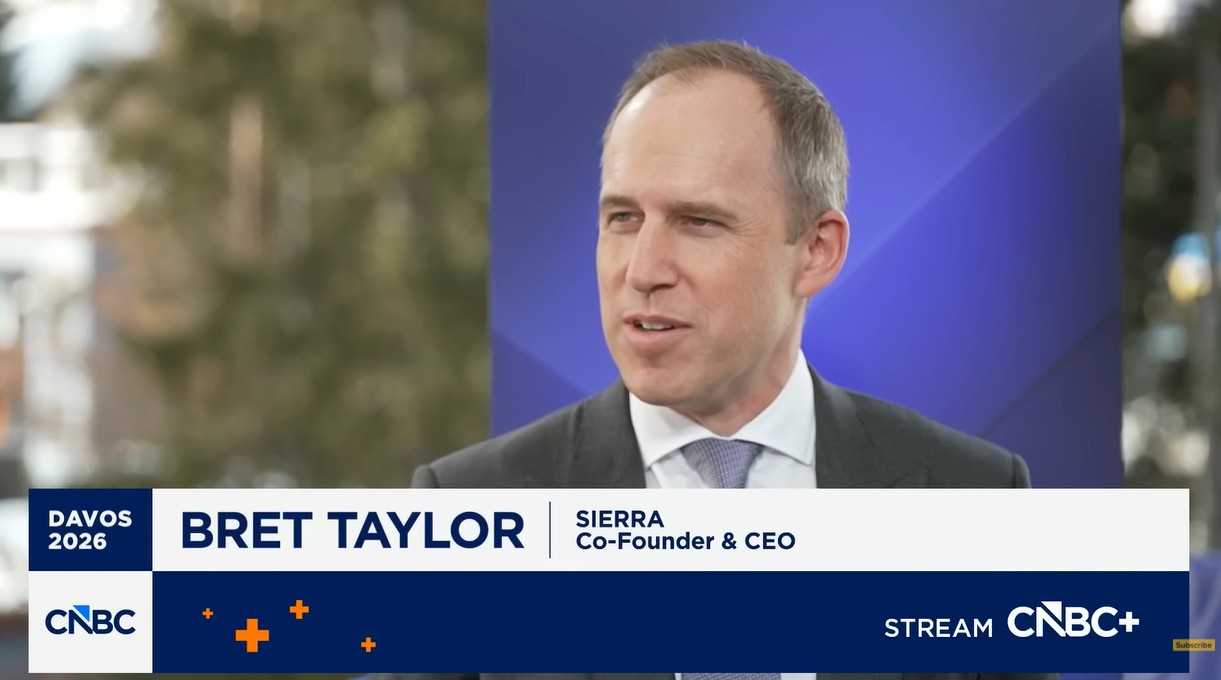
Speaking at the World Economic Forum on Wednesday, the Sierra co-founder and OpenAI board chairman brushed off concerns about an investment bubble. While the transformative potential of the technology is self-evident, he told CNBC that the necessary infrastructure and regulatory frameworks are still being built.
“We’re at the beginning of this curve.”
— Bret Taylor, Sierra co-founder and OpenAI board chairman
From Chatbots to Solutions
The industry is evolving rapidly from the digital equivalent of punch cards to conversational interfaces. Yet the deeper shifts are happening away from consumer chatbots. Taylor pointed to software engineering and customer service as the current leaders in applied AI, noting that companies don’t want to buy raw technology. They want solutions.
The real revolution might be mundane. Taylor argued that the “boring but important” back-office tasks—such as vendor onboarding or “KYC” banking protocols—are where agentic AI will prove its worth.
Context
In this emerging landscape, the atomic unit of software is no longer a system of record. It is a process. This creates friction for traditional dashboard systems used by human employees, potentially reshuffling the deck for enterprise incumbents.
Competition and Legal Challenges
Capital is flooding the sector, leading to overcrowding at every layer of the technology stack. Taylor welcomed the inevitable market correction, suggesting that messy competition is a prerequisite for true innovation.
“What you end up with [is] smart money, dumb money, you end up with too many competitors. I don’t think you can get innovation without that kind of messy competition.”
— Bret Taylor
Taylor also addressed the renewed legal challenge from Elon Musk regarding OpenAI’s profit motives. He dismissed the lawsuit as “baseless,” emphasizing the organization’s focus on its new structure. The board’s priority remains ensuring artificial general intelligence benefits humanity, even as the company navigates the complexities of a potential public offering.