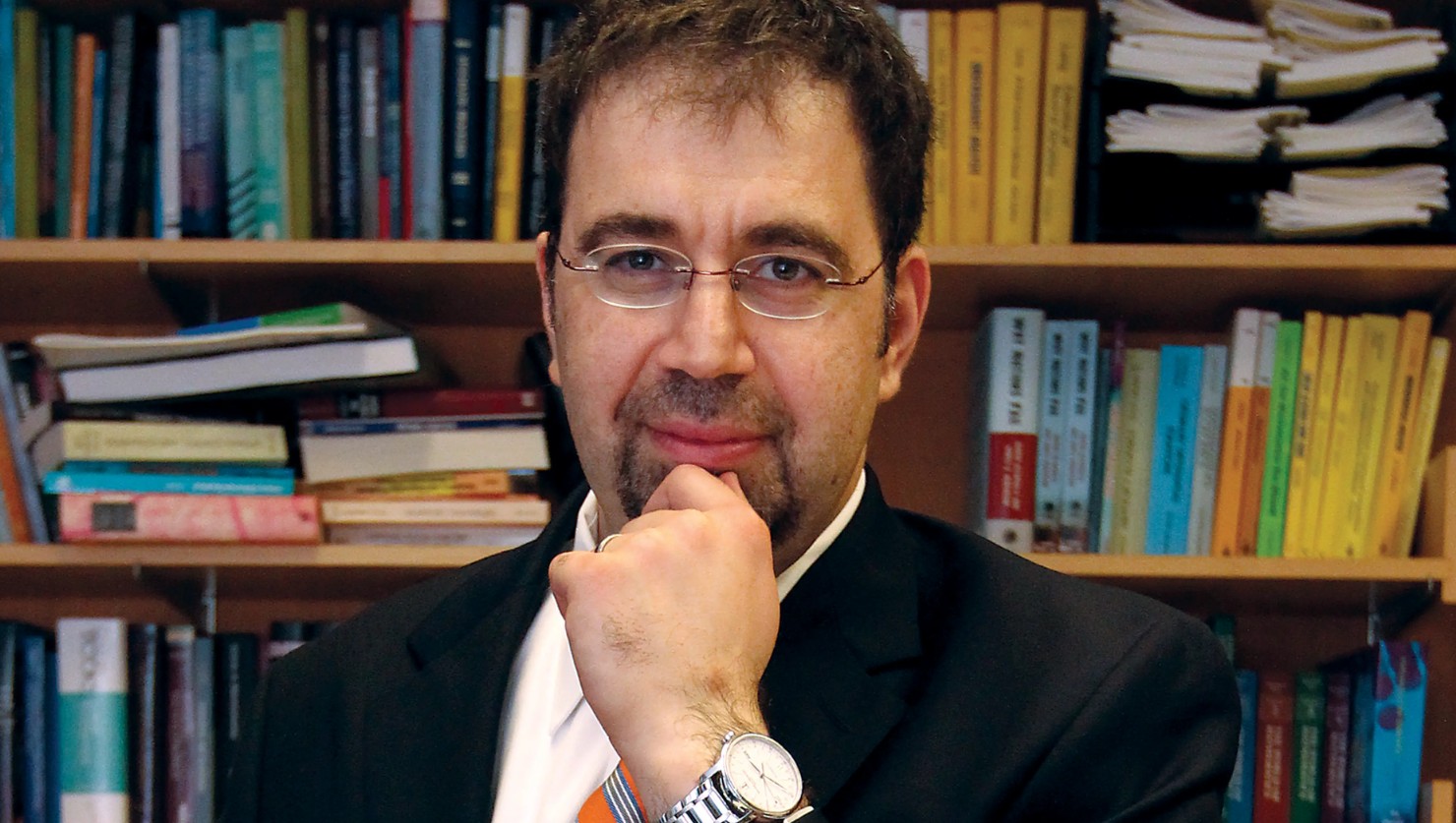
In a sweeping critique of the current technological and political landscape, Nobel Prize-winning economist Daron Acemoglu has cautioned that the world is betting too heavily on the economic promises of artificial intelligence while neglecting the crumbling institutions of liberal democracy.
Speaking on the Foreign Affairs Interview podcast with Deputy Editor Kanishk Tharoor, Acemoglu argued that the current fervor surrounding generative AI is driven more by corporate “FOMO”—fear of missing out—than by economic fundamentals. While tech giants project a transformative future, Acemoglu suggests the immediate reality is far more modest.
“I think a lot of the investment right now is driven by a combination of hype and a racing dynamic,” Acemoglu said, describing a corporate mindset where companies believe “whoever takes the lead now will have a huge advantageous position.” He added, “It is impossible, in my opinion, to understand the investments that OpenAI or Google or Anthropic are making in AI without recognizing this winner-take-all perception.”
Acemoglu, a professor at MIT and co-author of the seminal book Why Nations Fail, recently published research projecting that AI would contribute only a modest 1 percent to U.S. GDP growth over the next decade. He challenged the narrative that society must simply brace itself for an inevitable technological tsunami.
“Once you start thinking of new technology just like a gale or a storm that is out of our control, then the best thing we can do is we can try to adapt to it,” Acemoglu told Tharoor. Instead, he argued for agency: “Why don’t we try to steer AI in a direction that’s actually quite useful for humans?”
The False Race with China
The economist also dismantled the prevailing narrative in Washington regarding a technological arms race with Beijing. He characterized the U.S. fixation on China as a convenient tool for Silicon Valley. “I sometimes joke that if China did not exist, the tech industry in the US would have had to invent it. It is their trump card against any regulation,” Acemoglu observed.
While acknowledging China’s aggressive industrial policy and vast engineering talent, Acemoglu argued that the U.S. retains significant structural advantages—specifically its university system and history of attracting global talent—though he warned these advantages are currently being eroded by domestic policy choices.
“The US relies on foreign engineering talent,” he noted, critiquing restrictive immigration policies. “If you look at the innovators in the United States… immigrants, often coming with technical backgrounds, are very strongly overrepresented.”
A Crisis of Institutions
Beyond technology, Acemoglu painted a stark picture of the health of Western political systems. He argued that the crisis of liberal democracy stems from its failure to deliver on its core promise: shared prosperity. He pointed to the last four decades as a period where the social contract fractured, leading to “widening economic inequalities and a breakdown in public trust.”
Drawing on historical parallels, Acemoglu noted that the benefits of the Industrial Revolution were not immediate. “The first 80 or so years of the British Industrial Revolution, real wages fell, working hours lengthened, working conditions became horrible,” he said. It was only through the development of democratic institutions and labor movements that technology eventually benefited the broader population.
Today, however, he sees those necessary institutions under attack. “Trust in institutions, trust in journalism, trust in academia, all of them are lower,” he said. “And trust in Congress, presidency, and courts has collapsed.”
The Path Forward: ‘Working-Class Liberalism’
Despite the gloomy outlook, Acemoglu offered a prescriptive path forward, which he terms “working-class liberalism.” This model rejects both “radical individualism” and top-down social engineering in favor of strengthening local governance and economic fairness.
“Working-class liberalism… is the only way out,” Acemoglu asserted. He defined this as a system that remains “faithful to individual liberty but in a way that’s consistent with working class values,” prioritizing “jobs and shared prosperity.”
Ultimately, Acemoglu argued that the future of the global order will not be decided by who builds the fastest computer, but by which societies can rebuild the institutional trust required to navigate a turbulent century.
“The future of China-US competition will be shaped… by how this advantage-disadvantage pair will play out,” he said, contrasting China’s top-down research environment with the U.S.’s potential for open innovation. However, he warned that the U.S. is currently destroying its own engine of success. “If the United States were to fix its institutions… the US economy wouldn’t be where it is if it wasn’t so innovative.”