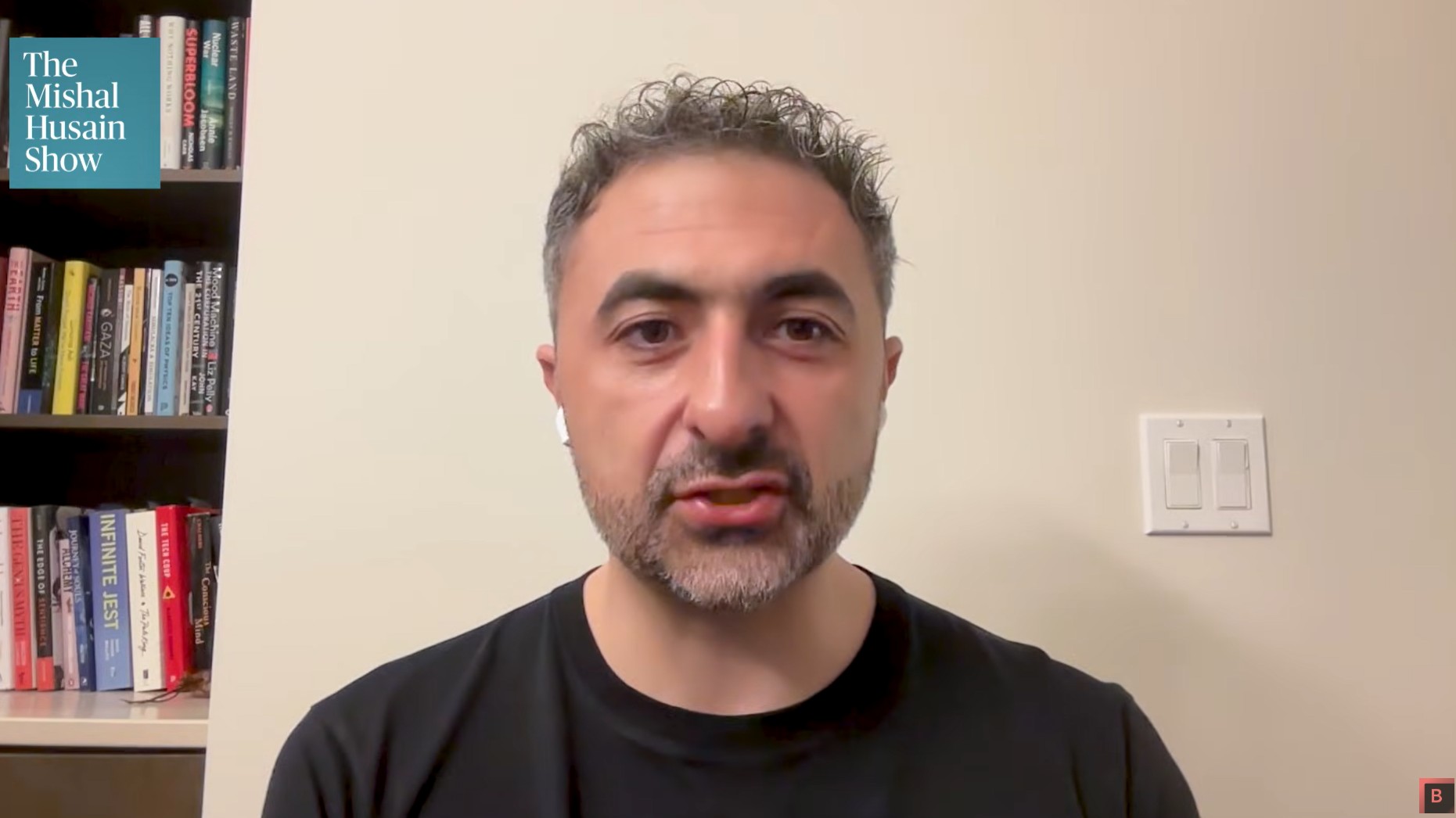
In the rapidly escalating race to develop artificial intelligence that surpasses human capability, Microsoft AI CEO Mustafa Suleyman is advocating for a cautious, “humanist” approach while signaling a strategic shift that grants the tech giant more independence from its key partner, OpenAI.
Speaking on The Mishal Husain Show for Bloomberg, Suleyman outlined his vision for the next frontier of the technology: “superintelligence.” He defined the term as an AI system capable of learning any new task and performing “better than all humans combined at all tasks.” While acknowledging the immense risks associated with such power, Suleyman emphasized that Microsoft is committed to a safety-first doctrine.
“The framing that I prefer is one of a humanist superintelligence,” Suleyman told Husain. “One that is always in our corner, on our team, aligned to human interests. And until we can prove that it will remain safe, we won’t continue to develop a system that has the potential to run away from us.”
A Shift in the OpenAI Alliance
Suleyman, who co-founded DeepMind before joining Microsoft 18 months ago, revealed significant details regarding the evolving relationship between Microsoft and OpenAI. While the two entities have collaborated closely since 2019, a recent restructuring of their agreement has altered the competitive landscape.
Historically, Microsoft was contractually restricted from pursuing artificial general intelligence (AGI) independently. However, recent changes spurred by OpenAI’s need for massive computing power have loosened those bonds.
“OpenAI decided that they wanted to take on more compute and buy compute from other providers,” Suleyman explained, referencing OpenAI’s deals with companies like Oracle and SoftBank. “In return, we then have the right to go and develop our own AI… we’re now building out a superintelligence team and pursuing our own AI development.”
This shift positions Microsoft not just as a partner, but potentially as a competitor to the very startup it has backed with billions of dollars.
The Talent War and the “Bulldozer”
The interview also touched on the frenzied competition for top-tier AI talent, with Husain citing reports of pay packages reaching $200 million for leading figures in the field. While acknowledging the high stakes, Suleyman distanced Microsoft’s hiring strategy from the aggressive individual acquisition tactics attributed to Meta CEO Mark Zuckerberg.
“I think that Zuck’s taken a particular approach,” Suleyman noted. “What we did well at DeepMind… and what I’ve been doing at Microsoft over the last year and a half is adding people incrementally who fit the culture… We’re very much creating a team rather than a set of individuals.”
Suleyman offered candid assessments of his peers in the industry. He described his former DeepMind co-founder Demis Hassabis as “truly exceptional” and a “great scientist.” When asked for a one-word description of Elon Musk, Suleyman chose “bulldozer.”
“He’s kind of got superhuman capabilities to bend reality to his will,” Suleyman said of Musk. “And somehow he sort of mostly manages to pull off what appears to be impossible.”
Economic Abundance and Universal Basic Income
Beyond corporate strategy, Suleyman discussed the profound societal impacts of AI. Drawing from his own working-class background in London—the son of a taxi driver and a nurse—he expressed a belief that AI should ultimately serve to reduce human labor and generate economic abundance.
Addressing fears that AI will decimate jobs, Suleyman argued that while displacement is inevitable over the next few decades, the resulting productivity gains must be managed through policy. He explicitly endorsed the concept of Universal Basic Income (UBI).
“I think that that is both inevitable and very desirable,” Suleyman said regarding mechanisms to redistribute wealth generated by AI. “We have to make sure that that rate of displacement is counterbalanced with a mechanism to fund people and to support people through a massive transition.”
AI Reporters and the Future of Information
Looking toward practical applications, Suleyman highlighted the potential for AI to revitalize struggling sectors, specifically local journalism. As the head of Microsoft’s news service, MSN, he is exploring the deployment of AI-driven reporting.
“One of the things I’m very excited about is how AI news reporters can reinvigorate local news,” he said. He described a future where “hundreds of thousands of AI reporters” could conduct phone interviews, verify eyewitness footage, and synthesize information to provide reliable local coverage at scale.
Despite the rapid pace of development, Suleyman remains optimistic about the role of government oversight, describing himself as a centrist who believes regulation has historically made technology safer.
“I think that regulation is necessary and it has made most technologies better,” he said, adding that “we don’t need knee-jerk reaction,” but rather a long-term framework to ensure safety as the technology approaches superintelligence.