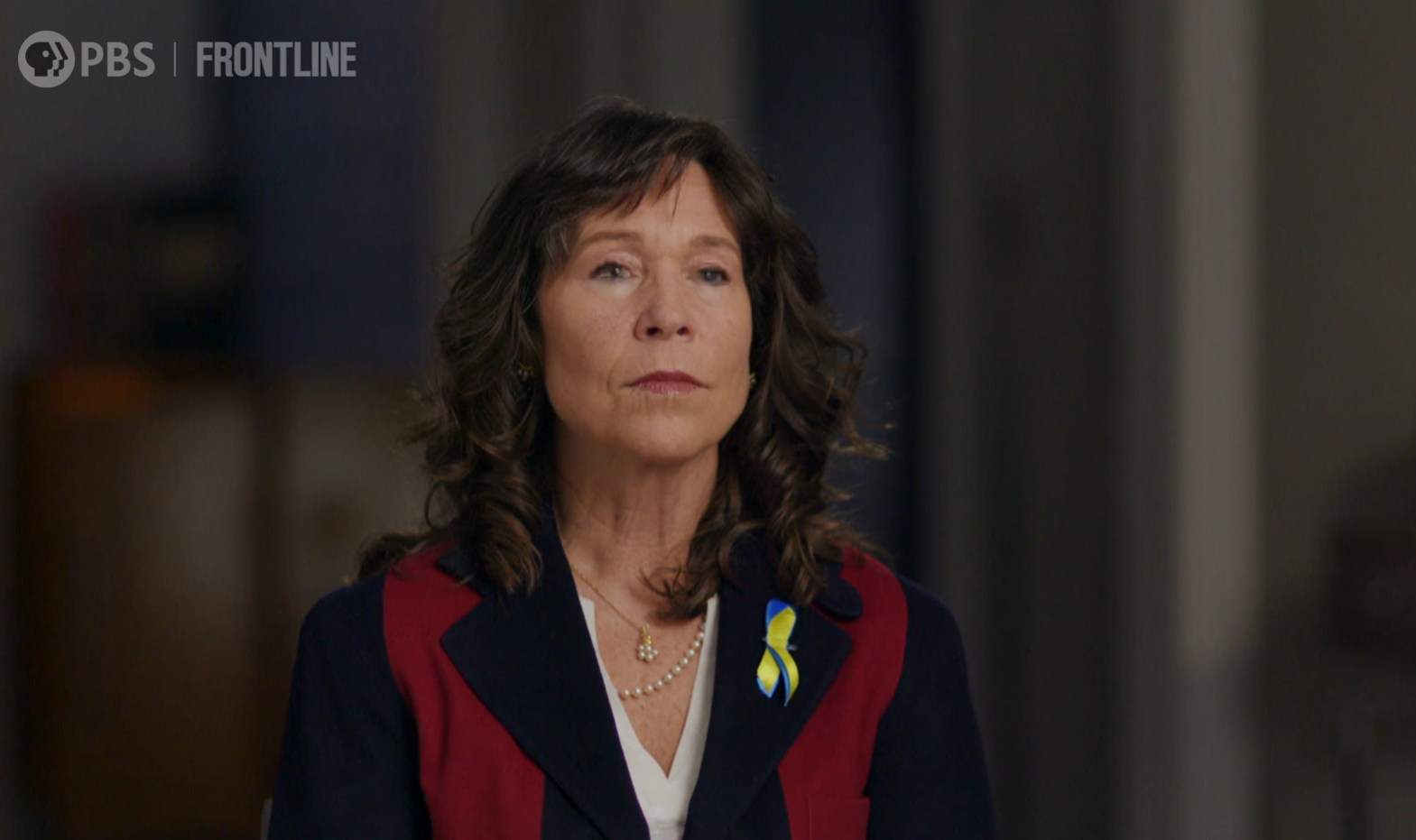
In a blistering assessment of the Trump administration’s newly released National Security Strategy (NSS), Kori Schake, a former senior official in the George W. Bush administration and current director of foreign and defense policy studies at the American Enterprise Institute, described the document as a fundamental misunderstanding of American power that threatens to dismantle the global order.
Speaking on The Foreign Affairs Interview podcast with executive editor Justin Vogt, Schake argued that the administration’s approach effectively treats traditional democratic allies as economic threats while failing to adequately address the dangers posed by authoritarian rivals.
“The Trump administration’s strategy is basically a declaration of war against our closest friends on the assumption that we are in closer alignment with our actual adversaries,” Schake said. She noted that the document seems to align the U.S. closer to nations like China, Russia, North Korea, and Iran—countries actively working to undercut American influence—than to European partners. “It’s lunacy,” she added.
A ‘Wish List’ Without Strategy
Schake criticized the intellectual rigor of the document, suggesting that its lack of clear authorship indicates that “nobody’s rushing to take credit” for it. She contrasted the current NSS with the coherent strategies of the Cold War era, particularly President Eisenhower’s 1954 strategy, which focused on leveraging American economic and cultural advantages to maintain security.
Instead, Schake characterized the Trump administration’s document as a “wish list” that skips the crucial step of accurately assessing the global environment. “It sounds fearful to me,” Schake observed. “It’s empty chest-thumping without a strategy to produce the kind of military they say we need.”
Real-World Consequences for Alliances
The interview highlighted that the administration’s rhetoric is already producing tangible geopolitical fallout. Schake pointed to evidence that key allies are “hedging against American power.” She cited reports that Japan and South Korea are considering trade arrangements with China to insulate themselves from U.S. tariffs, while European nations are scrambling to build independent defense industrial capacities.
Most consistently, Schake raised alarms regarding intelligence cooperation. She noted that some of America’s closest intelligence partners, specifically Britain and the Netherlands, are “restricting the intelligence they will share with the United States” due to disapproval of recent U.S. military operations in the Caribbean and fears that sensitive information could be compromised.
“The untrustworthiness of the United States is making us blinder, and it’s making us less capable,” Schake warned.
Civil-Military Relations Under Strain
The conversation also delved into the deteriorating state of civil-military relations following reports of a “purge” of senior officers overseen by Defense Secretary Pete Hegseth. Schake defended the conduct of the uniformed military, arguing that the instability is being driven entirely by civilian leadership.
“The military cannot save us from the politicians we elect,” Schake stated, emphasizing that the constitutional subordination of the military to civilian control is paramount, even when political leadership is erratic.
She also criticized a recent video released by Democratic veterans in Congress urging troops to refuse illegal orders. While acknowledging the legal duty to disobey unlawful commands, Schake called the political messaging “dangerous,” arguing that dragging the military into partisan disputes “is going to destroy the peaceful debate that our country relies on.”
Squandering the ‘Geopolitical Lottery’
Schake concluded with a stark warning about the long-term impacts of the administration’s isolationist turn. She argued that the U.S. has historically benefited from a “geopolitical lottery” of friendly neighbors and a voluntary international order that amplifies American power at a low cost.
By antagonizing allies and politicizing the military, Schake argued the administration is “lighting that international order on fire in a way it’s going to take a generation to repair.”
The full discussion is available via Foreign Affairs.