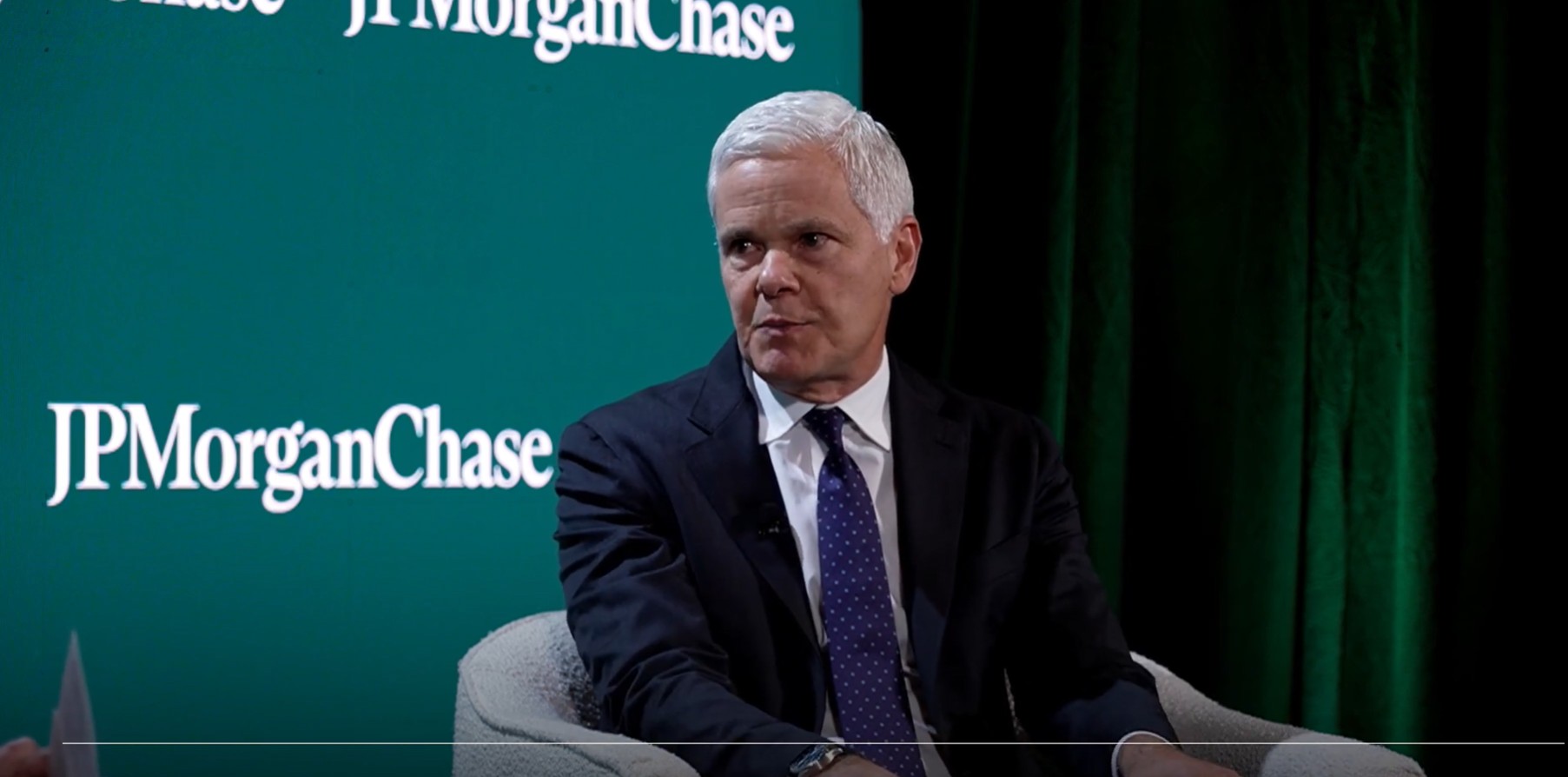
While the United States currently holds a dominant position in the global economy, that status is “tenuous” and threatened by aging infrastructure, regulatory hurdles, and a widening skills gap, a top executive at JPMorgan Chase warned during an Axios event in Washington, D.C.
Speaking at the “Axios Live’s Zoom In: Boosting America’s Competitive Edge” event, Douglas Petno, Co-CEO of the Commercial & Investment Bank at JPMorgan Chase, told Axios Publisher Nicholas Johnston that the nation cannot afford complacency regarding its economic standing.
“There is absolutely no question that the US sits in an unbelievable place in the competitive landscape in the global economy,” Petno said, citing American strengths in innovation, capital markets, and the rule of law. However, he cautioned that “we don’t have a divine right to maintain that stature forever.”
Petno described a convergence of factors currently straining the American economic engine. He pointed to “aging infrastructure,” “aging logistics,” and an energy grid that is struggling to keep pace with the rapid build-out required for artificial intelligence. Furthermore, he highlighted the burden of bureaucracy on businesses.
“You have this buildup of cumulative regulations… think about barnacles on a ship just building up over and over and over again,” Petno said.
To address these vulnerabilities, Petno discussed a major strategic initiative by JPMorgan Chase focused on security and resiliency. He noted that the urgency stems from global competition, specifically the technological sprint against foreign rivals.
“We’re in a race,” Petno said. “A race to solve quantum… it is a strategic imperative to win the AI race.”
The initiative involves a significant financial commitment. Petno stated the bank is pledging “$10 billion of our own capital” while aiming to facilitate and arrange “a trillion and a half dollars over 10 years” to bolster critical sectors.
Beyond infrastructure and technology, Petno emphasized that the U.S. labor market faces a paradoxical challenge. While the country is witnessing a “manufacturing renaissance”—driven by the reshoring of energy-intensive and clean-tech industries—there is a critical shortage of skilled trade workers to support it.
Citing the construction of JPMorgan’s new headquarters in New York City, which employed 10,000 skilled laborers, Petno observed: “The talent in the US is exceptional, there is just not enough of it.” He specifically noted a shortage of essential tradespeople, such as welders and electricians, requiring a renewed focus on workforce development.
Concluding the session, Petno urged policymakers in Washington to rely on the private sector for ground-level insights when crafting legislation to solve these “world-scale challenges.”
“Our policymakers, our legislators need the best eyes and ears on the ground so they understand the facts and circumstances locally and globally to write the best legislation,” Petno said.