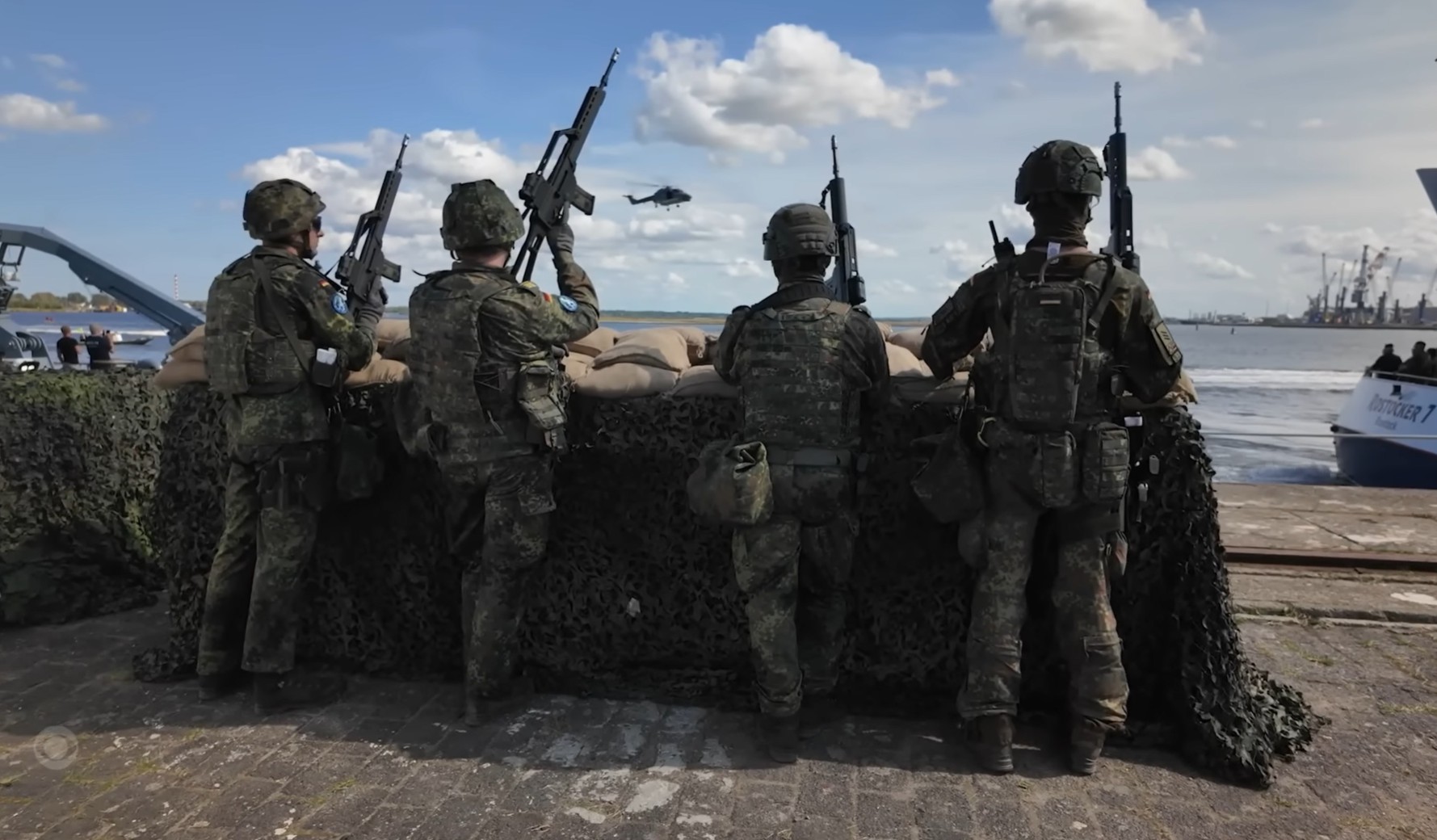
For decades following the devastation of World War II, Germany defined itself by a staunch commitment to pacifism, enjoying a “peace dividend” that allowed defense spending to languish. However, facing a grinding war in Ukraine and shifting geopolitical alliances, Europe’s largest economy is now engaged in a rapid, historic military overhaul.
According to a new report by “60 Minutes,” Germany is racing to transform the Bundeswehr—its armed forces—into a combat-ready power capable of deterring Russian aggression by the end of the decade.
The catalyst for this shift, described by former Chancellor Olaf Scholz as a Zeitenwende or “turning point,” is the perceived existential threat posed by Russian President Vladimir Putin. German Defense Minister Boris Pistorius, a central figure in the rearmament effort, offered a stark assessment of Moscow’s ambitions during an interview with the program.
“There is not only the war against Ukraine, this is a war against the rule-based international order,” Pistorius told “60 Minutes.” He warned that Putin is seeking a “renaissance of the Soviet empire” and aims to establish Russia as “the dominant power in Europe.”
When asked when Germany needs to be prepared for a potential direct conflict, Pistorius was unequivocal: “We should do everything to be that in 2029.”
A Shift in Strategy and Industry
The revitalization of the German military is visible both on the training ground and in the industrial sector. The “60 Minutes” report highlighted basic training exercises at the Munster Army Base, where recruits are preparing for trench warfare—a grim echo of 20th-century conflicts that has returned to the continent.
To support these troops, the German defense industry, long dormant, is surging. Armin Papperger, CEO of defense giant Rheinmetall, noted that the country is moving away from its reliance on American protection.
“We educated two generations [that] if something happens in the world, we call Washington and Washington will help us. That changed,” Papperger said. “Now, with the Ukrainian-Russian war, it’s very clear… that we have to do more.”
Innovation is also playing a key role. The military is investing in cutting-edge drone technology, including contracts with manufacturers like Quantum Systems, whose equipment is already deployed in Ukraine. In a more experimental turn, the Ministry of Defense is even funding research into “bio-tactics,” testing technology that could turn insects, such as cockroaches, into autonomous reconnaissance units to navigate rubble and war zones.
Geopolitical Pressures
The drive for self-sufficiency is fueled not only by Russian aggression but also by uncertainty regarding the United States’ commitment to NATO. The report noted that pressure from former U.S. President Donald Trump for Europe to shoulder its own defense burdens has had a lasting impact.
Friedrich Merz, identified in the broadcast as Germany’s Chancellor following elections in May 2025, emphasized the need for European strategic autonomy. “My absolute priority will be to strengthen Europe as quickly as possible so that, step by step, we can really achieve independence from the USA,” Merz stated.
Societal Challenges
Despite the top-down push for rearmament, the transition challenges the German national psyche. While enlistment has seen a 23% uptick recently, the Bundeswehr still faces a manpower shortage as it attempts to expand its active-duty force.
The military is also breaking historical taboos. Germany has begun deploying a combat-ready brigade to Lithuania, marking the first permanent deployment of German combat troops abroad since the Second World War. The move is intended to bolster NATO’s eastern flank, yet it remains a sensitive subject in a country where the memory of wartime atrocities remains vivid.
Ultimately, the government argues that the cost of inaction outweighs the discomfort of remilitarization. Defense Minister Pistorius framed the massive increase in defense spending—projected to rise nearly 80% by 2029—as the price of preserving democratic values.
“If you want to live in peace, in freedom, security… to love whoever you want and to believe in any god you want, then you need to be willing to defend it,” Pistorius said. “Because otherwise, there might be people like Vladimir Putin who will take that kind of living away from us.”