For decades, the German economic miracle was powered by a triad of external dependencies that are now crumbling, leaving Europe’s largest economy facing a painful period of withdrawal and structural reinvention.
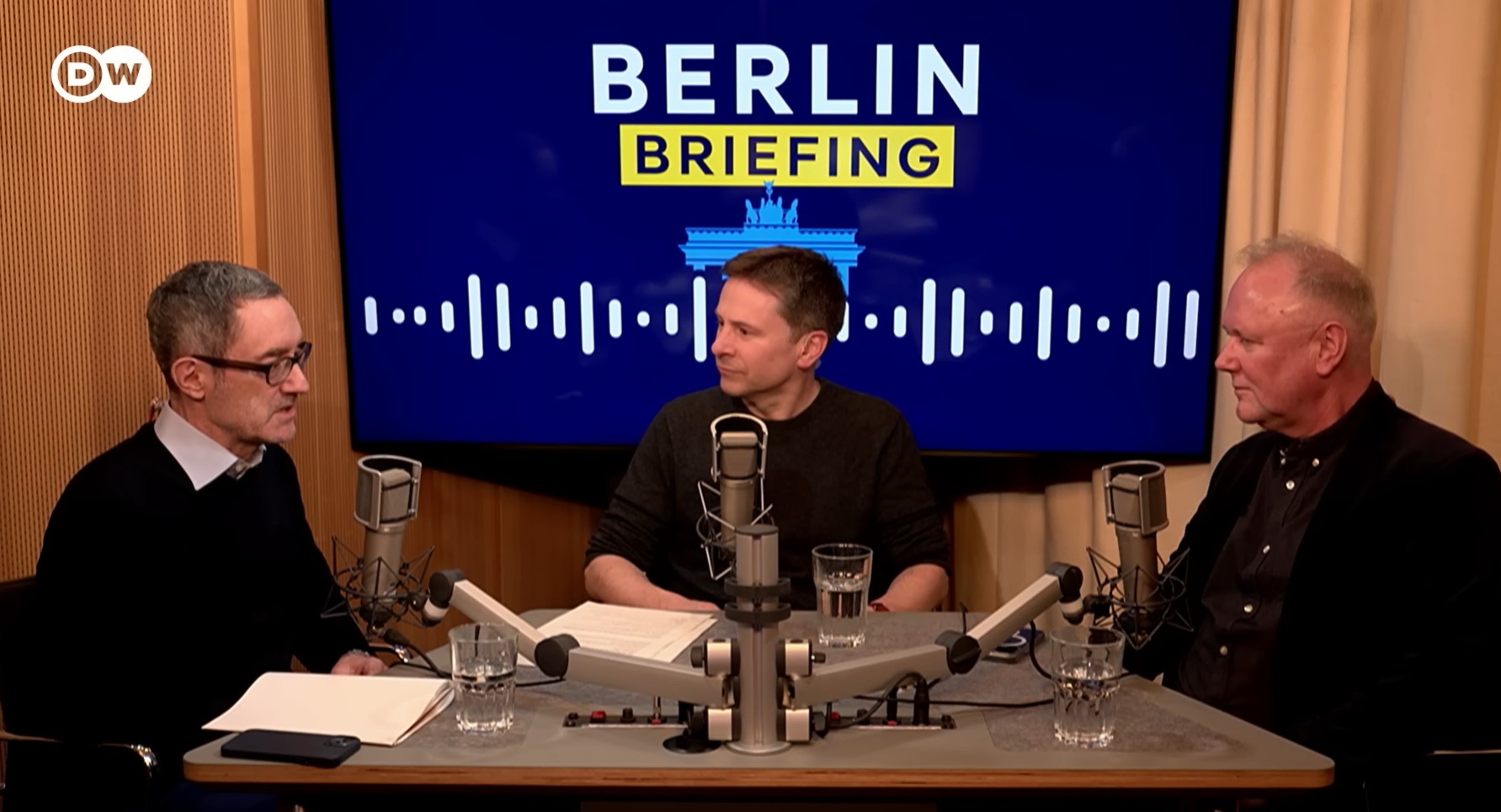
According to a recent in-depth analysis by DW News on their “Berlin Briefing” podcast, Germany is currently grappling with the consequences of an economic model that relied too heavily on what host Richard Walker described as three specific “drugs”: cheap energy from Russia, guaranteed defense from the United States, and the “mind-bending growth” of the Chinese economy.
While Germany has largely weaned itself off Russian energy and is attempting to bolster its defense capabilities, the economic entanglement with Beijing is proving to be the most difficult dependency to break. With 2025 exposing deep vulnerabilities in the German industrial base, experts warn that the country is facing a critical juncture.
The hangover from the ‘Golden Era’
The roots of the current crisis lie in the early 21st century, particularly during the chancellorship of Angela Merkel. During the Eurozone debt crisis, China emerged not just as a trading partner, but as an economic savior for German industry.
“It was a way of, if things were tough at home, you could go to China and you’d be given this incredible welcome… go to see a German company producing fantastic products that everyone in China wanted,” said Clifford Coonan, a DW editor and longtime China analyst.
However, that relationship has fundamentally shifted. China has moved up the value chain, transitioning from a customer of German engineering to a fierce competitor.
“We’ve seen German exports for a while going down… declining margins and market share in China,” noted Noah Barkin, a senior advisor at the Rhodium Group and visiting senior fellow at the German Marshall Fund. He pointed to a structural decline in the relationship, highlighting that German companies are now losing ground in third markets like Latin America and the Middle East to Chinese competitors.
The threat of deindustrialization
The podcast highlighted a stark reversal in the automotive sector, once the crown jewel of German industry. Facing high energy costs and bureaucracy at home, companies like Volkswagen are shifting strategies. Rather than exporting to China, they are increasingly utilizing China as a production base for the global market.
“We can produce an EV 50% cheaper in China than we can here in Germany,” Barkin said, citing reports on Volkswagen’s strategy. He warned that this trend points toward a decoupling of German corporate interests from the German domestic economy.
“If you are a multinational corporation… you have invested significantly in China and you’re producing there. You don’t need all the workers that you used to have working in Wolfsburg or Stuttgart or Munich,” Barkin added.
Weaponized supply chains
Beyond market access, the discussion focused on Germany’s critical vulnerability regarding raw materials. In response to U.S. trade policies, Beijing has begun to leverage its dominance over critical minerals, imposing export controls on materials vital for high-tech and green industries.
“It was sending a message not just to the US but also to other countries… that we have leverage, we are prepared to weaponize your dependencies,” Barkin told DW.
While European nations attempt to diversify, the process is slow and costly. Coonan noted that while the U.S. has moved quickly to secure resources in Latin America and Africa, the EU is lagging. “Germany as kind of the leading economy within the EU is struggling now to replace these,” Coonan said.
The Taiwan scenario
Looking ahead to 2026, the analysts painted a grim picture of the potential fallout from an escalation in the Taiwan Strait. With Chancellor Friedrich Merz expected to visit Beijing in early 2026, the pressure to balance economic interests with geopolitical security is mounting.
Coonan warned that even a blockade, falling short of a full military invasion, would trigger an economic shock far surpassing the fallout from the invasion of Ukraine.
“It would have a massive impact on supply chains… huge impact on global growth,” Coonan said. “And then politically of course it would have a huge impact. But even for Germany and for Europe specifically, it’s a massive headache because it’s basically Ukraine, but on a much, much bigger scale.”
A lack of cohesion
Despite the mounting risks, the analysts expressed skepticism regarding the readiness of Berlin and Brussels to handle a full-blown crisis. While the rhetoric regarding “de-risking” has sharpened, the reality on the ground is often contradictory. Barkin pointed to the recent decision by Deutsche Bahn, Germany’s state-owned railway operator, to purchase hundreds of electric buses from Chinese manufacturer BYD as evidence of the gap between strategy and practice.
“It is amazing that the government is talking about protecting critical infrastructure… and at the same time, a 100% state-owned company is buying BYDs, pushing Huawei technology into their IT infrastructure,” Barkin said. “It’s nuts.”
As Germany moves forward, the consensus from the DW panel suggests that the era of compartmentalizing trade and security is over, yet the roadmap for what comes next remains dangerously unclear.
“There really is no cohesion at all on how to deal with China,” Coonan concluded.