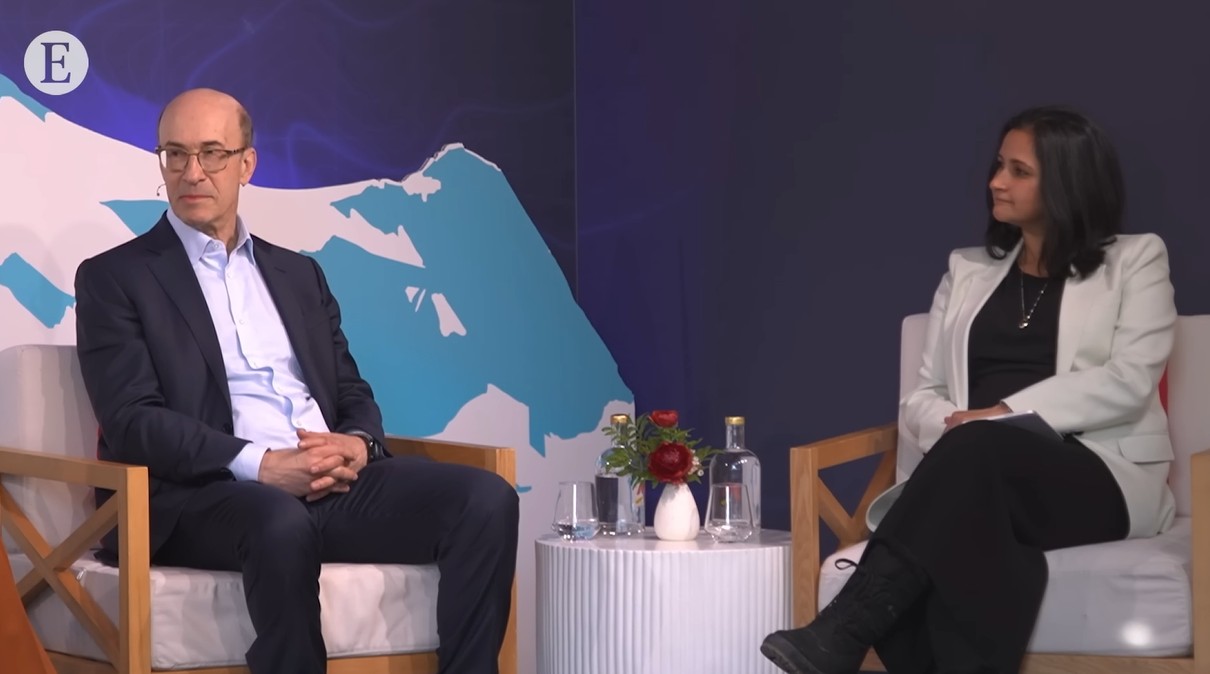
The long-held assumption of American financial supremacy is buckling under pressure. At a gathering of economic leaders organized by The Economist, experts warned that the United States has undermined the dollar’s stability through fiscal recklessness while geopolitical rivals actively build insulation against greenback hegemony.
Context
The “weaponization of the dollar” via sanctions has accelerated efforts by rival nations to create alternative payment systems. Beijing’s push to decouple began in earnest around 2015, driven by a desire to insulate its economy from Western financial leverage.
Kenneth Rogoff, a professor at Harvard University, argued that the dollar’s decline is not a future theoretical event but a process that began in 2015. That year marked a turning point when Beijing realized a strict peg to the US currency left it vulnerable to exchange rate attacks. China has since worked to decouple its financial system from the West, driven by the fear of sanctions arriving at a “theater near them.”
The Internal Fracture
But the real danger is internal. Rogoff said the US government “promiscuously” increased its debt load through the global financial crisis, the pandemic, and the years between. For a decade, Western economists treated borrowing as a free lunch. That era is over. The sheer volume of liability has left the American economy brittle, reducing its resilience against shocks such as a new war.
Debt acts like gravity on growth.
Foreign reserve managers are watching this fiscal deterioration with genuine alarm. The concern is compounded by political rhetoric from Donald Trump’s orbit floating the idea of default. This anxiety helps explain the recent rally in gold prices, as central banks seek assets immune to Washington’s dysfunction.
“They can’t be that nuts—unless they are.”
— Kenneth Rogoff, characterizing the view of foreign officials
Gita Gopinath, the deputy managing director of the IMF, offered a more tempered view of the currency’s structural defenses. She argued that dollar dominance persists because of the rule of law and the predictability of American institutions. Investors still crave the contract enforcement that the US legal system provides. Financial markets have remained relatively forgiving, shaking off brief scares like the volatility seen in early April.
A Quiet Revolution
50%
Share of China’s global transactions now settled in Renminbi
Yet trade data reveals a significant shift. In 2010, the renminbi was used for virtually zero percent of China’s transactions with the rest of the world. Today, that figure has surged to half. While other nations have not followed suit at the same pace, the world’s second-largest economy has successfully reduced its reliance on the dollar.
“Nothing is happening, and then it can happen very rapidly.”
— Gita Gopinath, IMF Deputy Managing Director
The panelists offered a surprisingly bullish outlook on the euro, often derided for its structural inefficiencies. Rogoff described himself as “constructive” on Europe, suggesting that external pressure—specifically from a Trump presidency—might force the continent to finally unify its policies and compete.
Gopinath pointed to the EU’s ability to close the trade deal with Mercosur as evidence that the bloc is more agile than critics claim. While European locals remain skeptical of their own institutions, the euro is quietly solidifying its position as a viable alternative.
Washington’s chaos is now a line item on global balance sheets. If the US continues to test the world’s faith in its creditworthiness, the alternatives that once looked pale may suddenly appear necessary.