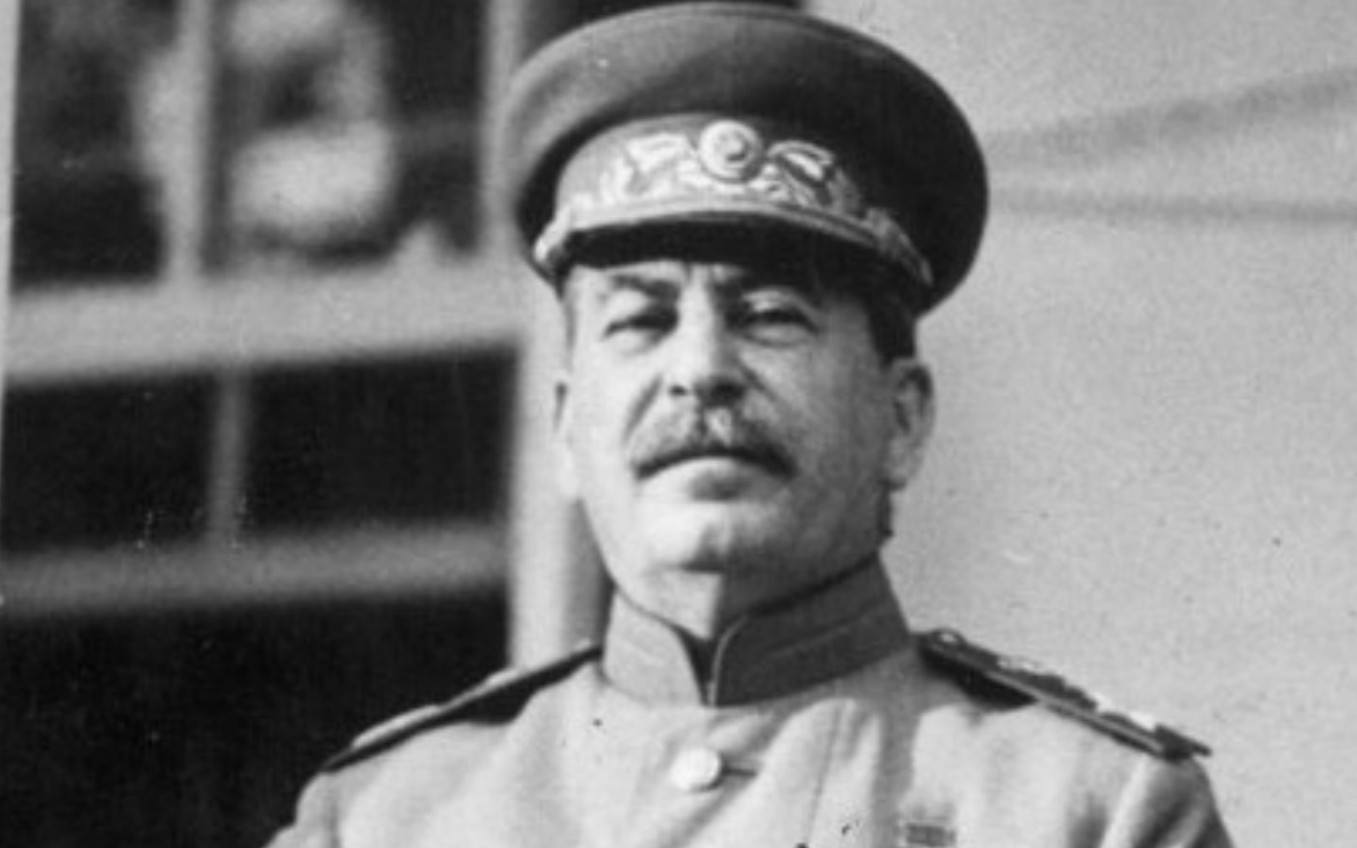
Joseph Stalin is rarely categorized alongside the intellectual heavyweights of the early 20th century. While Vladimir Lenin and Leon Trotsky are remembered as theorists who bent Marxism to fit the Russian reality, Stalin is often dismissed as a mere thug or a bureaucrat. But according to economic historian Adam Tooze, ignoring Stalin’s intellectual output blinds us to how he engineered one of the most rapid industrial transformations in history.
Stalin did not possess the abstract brilliance of his Bolshevik predecessors. He was, as Tooze described in a discussion with Foreign Policy deputy editor Cameron Abadi, an “algorithmic” thinker. He absorbed vast amounts of information—his personal library reportedly contained 20,000 books—and synthesized it to find a navigable path for the Soviet state.
This pragmatic brutality manifested in his rejection of Trotsky’s doctrine of “permanent revolution.” While the orthodox Marxist view held that the Soviet experiment could not survive without a global uprising, Stalin calculated that the USSR controlled enough territory and resources to go it alone. He turned the ideology of the Communist Party into the “hard DNA” of national developmentalism.
“Stalin really is the bonafide… theoretician of the second phase of the Soviet revolution.”
— Adam Tooze
The Industrial Transformation
Implementing “socialism in one country” required a total reconstruction of the economy. The regime needed to extract resources from the agrarian countryside to fund urban industrialization. Stalin’s solution was the forced collectivization of agriculture, a policy that ended the market-based compromises of the 1920s.
The state waged a socioeconomic war against the peasantry, specifically targeting the wealthier class known as “kulaks.” By breaking rural resistance and seizing grain, the Soviet leadership secured the export revenue needed to purchase German and American machinery. This was state-building through terror.
Violence was the metabolic core of the system.
Context
The resulting famine and the sprawling Gulag system were not accidental byproducts of poor planning. They were integral to a strategy that viewed the population as a raw resource to be molded. Tooze argued that Stalin realized earlier than most that maintaining power in the 20th century required immense industrial scale.
“We are 50 to 100 years behind the advanced countries. We must make good this distance in 10 years. Either we do it, or they crush us.”
— Joseph Stalin, 1931
Despite the humanitarian catastrophe, the economic results were staggering. In the decade preceding World War II, the Soviet Union achieved annual growth rates estimated between 5 and 6 percent. Steel production quadrupled. The USSR transformed from a backward agrarian society into a military-industrial superpower capable of producing thousands of tanks.
5-6%
Annual growth rate in the 1930s
This transformation creates an uncomfortable historical reality. The Soviet Union under Stalin became the archetype for a specific kind of authoritarian modernization, prefiguring the later rise of states like China. It proved that a government willing to inflict unlimited costs on its own people could compress a century of development into a single generation.
The Ultimate Test
The true test of this “macabre logic,” as Tooze termed it, arrived with the Nazi invasion in 1941. The Soviet victory was not merely a triumph of ideology or winter geography, but a validation of the ruthless industrial machine Stalin had forged in the 1930s. The regime survived because it had successfully militarized its entire economy long before the first shot was fired.