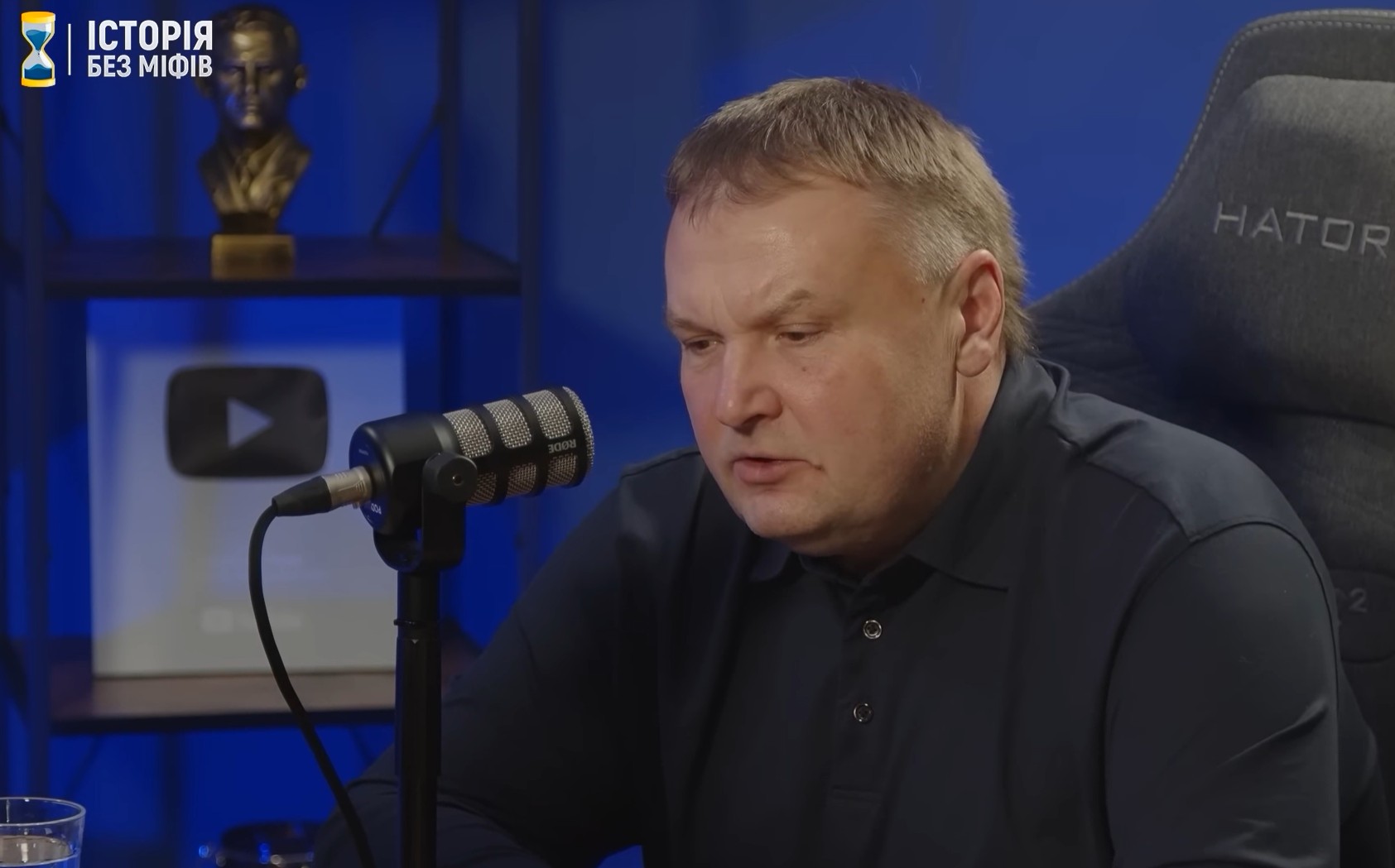
For decades, Western analysts have operated under a prevailing assumption regarding the Kremlin’s power structure: that Vladimir Putin’s Russia is simply an extension of the Federal Security Service (FSB), a regime where the intelligence services hold absolute sway. However, according to Vadym Denysenko, a historian, political scientist, and author of the book Post-Putin, this assessment is dangerously outdated.
In a comprehensive interview with the Ukrainian educational project “History Without Myths,” Denysenko dissects the evolution of Putin’s governance, arguing that the Russian president has moved beyond reliance on the siloviki (security forces) to construct a complex bureaucratic machine where he serves as the sole, indispensable arbiter.
From “New Nobility” to Technocratic Control
Denysenko suggests that while Putin’s early years were indeed defined by a reliance on the FSB—whom Nikolai Patrushev once famously termed the “new nobility”—a pivotal fracture occurred during the 2011–2012 Bolotnaya Square protests.
“The FSB blinked and missed Bolotnaya Square,” Denysenko stated, noting that the intelligence agencies failed to predict or prevent the massive unrest. This failure marked the beginning of a divergence between the security apparatus and the state’s bureaucratic vertical.
By 2016, a new system of management had crystallized, characterized by the rise of technocrats like Anton Vaino and Sergei Kiriyenko. In this reconfigured landscape, the FSB was relegated to the role of an instrument rather than a master.
“The FSB cannot set tasks for the bureaucratic system,” Denysenko explained. “On the contrary, the political system sets tasks for the FSB, and the FSB must execute them.”
The End of the “Kremlin Towers”
For years, Kremlinology focused on the conflict between various “towers” of influence within the Russian elite. Denysenko argues this era effectively ended between 2023 and 2024. The competitive oligarchy has been dismantled, replaced by a centralized hierarchy where proximity to Putin is the only currency.
“The circle of untouchables has sharply narrowed,” Denysenko noted, estimating that only 20 to 30 individuals now possess immunity from the system’s predatory nature. This inner circle—comprising figures like the Kovalchuk brothers, Sergei Kiriyenko, and the heads of security agencies—acts as the “guardians” of the regime.
Outside this group, everyone is vulnerable. The recent arrests of high-ranking officials within the Ministry of Defense, following the dismissal of Sergei Shoigu, served as a stark signal to the elite. “Putin is demonstrating to these people that nothing should be plotted against him… even if you mess up, nothing will happen to you [if you are loyal],” Denysenko said, referring to the immunity retained by Shoigu himself despite the purge of his subordinates.
The National Idea: Survival
According to Denysenko, the ideology of the Russian Federation has stripped away complex philosophical underpinnings in favor of a singular, biological imperative regarding its leader.
“The national idea of the Russian Federation boils down to a simple phrase: Putin must live as long as possible and die as late as possible in the president’s chair,” Denysenko asserted.
To ensure this, Putin has fostered a system of internal competition among his subordinates while stripping potential successors of the power to challenge him. The recent demotion of Nikolai Patrushev from the Secretary of the Security Council to a naval aide was interpreted by Denysenko not as a punishment, but as a necessary move to break up the “Chemezov-Patrushev tandem,” which controlled a dangerous concentration of the military-industrial complex and security forces.
History as Ideology
The interview highlights a unique feature of the current regime: the substitution of philosophy with history. Putin’s obsession with historical narratives—often manipulated or fabricated—serves as the primary justification for state actions, including the invasion of Ukraine.
“In the 20th century, I don’t know if there was anyone else who raised history so high within the framework of state ideology,” Denysenko observed. He points to Vladimir Medinsky and Mikhail Kovalchuk as the key architects of this historical worldview, providing the President with the narratives he desires. “One oversees history, the other is responsible for gerontological research,” Denysenko added, alluding to the search for life-extending technologies for the aging leader.
The Future of the Regime
Denysenko remains skeptical of any immediate collapse or democratic revolution in Russia. He argues that the system is built to withstand shocks through a “collective Putin”—the consolidated group of bureaucrats and billionaires whose survival depends on the regime’s continuity.
However, the hyper-centralization poses a long-term existential threat. By removing mechanisms of succession and narrowing the decision-making scope to one man who makes decisions increasingly slowly, the regime becomes brittle.
“He is a person who makes any decision with great difficulty, and with age, he makes them even more slowly,” Denysenko said. While the system is currently stable, built on “competitive principles of competent individuals,” its fate is inextricably and potentially catastrophically tied to the physical lifespan of Vladimir Putin.