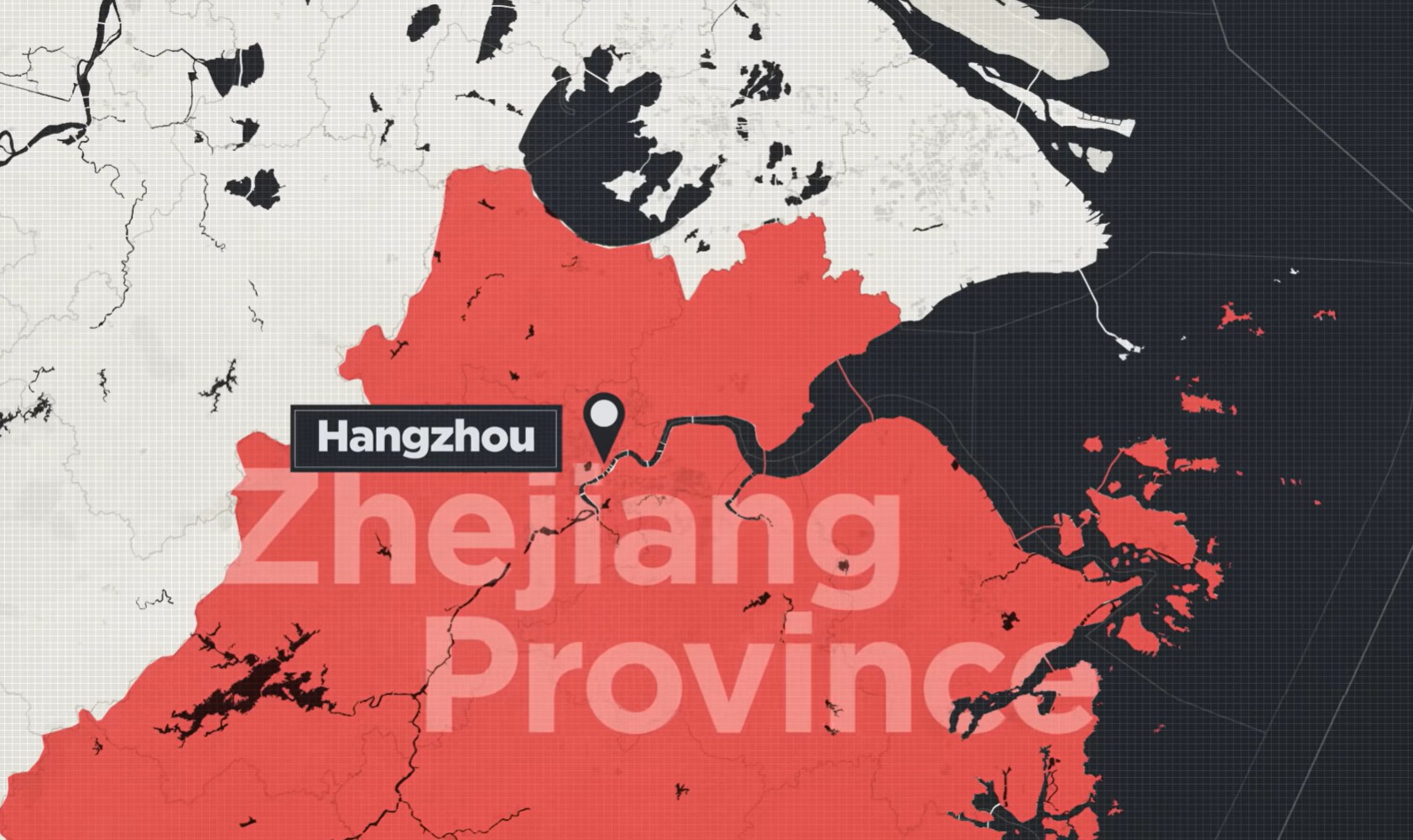
Long synonymous with e-commerce titan Alibaba, the city of Hangzhou is rapidly reinventing itself as the cradle of China’s artificial intelligence and robotics future. According to a new report by CNBC, the city is now the breeding ground for a cluster of fast-moving startups dubbed the “Six Little Dragons,” which are reshaping the global tech landscape with a philosophy of high efficiency and lower costs.
By 2024, Hangzhou had established itself as a major AI cluster, hosting more than 500 AI companies that generate over 70% of the sector’s profits in Zhejiang province. The city has risen to become China’s best-performing large city, outpacing traditional tech hubs like Beijing and Shanghai in key economic indicators.
“Now Hangzhou seems to be making AI part of its DNA,” said Elaine Yu, a China reporter for CNBC. “And that is part of a wider national strategy.”
The “Six Little Dragons”
The moniker refers to six specific companies that have recently surged to global prominence: DeepSeek (AI), Manycore Tech (spatial intelligence), Unitree Robotics (humanoid robots), DEEP Robotics (industrial quadruped robots), Game Science (video games), and BrainCo (brain-computer interfaces).
DeepSeek recently sent shockwaves through the tech industry with its open-source reasoning model, R1. The model reportedly cost just $294,000 to train—a fraction of the expenditure of its U.S. rivals—and garnered 16 million downloads in just 18 days.
“DeepSeek really symbolized this ethos of doing more with less,” Yu noted. “Really that underdog energy that’s implied in the ‘little’ of Little Dragons.”
The cluster’s success extends beyond software. Unitree Robotics has captured attention with its mass-market humanoid robots, reportedly eyeing an IPO with a valuation of up to $7 billion. Meanwhile, Game Science shattered records with Black Myth: Wukong, selling more than 25 million copies and becoming one of the fastest-selling video games in history. Manycore Tech, which digitizes real-world spaces, became the first of the group to file for an IPO in Hong Kong in February 2025.
The Hangzhou Advantage
The video report highlights that Hangzhou’s rise is not accidental, but rather the result of a unique convergence of talent, affordability, and policy.
A critical driver is Zhejiang University, consistently ranked among Asia’s top ten universities. Alumni from the institution founded three of the six “Little Dragons,” including DeepSeek CEO Liang Wenfeng. This academic pipeline provides a steady stream of engineering talent specifically trained in computer science and robotics.
Furthermore, Hangzhou offers a distinct economic advantage over China’s Tier 1 cities. Rents in Hangzhou are roughly 20% lower than in Beijing, yet software engineer salaries remain competitive. This lower cost of living fosters an environment conducive to long-term research rather than short-term commercial pressure.
“If you create a high-tech company, the environment should not be too commercialized,” said Xiaohuang Huang, co-founder of Manycore Tech. He noted that in expensive cities where “people have too high pressure on just buying [a] house… they will change jobs too frequently.” In contrast, he described Hangzhou as a “very creative city” that is “more like Silicon Valley.”
State Support and Future Outlook
The local government has adopted a supportive but “light-handed” approach. To attract talent, the city has eased “hukou” (residency) restrictions and offers subsidies of up to 600,000 yuan (approximately $80,000) for high-tech enterprises. In 2025, the city committed more than 100 billion yuan ($14 billion) to grow its AI industry and pledged a broader tech investment of 400 billion yuan ($56 billion) by 2030.
“The industry cluster and ecosystem that Hangzhou has built since the establishment of Alibaba is something that [is] hard to replicate elsewhere,” said Yue Su, a principal economist at the Economist Intelligence Unit.
As these startups scale, they are positioning themselves as formidable competitors on the world stage.
“The old guards like Huawei and Alibaba, and the young guns like DeepSeek… are together really putting up a challenge to the US,” Yu said. “The next breakthrough could come from a startup that no one has ever heard of.”