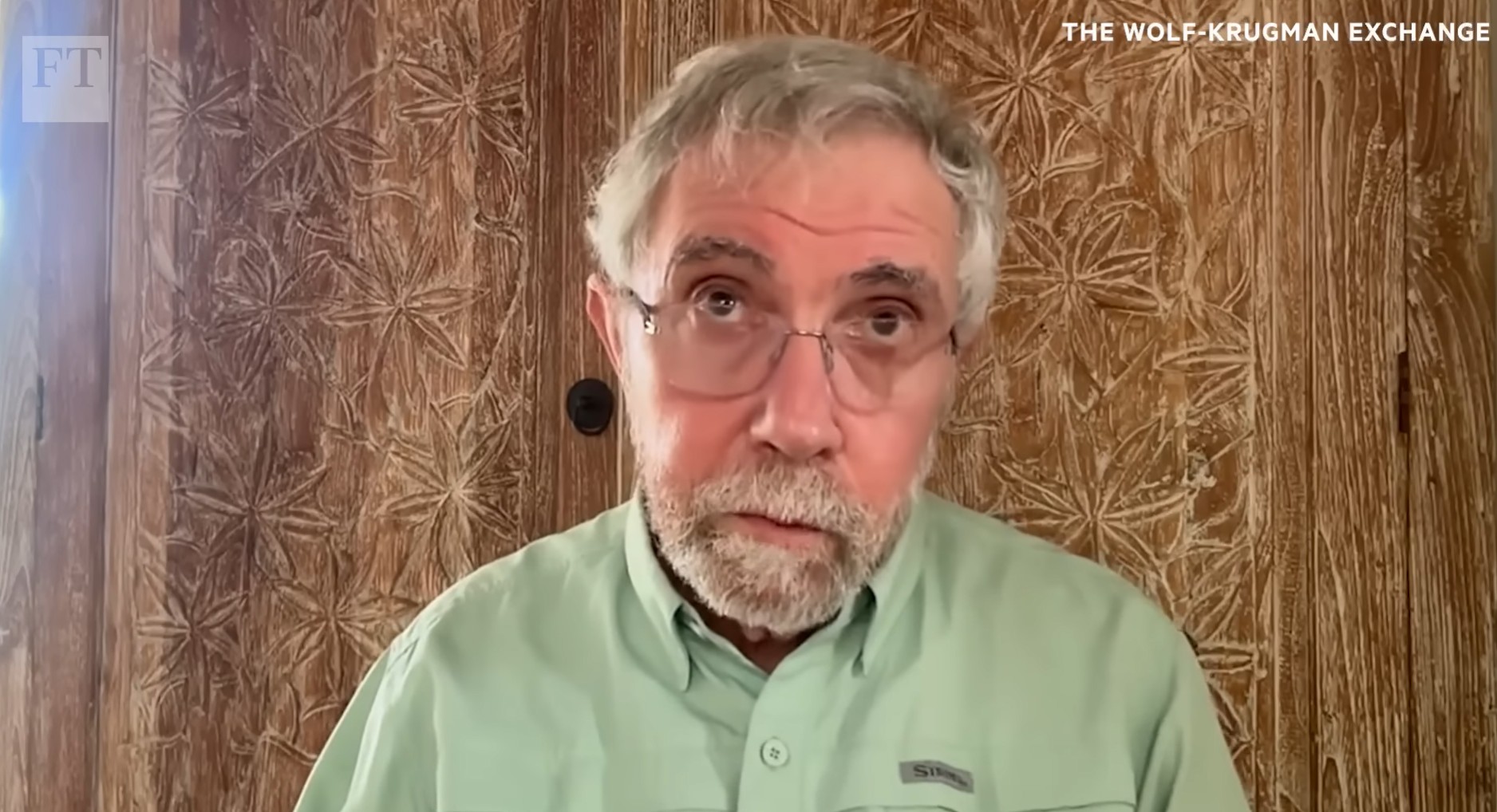
In a stark assessment of the geopolitical landscape following the release of the White House’s new National Security Strategy (NSS), leading economists Martin Wolf and Paul Krugman have warned that the United States has effectively abandoned its role as a global stabilizer, declaring its traditional European allies to be ideological enemies.
During an exchange for the Financial Times, Wolf and Krugman dissected the newly released document, describing it as a roadmap for American isolationism and a pivot toward “white supremacy” over national greatness. The strategy, they argued, signals the end of American exceptionalism and presents a profound threat to the cohesion of the Western world.
A Hostile Stance Toward Europe
Wolf, the Financial Times’ chief economics commentator, expressed disbelief at the language used in the document regarding the European continent. “I appear to be living on a continent that faces civilizational erasure,” Wolf noted, citing the text. He added that for many Europeans, the strategy suggests that “the Americans have come out… and said, ‘we are your number one enemy.’”
Paul Krugman, the Nobel Prize-winning economist, agreed, pointing out that the document explicitly states the US intends to help Europe “correct its current trajectory” by supporting “patriotic parties.” Krugman interpreted this as a clear endorsement of far-right movements, such as “Germany’s AfD.”
“It goes beyond sort of dropping the historic US commitment to liberal values… to actively opposing it,” Krugman said. He argued that the famous American ideal of being a “shining city on a hill” is “definitely not the message that we’re getting from this document.”
Ceding the Global Stage to China
The economists expressed perplexity at how the new administration is framing its rivalry with China. While the NSS acknowledges military and economic competition, Wolf observed that the US seems “quite willing to hand over the rest of the world” to Beijing, provided Washington remains the dominant power in the Americas.
Krugman suggested that the document downplays the technological and ideological struggle with China in favor of a domestic culture war. “We’re much more concerned with making sure that there aren’t too many non-white people living in Europe than we are with great power competition with China,” Krugman said.
Wolf argued that the strategy implies the US is burning its geopolitical assets. “The US had this vast alliance and lots of friends… and it’s just burnt them all,” Wolf said. He added that for China, looking at the fracturing of the West, it must feel as though “everything’s falling into their lap.”
Europe’s “Learned Helplessness”
The conversation turned to Europe’s ability to stand alone. Wolf noted that the continent suffers from “learned helplessness” resulting from decades of reliance on US security guarantees. However, both economists agreed that Europe possesses the economic and industrial capacity to achieve strategic autonomy if it can summon the political will.
“Europe remains immensely wealthy,” Krugman said, noting that Europe’s GDP is not far short of America’s and that it is the world’s largest trader. He suggested the hostility from Washington could serve as a “wake-up call” for the EU to utilize its resources, though Wolf cautioned that the transition toward autonomy could result in “very, very bumpy years.”
The Return of the Monroe Doctrine
The discussion also highlighted a regressive shift in US foreign policy toward a revived Monroe Doctrine, focusing intensely on the Western Hemisphere. Krugman described this focus as driven by “maximum cynicism,” suggesting that Latin America serves as a theatre for the administration to exercise force without the complications of broader global engagement.
“If you want to go out there and kill people, Latin Americans are kind of the targets of opportunity,” Krugman stated, questioning the existence of any “coherent geopolitical doctrine” in the strategy beyond isolationism and grievance.
A “Senile” Foreign Policy
In their concluding remarks, the economists painted a grim picture of the current state of US diplomacy. Wolf described the new foreign policy stance as “at best senile,” driven by a “very profound sense… that [the US] has been ripped off” by its allies.
Wolf summarized the document’s overarching theme as a rejection of the liberal democracies that have stood as America’s partners for nearly a century.
“It has one coherent idea,” Wolf concluded. “It hates us.”