The United States’ newly released National Security Strategy represents a definitive break from eight decades of foreign policy tradition, signaling a shift that prioritizes the Western Hemisphere and declares the post-World War II security architecture obsolete, according to a leading geopolitical analyst.
In a recent analysis for Geopolitical Futures, chairman and founder George Friedman argued that the strategy, published by the Trump administration in late 2025, is not merely a political maneuver but a rational evolution of American interests in a changed world.
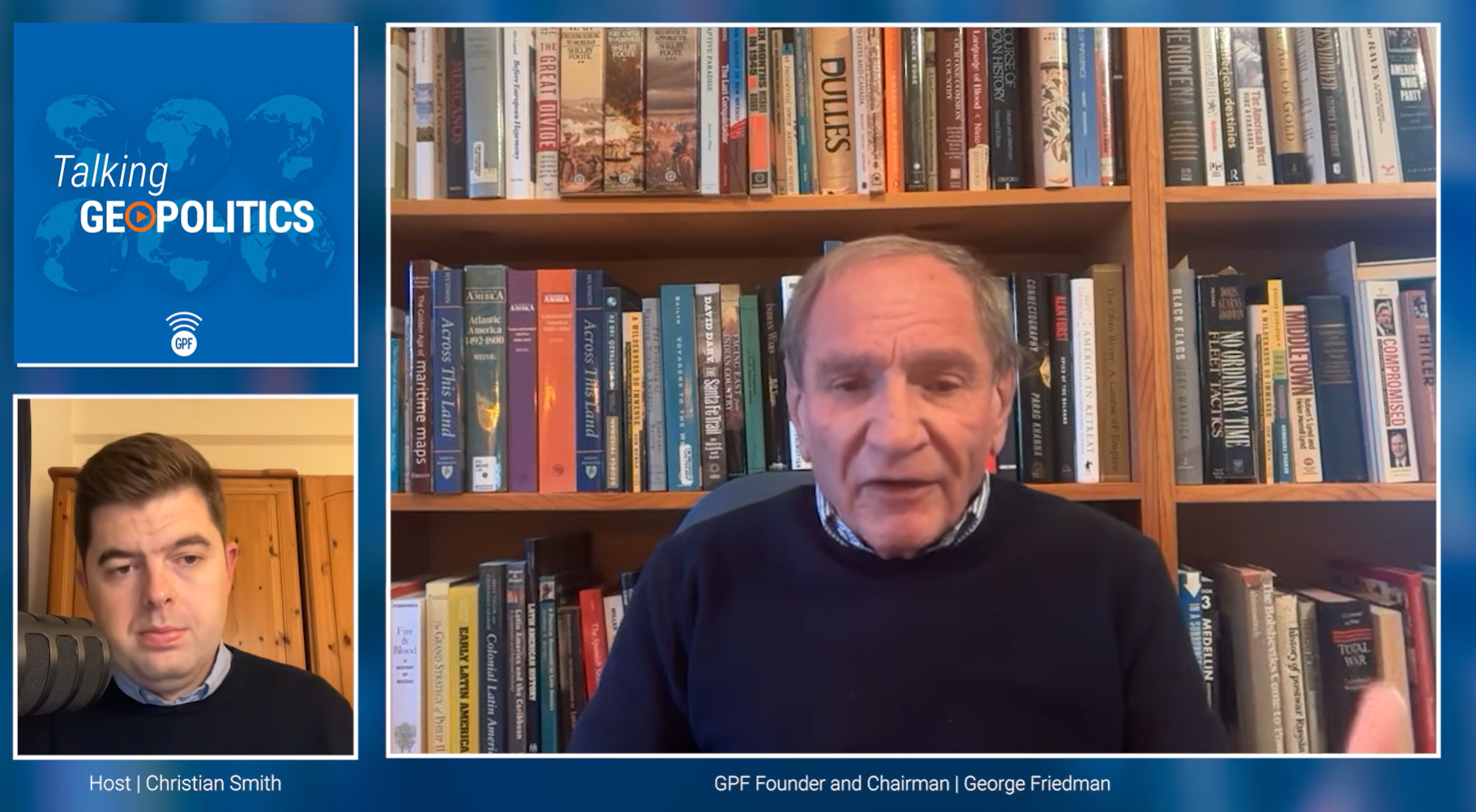
“It is both a new policy on paper, but one that has been evolving for several years,” Friedman told the Talking Geopolitics podcast. He noted that the strategy formally dismantles the Cold War framework that required the U.S. to act as the primary security guarantor for Europe and Asia to contain communism.
According to Friedman, the document codified a reality that has been evident since the invasion of Ukraine: Russia is no longer a peer competitor capable of threatening global order.
“It became self-evident that the Russians could not defeat Ukraine even after three and a half years,” Friedman said. “Therefore, the threat to Europe was minimal.”
A Pivot to the Americas
The core of the new strategy, often described as “America First,” refocuses U.S. attention on the Western Hemisphere while stepping back from endless entanglements in the East. Friedman suggests this is a return to a modernized version of the Monroe Doctrine.
“We have a fundamental interest in the Western Hemisphere and a minimal interest in the Eastern Hemisphere unless it goes berserk,” Friedman stated.
He argued that the criticism labeling the strategy as isolationist or a betrayal of alliances ignores the historical context. The U.S. became a global hegemon out of necessity to fight World War II and subsequently contain the Soviet Union—conditions that Friedman argues no longer exist.
“The United States did not enjoy the Cold War,” Friedman said. “We took national responsibility and vast numbers of Americans served in the American military at that time… But it no longer has to be done.”
The European Question
The new strategy places the burden of European defense squarely on European shoulders. Friedman pushed back against the narrative that the U.S. is abandoning its allies, pointing out that the European Union possesses a collective economy roughly the size of China’s.
“Europe can surely defend itself given its economy,” Friedman said, attributing the continent’s military reliance on Washington to a lack of political will rather than a lack of resources. “The Europeans have not yet faced this reality that they must make a choice and live with it.”
He characterized the previous arrangement as obsolete, describing Europe as a “fragmented continent” that expects the U.S. to step in due to its own internal distrust. “Europe in a way… became obsolete,” he added.
Detente with China
Perhaps the most significant deviation from recent hawkish rhetoric is the strategy’s approach to China. Friedman interpreted the document as a move toward stabilizing relations based on economic reality rather than military confrontation.
Highlighting the deep economic interdependence between the two nations, Friedman noted, “You cannot be economically dependent on a country you might be going to war with.”
He dismissed fears of an imminent invasion of Taiwan, citing the logistical impossibility of amphibious warfare for the People’s Liberation Army and China’s own precarious economic position. Instead, the strategy seeks to lower the temperature.
“The United States has no desire whatsoever to invade China,” Friedman said. He suggested that both nations are moving toward an understanding to avoid mutual destruction, noting that “China is in deep trouble economically” and relies on the U.S. market to survive.
A Rational Evolution
Ultimately, Friedman argued that the shift in U.S. strategy was inevitable, regardless of who sits in the Oval Office. He posits that the “America First” approach is standard behavior for any nation-state, comparing it to “Britain First” or any other country prioritizing its own survival and prosperity.
“The world has changed,” Friedman concluded. “Therefore, in a rational country, foreign policy changes.”