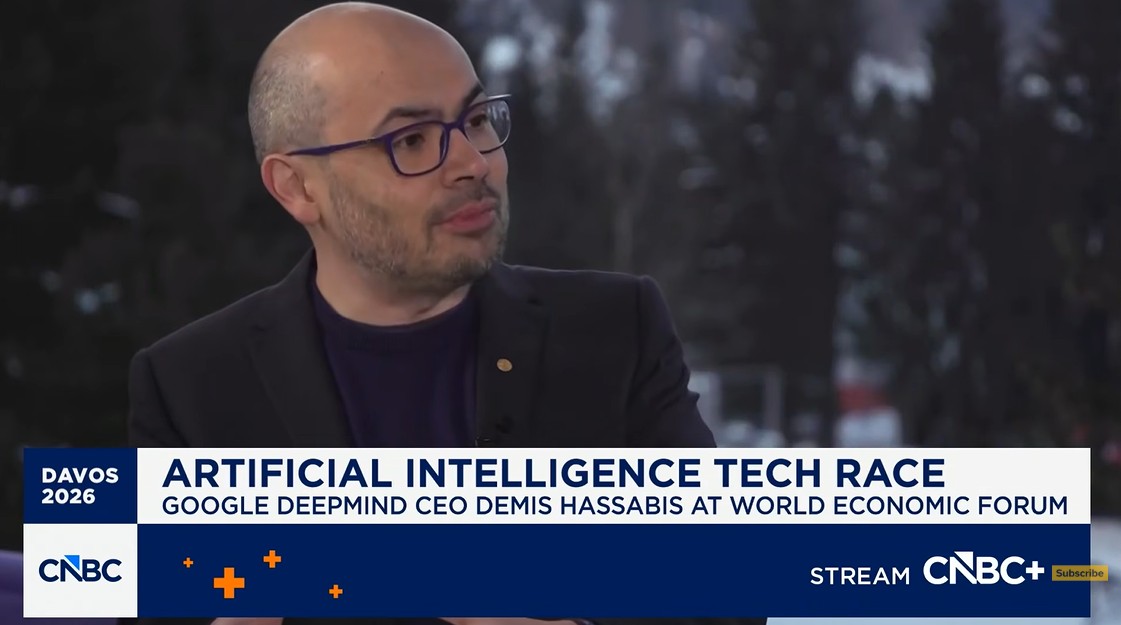
Demis Hassabis, CEO of Google DeepMind, cast doubt on the valuations of fledgling artificial intelligence companies, suggesting parts of the market have detached from reality.
Speaking to CNBC at the World Economic Forum in Davos on Friday, Hassabis argued that while the broader industry rests on solid ground, specific pockets of investment look suspicious. He pointed to startups raising billions of dollars in seed rounds before establishing a viable product or proprietary technology.
“That seems a little bit frothy to me, and perhaps unsustainable.”
— Demis Hassabis, CEO of Google DeepMind
Consolidating Google’s Strategy
The executive’s comments come as Google moves to integrate its latest model, Gemini 3, across its consumer services. Hassabis dismissed the notion that the search giant is falling behind, noting that internal restructuring has finally “corralled” the company’s disparate research assets and infrastructure into a unified engine.
Context
Google is hedging its bets on the technical path forward. Hassabis took a middle-ground stance on the industry debate between simply adding more computing power versus inventing new scientific methods to achieve human-level intelligence.
Current large language models still lack “true creativity” and long-term planning capabilities, leaving a gap that raw processing power alone might not close. Getting to full Artificial General Intelligence (AGI) will likely require “two or three new big breakthroughs,” Hassabis said.
Global Competition and Labor
He also brushed off concerns that Chinese competitors have upended the board with drastically more efficient technology. The anxiety surrounding a “DeepSeek moment”—referring to a rival model gaining traction with less computing power—was “overblown,” he said, noting that such models often rely on fine-tuning against existing Western systems rather than foundational innovation.
While Hassabis sees little evidence of broad workforce displacement yet, he acknowledged that entry-level roles and internships could soon face pressure from automated systems.
“Immerse yourself in it, become native with it, and then leapfrog the incumbent people.”
— Hassabis, advising young workers