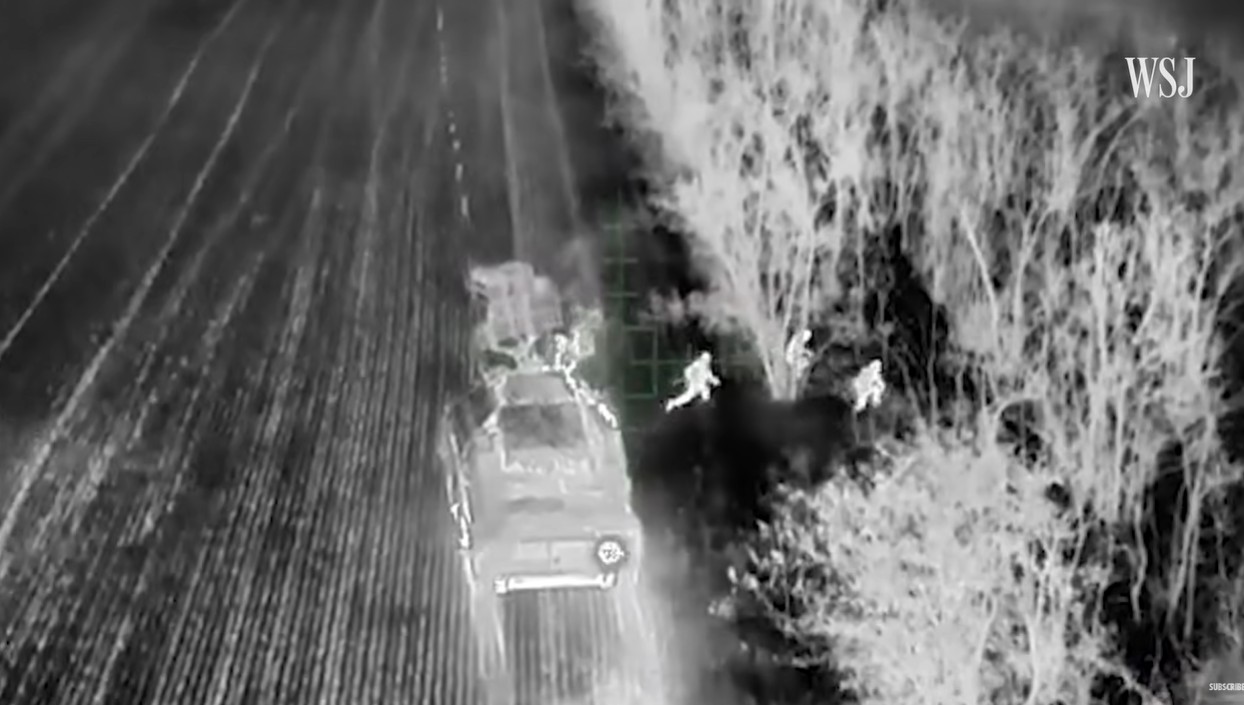
In a secret subterranean command center, the silence is broken only by the click of computer mice and the hum of cooling fans. Rows of pilots stare into monitors, guiding custom-built aircraft toward Russian armor miles away. When a target explodes on screen, there are no cheers, just the methodical logging of another destroyed asset.
Lasar’s Group has transformed the chaotic improvisation of early drone warfare into a cold, corporate assembly line of destruction.
Context
The Wall Street Journal was granted exclusive access to the unit’s operations, revealing how Ukraine has shifted from testing battlefield experiments to running an industrial-scale killing machine. For the unit’s commander, Pavlo Yelisarov, the goal was never just to be effective. It was to be scalable.
“We said to ourselves that this can’t be a small boutique restaurant. It should run like a McDonald’s.”
— Pavlo Yelisarov, Unit Commander
24,000+
Russian assets destroyed ($12.6B value)
That franchise model has produced staggering returns. According to the unit’s internal logs, the destroyed equipment ranges from tanks to supply trucks. The operation runs 24 hours a day, rotating pilots through shifts to ensure constant pressure on the front lines.
From TV Studio to Bunker
Before the full-scale invasion, Yelisarov was a prominent television producer in Kyiv, managing polished studio shows rather than artillery coordinates. The war stripped away his civilian life, leaving him with a conviction that technology had irrevocably altered the history of combat. He views the drone not merely as a tool, but as the inevitable successor to the spear, the rifle, and the tank.
His unit had to innovate because the traditional military establishment was too slow to adapt. In the early days, they operated out of a garage, strapping 120mm mortar shells to agricultural drones bought from smugglers. Today, they manufacture their own heavy bombers equipped with Starlink terminals, allowing them to fly nearly 40 miles behind enemy lines while resisting Russian jamming attempts.
The NATO Disconnect
Yelisarov is concerned that his Western allies are missing the point. While Ukraine innovates out of desperation, he sees NATO militaries resting on outdated doctrines, mistaking buzzwords for actual capability.
“There is absolutely nothing behind those words in Europe. In their Defense Ministries.”
— Pavlo Yelisarov
He warns that Europe has already lost two years of preparation time, lulled into a false sense of security while Russia ramps up its own military production. The Kremlin is learning, and its resources remain vast.
The Psychology of Remote Combat
For the soldiers inside the bunker, the philosophical implications of this new warfare are secondary to the psychological toll of remote killing. Nelia Sheliakina, the unit’s chief of staff and Yelisarov’s former television colleague, initially struggled with the guilt of hunting living beings from a leather office chair.
That hesitation has evaporated. Sheliakina notes that the human psyche adapts quickly when faced with an enemy that arrived to destroy her home. The distance provided by the screen does not make the war less real; it just clarifies the stakes.
“This is a war of robots.”
— Nelia Sheliakina, Chief of Staff