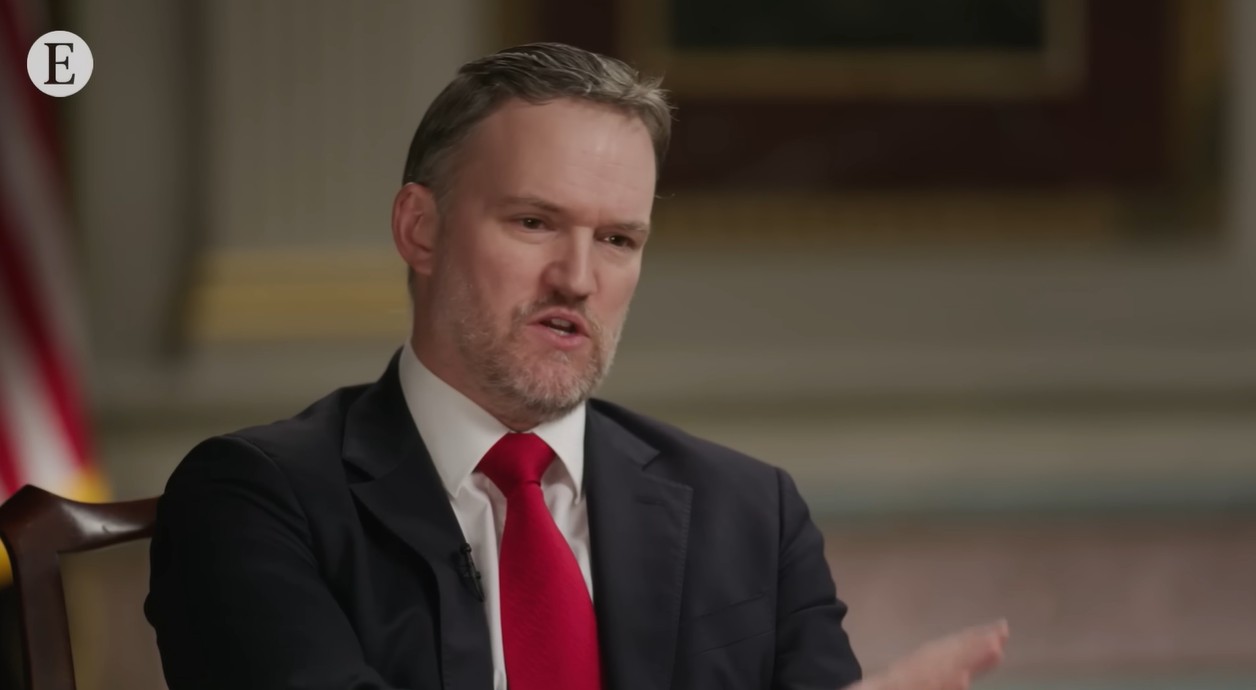
The United States Trade Representative offered a blunt message to foreign allies distressed over the administration’s aggressive protectionism: Get used to it.
In an interview with The Economist released Wednesday, Jamieson Greer defended the White House’s expansion of tariffs one year into Donald Trump’s second term. The discussion highlighted a fundamental shift in Washington, where economic levies are no longer just tools for balancing ledgers but weapons used to enforce political will on issues ranging from border security to narcotics control.
Tariffs as Geopolitical Leverage
Greer dismissed the “pearl-clutching” among international observers regarding the use of tariffs as geopolitical leverage. He argued that the United States has long used financial sanctions to punish foreign actors for human rights abuses or conflict, effectively cutting them off from the global financial system. Imposing a fee on goods, he suggested, is a comparatively moderate exercise of authority.
Context
The administration views adherence to older trade frameworks, such as World Trade Organization rules, as optional if they conflict with domestic interests. Greer described strict compliance with agreements that facilitate the offshoring of American industry as a “suicide pact.”
“That is a recipe for losing your sovereignty.”
— Jamieson Greer, US Trade Representative
Domestic Politics Over Diplomacy
David Rennie, The Economist’s geopolitics editor, pressed Greer on the emotional toll this shift has taken on traditional security partners. Rennie noted that officials in friendly capitals are not merely angry but “heartbroken,” viewing the tariffs as a betrayal by a longtime ally. He suggested that foreign powers now see the uncertainty generated by the White House—and the fear it instills—as the primary point of the policy.
Greer remained unmoved by appeals to diplomatic sentiment. He countered by questioning where international sympathy was when American factories closed and moved to Vietnam or Mexico, or when fentanyl flooded US communities. For this White House, trade is no longer foreign policy; it is purely domestic politics.
“I’m not super worried about the feelings of people overseas. I’m worried about the families torn apart in middle America because they’ve lost a factory that’s the anchor of a community.”
— Jamieson Greer
The Trade Representative maintained that the meetings between President Trump and world leaders remain “quite gracious,” despite the economic hostilities. But he acknowledged that the era of open access is over. Leverage, not historical friendship, now dictates the terms of engagement. “No one has a right to the US market,” Greer said. “Nobody does.”