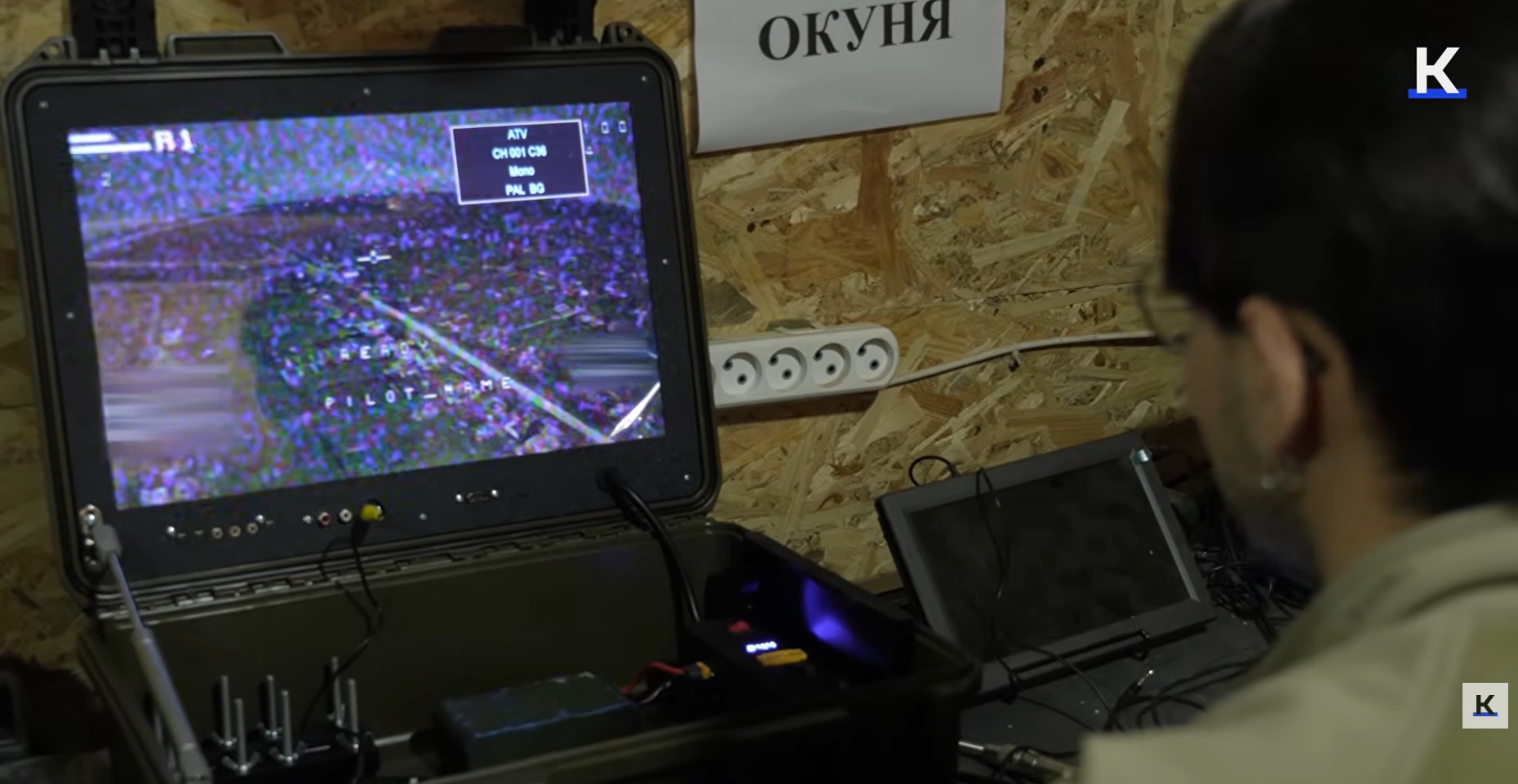
For over three years, the Dnipro River has sliced Ukraine in half, serving as a natural barrier between free territory and the Russian-occupied south. While the eastern front grabs headlines with rapid movements and tactical retreats, the water war in Kherson Oblast has settled into a deadly, static rhythm defined by technology and patience.
A recent report by The Kyiv Independent provides a rare look inside this amphibious battlefield, where the fight is determined as much by signal frequencies as by artillery.
The Electronic Battlefield
For drone pilots transferring from the intense urban combat of the east, the river demands a total psychological shift. Artem, a sapper known by the callsign “Piskar,” described the tactical difference. In the Donbas, survival relies on speed and reaction time. Here, amidst the reeds and vast open water, the work resembles fishing. Operators must wait, watch, and gather intelligence before striking.
But the Russians have had years to fortify the opposite bank. They have filled the occupied territory with electronic warfare (EW) systems, creating an invisible wall of interference that complicates every flight.
“Russian forces monitor frequencies and activate powerful jammers—sometimes dubbed ‘Zhuzha’—to wipe out video feeds the moment a Ukrainian drone crosses the water. A mission often ends in static before a target is even identified.”
— Oleh “Makitra”, Ukrainian drone pilot
Every lost drone provides data for the next attempt, but the learning curve is steep and expensive.
Fighting in the Reeds
The physical reality of the river islands is just as unforgiving as the electronic one. Soldiers from the 40th Coastal Defense Brigade train to fight in a landscape where earth turns to water. Conventional infantry tactics do not apply here.
“Digging trenches is impossible; one shovelful of dirt reveals the water table. Infantry must fight from shallow ‘beds’ in the reeds, exposed to the sky and the damp.”
— “Hard”, serviceman from 40th Coastal Defense Brigade
Movement is lethal. Small rubber boats are vulnerable to strikes from above, making troop rotations and supply runs dangerous. To mitigate the risk, units have reduced the frequency of human rotations, leaving men on the islands for longer stretches.
Context
Logistics now fall to the “Pegasus,” a heavy bomber drone the Russians fearfully call “Baba Yaga.” While often used for dropping explosives, these machines have taken on a humanitarian role. Under the cover of darkness, teams use the heavy-lift drones to ferry crates of water, food, and ammunition to the stranded infantry in the gray zone.
In this war, the river is no longer a lifeline, but a kill box where technology decides who survives.
No Room for Negotiations
The disconnect between international politics and the frontline reality remains sharp. Yevhen, a pilot going by “Azart,” dismissed recent Western discussions of ceasefires and land concessions. Having lost his friend Mykola during a botched amphibious landing where their boat was hit by two assaults, he views such proposals with deep skepticism.
“The version developed today, together with the EU, works so well for us that Russia won’t accept it. There are no negotiations here.”
— Yevhen “Azart”, Ukrainian pilot
He argued that Western powers possess the resources to force a Russian retreat through strength, yet the war drags on.
Kherson itself bears the scars of this stalemate. Liberated three years ago, the city stands battered by constant shelling and drone attacks from across the water. Its central square, once the site of jubilation following the Russian retreat, is now a desolate danger zone, destroyed by the very river that once brought it life.