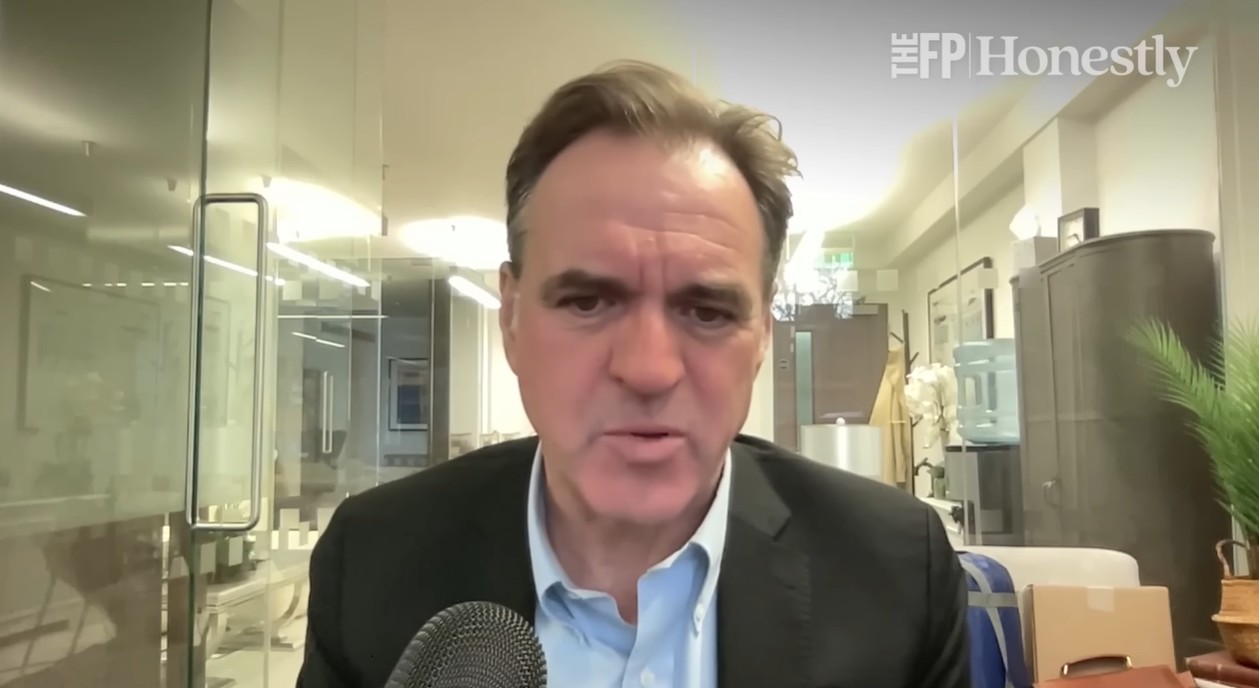
As 2025 draws to a close—a year marked by strikes on Iranian nuclear sites and a fragile ceasefire in Gaza—historian Niall Ferguson delivers a sobering forecast for 2026. In a comprehensive interview with The Free Press, Ferguson argued that the globe remains firmly entrenched in “Cold War II,” a geopolitical framework ensuring stability will remain elusive in the year ahead.
Speaking with hosts Bari Weiss and Olly Wiseman, Ferguson described the current era as a contest between two superpowers, the United States and China, reminiscent of Soviet-American tensions of the 20th century. While noting that President Donald Trump, now in his second term, “sincerely wants to try to end conflicts,” the historian warned of the inertia of modern warfare.
“It’s much easier to start a war… than it is to end one. And that’s one of the lessons of 2025.”
— Niall Ferguson, historian
The War in Ukraine Grinds On
Regarding the war in Ukraine, now approaching its fourth anniversary, Ferguson offered a grim assessment. Despite speculation about potential peace deals, he believes Russian President Vladimir Putin has little incentive to settle for a compromise that leaves a sovereign Ukraine intact and aligned with the West.
30%
Probability of ceasefire in 2026, according to Ferguson
According to Ferguson, the conflict has devolved into a war of attrition where the Kremlin is willing to absorb massive casualties.
“Putin can just play to win. He can just grind out this victory, even if the casualties on the Russian side go to a million, because he’s Putin.”
— Niall Ferguson
Conversely, while Ukrainian President Volodymyr Zelensky faces a fatigued population, a peace deal that cedes too much territory could leave him “politically vulnerable.”
A “Kind of Peace” in the Middle East
Ferguson acknowledged that U.S. diplomacy achieved a “meaningful success” in 2025 regarding the release of hostages in Gaza, but cautioned against viewing the region as stabilized. He described the current situation as “a kind of peace,” noting that Hamas is “still there” in a rump state, and Israel continues to face threats on multiple fronts.
Context
While Iran suffered setbacks in 2025, including damage to its nuclear facilities, the regime is already looking to recover. “Iran is beginning to rebuild its seriously damaged nuclear capabilities,” Ferguson observed, presenting the U.S. and Israel with the strategic dilemma of whether to strike again or allow the regime to reconstitute.
Summitry Over Invasion in Asia
On the critical issue of Taiwan, Ferguson pushed back against fears of an imminent invasion. He predicted that China will not launch a military takeover in 2026 or 2027, arguing that the People’s Liberation Army is not yet ready for such a complex operation.
Instead, Ferguson anticipates a year of “summitry” between President Trump and Chinese President Xi Jinping. He framed the U.S.-China relationship as the central axis of “Cold War II,” characterized by economic warfare rather than direct military engagement.
“It’s going to be a year of summitry, not of invasions or blockades.”
— Niall Ferguson
He highlighted that the contest will likely play out in trade negotiations involving semiconductors and export controls, noting that China holds a “trump card” in its monopoly on rare earth elements.
The “Return of the Pogrom”
Perhaps Ferguson’s starkest warning concerned a domestic and social trend rather than a military one. He pointed to the global rise in violent antisemitism as a defining and dangerous characteristic of the 2020s.
Citing violent incidents in 2025 ranging from the UK to Australia, Ferguson described the phenomenon as “the return of the pogrom.” He criticized Western societies for failing to check the spread of this “toxic ideological substance,” warning that history shows such hatreds rarely remain contained.
“If you don’t condemn it, if you don’t drive it out of the pale of political respectability, then like some ghastly cancer, it will spread until it poses a truly mortal threat.”
— Niall Ferguson