Diplomatic relations between Japan and China appear to have reached their lowest point in over a decade, characterized by furious rhetoric, economic retaliation, and dangerous military encounters. The escalation follows controversial remarks by Japan’s new Prime Minister, Sanae Takaichi, regarding the potential for Japanese involvement in a Taiwan conflict.
The diplomatic standoff began last month after Prime Minister Takaichi addressed a parliamentary inquiry regarding a hypothetical Chinese naval blockade of Taiwan. Takaichi suggested that such a blockade could legally trigger Japan’s collective self-defense mechanisms.
“If it involves the use of warships and the exercise of military force, then by any reasonable standard, I believe it could constitute a ‘survival-threatening situation,’” Takaichi said.
Beijing views Taiwan as a renegade province and a core sovereignty issue, making the Japanese leader’s comments particularly incendiary. The backlash from the Chinese government was immediate, ranging from diplomatic condemnation to military aggression.
Earlier this week, tensions took a physical turn when Chinese fighter jets reportedly locked fire-control radar onto Japanese aircraft in the airspace above the Okinawa islands—a move that typically indicates a weapon system is tracking a target. Additionally, China has issued travel warnings citing safety risks, resulting in hundreds of thousands of Chinese travelers canceling flights to Japan.
In a press briefing, the Chinese Ministry of Foreign Affairs evoked memories of World War II to condemn Tokyo’s defense policies. “Japan’s attempt to remilitarize itself through accelerated military build-up will only make the world once again question where Japan is headed,” a spokesperson stated.
The diplomatic vitriol has also played out on social media. In a since-deleted post, China’s Consul General in Osaka used violent imagery, threatening to “cut off that dirty neck,” a comment widely interpreted as being directed at Prime Minister Takaichi.
“Tip of the Iceberg”
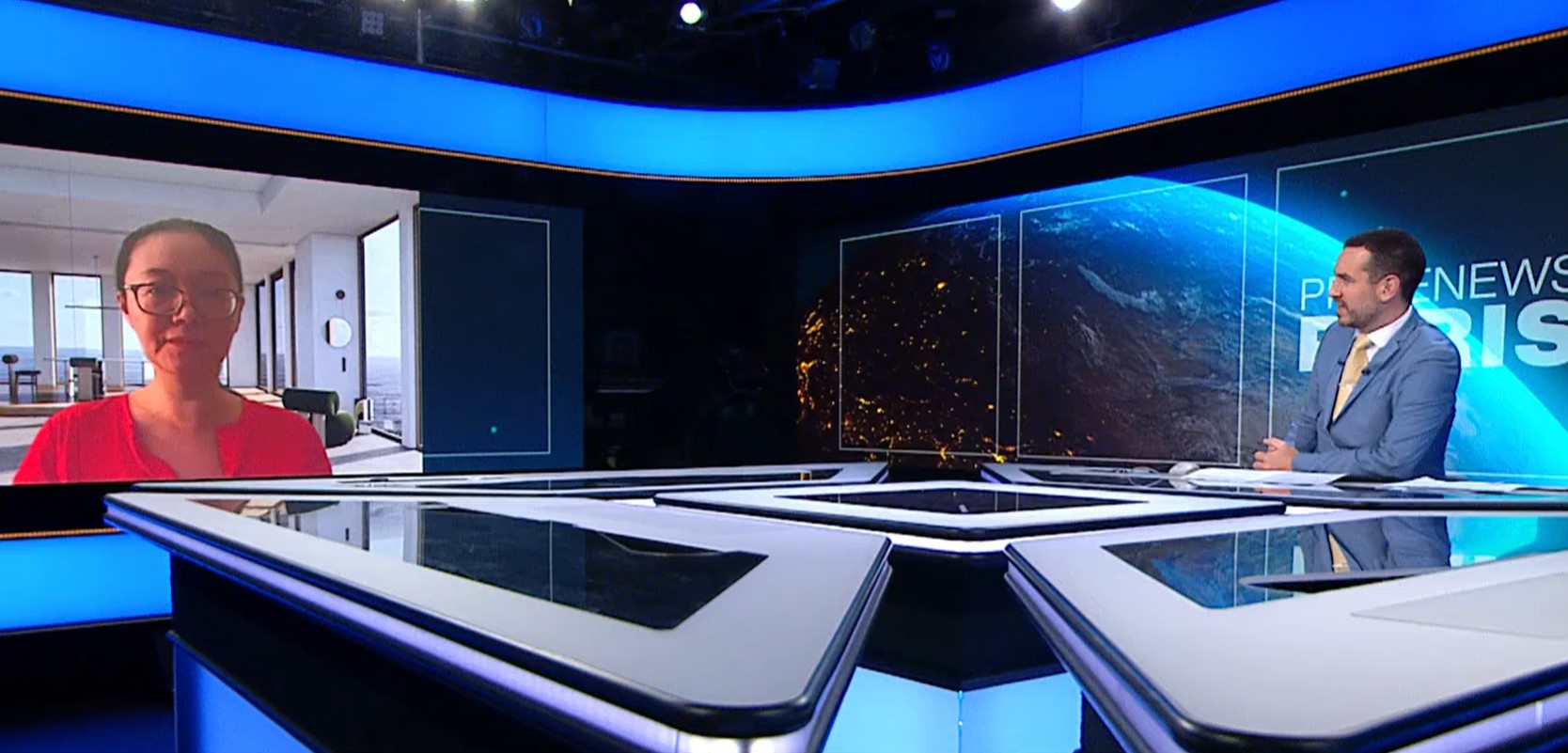
Speaking to France 24, Bonny Lin, a Senior Adviser at the Center for Strategic and International Studies (CSIS), warned that this dispute is fundamentally more dangerous than previous rows over the Senkaku Islands because Taiwan is of paramount importance to the Chinese Communist Party.
“What we’re seeing so far in terms of Chinese escalation… is probably only just the tip of the iceberg if China wants to escalate more,” Lin said.
Lin highlighted a disturbing development in Chinese messaging: the Chinese embassy in Japan has begun referencing the “UN enemy clause,” arguing that Japan’s status as a defeated nation in World War II could strip it of certain protections.
According to Lin, experts interpret this legal maneuvering to mean that “China is politically setting the stage to potentially use military force if it wanted to.”
Despite the economic and military pressure, Prime Minister Takaichi has not retracted her comments. Lin noted that while Takaichi’s original statement was technically nuanced and conditional, Beijing is demanding nothing short of a full withdrawal of the remarks.
“From the Chinese perspective, they want her to retract the comment; anything less than that is not possible,” Lin explained, adding that Beijing views silence or clarification as “strategic deception.”
With neither side willing to back down, analysts fear the window for diplomatic de-escalation is closing. “I see quite a bit of escalation ahead,” Lin concluded.