As the world looks toward 2026, a new video analysis by The Economist forecasts a year defined by intensifying military competition in orbit, the politicization of central banks, and a radical experiment in human biology. Looming over these global shifts is the presidency of Donald Trump, described in the report as “the biggest factor influencing the coming year.”
According to The Economist’s “The World Ahead 2026,” the next twelve months will test the resilience of international treaties, economic independence, and the very definition of human limits.
The Militarization of the Heavens
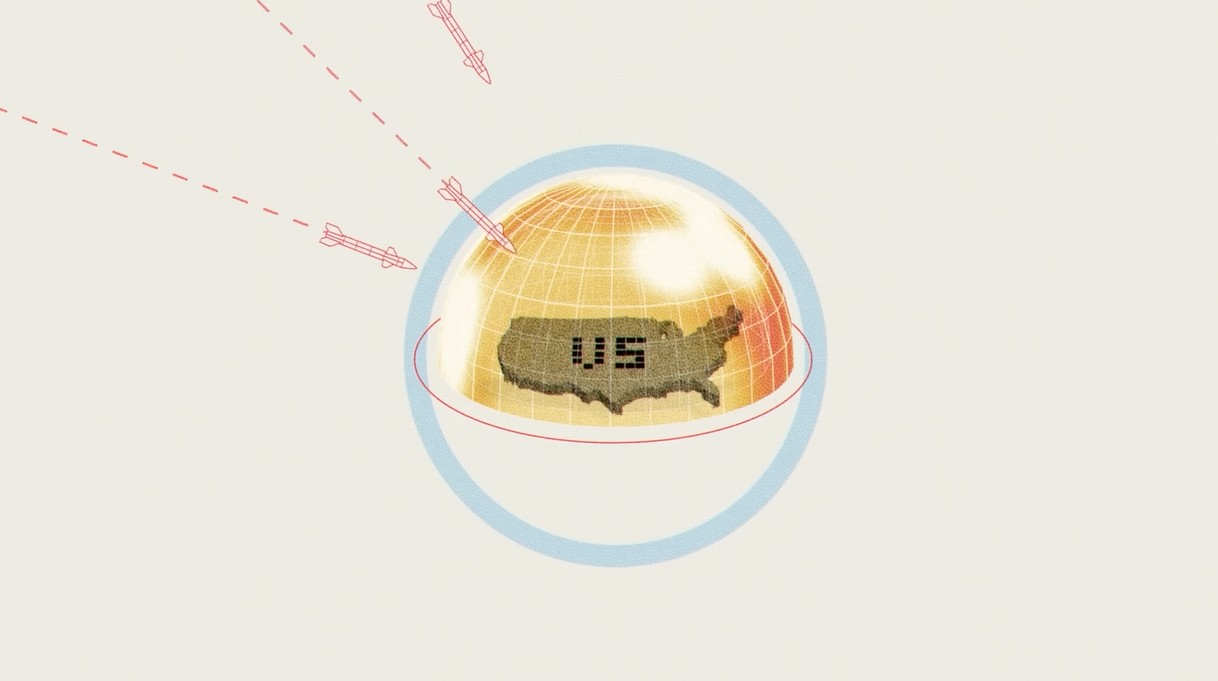
The analysis highlights a sharp escalation in space-based military posturing. The Trump administration has requested a 40% budget increase for the US Space Force for the fiscal year 2026, aimed at constructing a “Golden Dome” missile defense shield.
“We do need capabilities that protect us against the space-enabled attack of others,” states General Stephen Whiting, Commander of the US Space Command, in the report.
While the shield is ostensibly designed to intercept enemy missiles during takeoff, The Economist notes that the technology could theoretically target enemy satellites. This arms race is accelerating globally, with France recently conducting close-proximity satellite operations and China increasing its launch activity eightfold since 2015.
Perhaps most alarming is the report’s assessment of Russian ambitions. Experts fear Moscow may be developing a space-based nuclear weapon capable of destroying vast satellite networks in low-earth orbit—a move that would violate the 1967 Outer Space Treaty. In this precarious environment, the report suggests SpaceX’s Starship could become a critical military asset, offering the US the ability to rapidly replenish destroyed satellites in the event of orbital conflict.
Central Banks Under Siege
On the economic front, 2026 marks the end of Federal Reserve Chair Jerome Powell’s term in May, opening the door for a clash between monetary policy and political will. The report warns that central bank independence is under threat across the rich world, drawing parallels to the 1970s when Richard Nixon pressured the Fed to keep rates low, triggering rampant inflation.
President Trump has made his dissatisfaction with the current leadership clear. “I call him too late,” Trump is quoted as saying regarding Powell. “He should have cut interest rates a long time ago.”
This pressure is not unique to Washington. The report details similar political encroachments in Japan, France, and the UK, where populist leaders are increasingly viewing central banks as tools to fund political agendas rather than independent guardians of economic stability.
The Rise of ‘Superhuman’ Sports
In a stark cultural shift, May 2026 will see Las Vegas host the “Enhanced Games,” a sporting event that explicitly encourages the use of performance-enhancing drugs. Backed by venture capitalists including Peter Thiel, the event challenges the ethos of the Olympics by embracing bio-hacking and medical intervention to shatter world records.
“We want you to be able to change your heart, and change your mind, and change your whole body,” Thiel says in the video.
Organizers are offering substantial financial incentives, including a $1 million prize for athletes who break world records in events like the 100-meter sprint. While the World Anti-Doping Agency (WADA) has condemned the event as dangerous, the report suggests this represents a broader trend toward the “pharmaceuticalization” of daily life and the pursuit of “superhumanity.”
A Divided Anniversary
Finally, the report turns to the commemoration of America’s 250th birthday. What should be a unifying national celebration has fractured into a partisan battle over history.
Two rival commissions are planning the festivities: the congressionally created “America 250” commission, which emphasizes diverse storytelling, and the Trump-led “Task Force 250,” which focuses on “The Patriot Games” and a rejection of modern progressive narratives.
“Our country will be woke no longer,” President Trump declares in a clip featured in the report.
As The Economist concludes, the semiquincentennial in 2026 will likely serve less as a celebration of a shared past and more as a reflection of the “divided state America is in,” with history itself becoming a battleground for the country’s future.