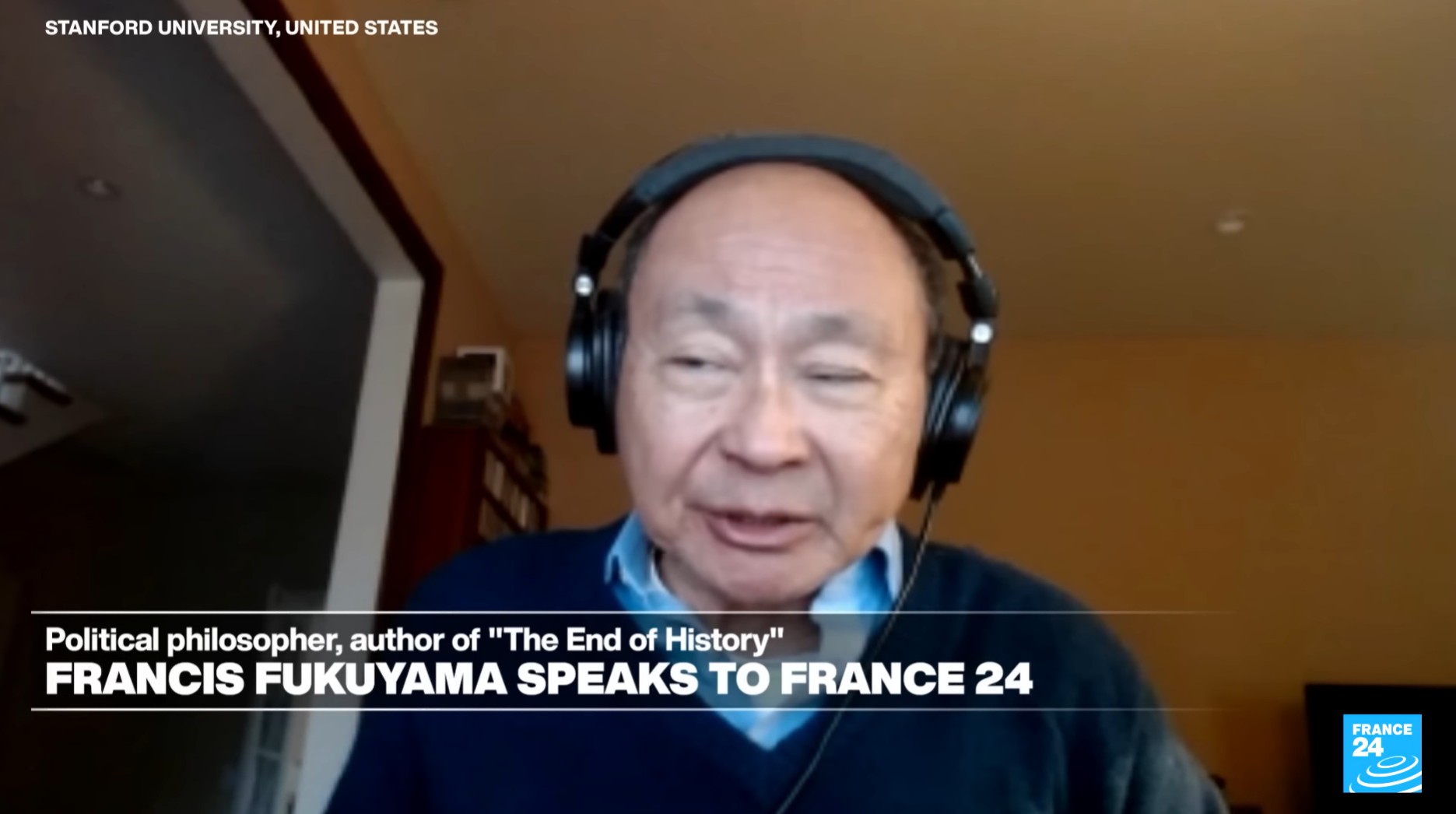
In a candid interview with FRANCE 24, political philosopher Francis Fukuyama offered a stark assessment of the current state of global politics, labeling the return of Donald Trump to the U.S. presidency as “the most surprising and the most disappointing thing that’s happened” since the publication of his seminal work.
Fukuyama, a senior fellow at Stanford University, is best known for his 1992 book The End of History and the Last Man, which argued that the end of the Cold War marked the triumph of liberal democracy. Speaking from California with FRANCE 24’s Marc Perelman, Fukuyama acknowledged that the global trajectory has shifted significantly since the early 90s, noting that the world has been in a “democratic recession” for nearly two years.
However, the philosopher reserved his sharpest criticism for the political climate in the United States. When asked about the challenges to democracy from within, specifically regarding Donald Trump’s re-election, Fukuyama did not mince words.
“He’s clearly a leader with authoritarian instincts,” Fukuyama stated. “He doesn’t like respecting the rule of law.”
Fukuyama expressed profound concern over the shifts in American foreign policy under Trump’s second mandate, particularly regarding the war in Ukraine. He argued that the U.S. President has effectively “switched sides” in the global struggle between democracy and authoritarianism.
“He is in the process of trying to cut an extremely shameful deal with Russia over Ukraine,” Fukuyama told FRANCE 24, calling it an “abandonment of the traditional American role as the leading democratic power in the world.”
Beyond geopolitics, Fukuyama pointed to domestic governance issues, citing what he described as unprecedented conflicts of interest involving the President’s family and cabinet. “The corruption in his administration is just off the charts in terms of earlier American presidents,” he noted, adding that such behavior “erodes confidence in democratic institutions.”
The interview also touched upon the erratic nature of the administration’s diplomacy. Fukuyama cited the deterioration of relations with India as an example of policy driven by “personal vanity” rather than strategy, alleging that Trump damaged a decades-long strategic partnership because Prime Minister Narendra Modi “wouldn’t support his bid for a Nobel Peace Prize.”
Despite the gloomy outlook, Fukuyama maintained that the “arc of history” has not necessarily broken, but rather stalled. He emphasized the resilience inherent in democratic systems, pointing to recent polling data and election results as evidence that the American public may be tiring of the “chaos and inconsistency.”
“The good thing about a democracy is it can self-correct,” Fukuyama concluded. “I think we can already see the peak of Trump’s power and a slow decline that in the end may undermine this whole authoritarian tendency of his.”