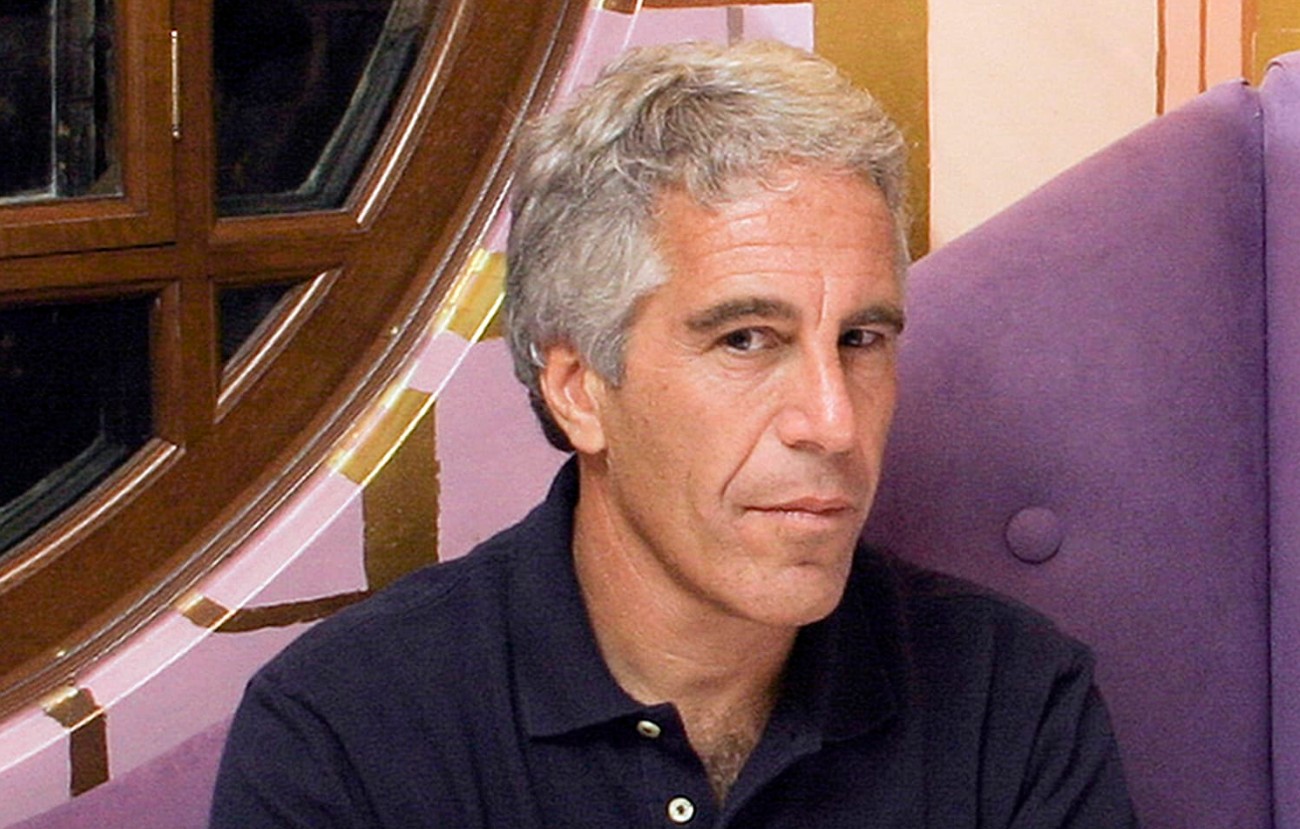
Following a highly anticipated release of Department of Justice files related to sex offender Jeffrey Epstein on Friday, a new investigation is shedding light on the “black box” of Epstein’s early years, revealing a pattern of deception and theft that long predated his notorious sex trafficking crimes.
While the newly released government documents—authorized by President Donald Trump following a pressure campaign—offered only “incremental color” regarding Epstein’s later criminal network, reporting detailed on Tuesday’s episode of The New York Times podcast The Daily exposes how Epstein transformed from a working-class college dropout into a financial power player.
According to David Enrich, an investigations editor at The New York Times, the central revelation of Epstein’s rise is not one of financial genius or intelligence asset work, as conspiracy theories have long suggested. Instead, the reporting indicates Epstein was an “extremely successful con man” who learned early on that he could operate outside the rules.
“He stole, he deceived, he manipulated,” Enrich said. “And he learned over and over again that he could do so basically with impunity.”
The Rise of a “PSD”
The investigation traces Epstein’s ascent to 1976, when he was a teacher at the Dalton School in Manhattan. Through a chance encounter at an art gallery, Epstein met Ace Greenberg, a top executive at Bear Stearns. Greenberg, known for hiring what he called “PSDs”—people who were “poor, smart and deeply desirous of being rich”—was impressed by Epstein’s charisma and apparent mathematical skill.
Epstein quickly climbed the ranks at the investment bank, despite lying on his resume about having a college degree. When caught in this lie by a superior, Michael Tennenbaum, Epstein admitted to the falsehood with disarming honesty, claiming he lied only to get a foot in the door. Tennenbaum gave him a second chance, a moment Enrich describes as a pivotal lesson for Epstein.
“He cheated and lied at Bear Stearns and essentially got away with it,” Enrich noted.
Financial Bounty Hunter and Fraudster
The reporting details blatant financial misconduct during the 1980s. In one instance, Epstein convinced a video game executive, Michael Strohl, to invest approximately $450,000—roughly 10 percent of Strohl’s net worth—into a non-existent oil deal. When Strohl demanded returns, Epstein reportedly sent him a pint of crude oil as “proof,” though the money was gone.
Epstein later rebranded himself as a “financial bounty hunter,” helping wealthy families recover lost assets. The investigation uncovered that Epstein helped recover millions for the family of a girlfriend in the Cayman Islands, only to pocket a massive portion of the recovered funds for himself.
Using Women as Currency
The investigation suggests that Epstein’s exploitation of women began as a corporate climbing strategy long before it evolved into the criminal sex trafficking ring for which he was arrested. At Bear Stearns, Epstein reportedly utilized his romantic relationship with Greenberg’s daughter to secure “protected status” at the firm.
Later, he used an attractive young assistant, Patricia Schmidt, to court clients and superiors, arranging meetings at his apartment swimming pool. Schmidt, who spoke to the Times, described herself as Epstein’s “plaything” and a tool for his ambition.
“Epstein had discovered that he could use attractive young women as a potent form of currency as he sought to impress and cultivate relationships with rich and powerful people whom he wanted to do business with,” Enrich said.
The Trump Connection
The release of the DOJ files has reignited questions regarding Epstein’s relationship with President Trump. The documents confirm widely held knowledge that Trump appeared on flight logs for Epstein’s private jet eight times between 1993 and 1996.
While the files released Friday contained no evidence of criminal wrongdoing by the President, the relationship between the two men during the 1980s and 90s was described as competitive and close. Enrich noted that investigations have characterized the two men as “wingmen” who operated in the same social circles, competing for the attention of young women.
Despite the release of some files, the Trump administration has drawn criticism for releasing heavily redacted documents and withholding others.
“It is not clear to me that federal investigators were doing a whole lot of investigating into the men with whom Epstein was associated,” Enrich said, referring to the lack of accountability for the powerful figures in Epstein’s orbit.
Ultimately, the investigation paints a portrait of a man who was emboldened by a system that rewarded his deceit.
“The message there is very clear,” Enrich concluded. “If you lie and cheat well enough and often enough, and are sufficiently manipulative, you can make a real living doing this.”