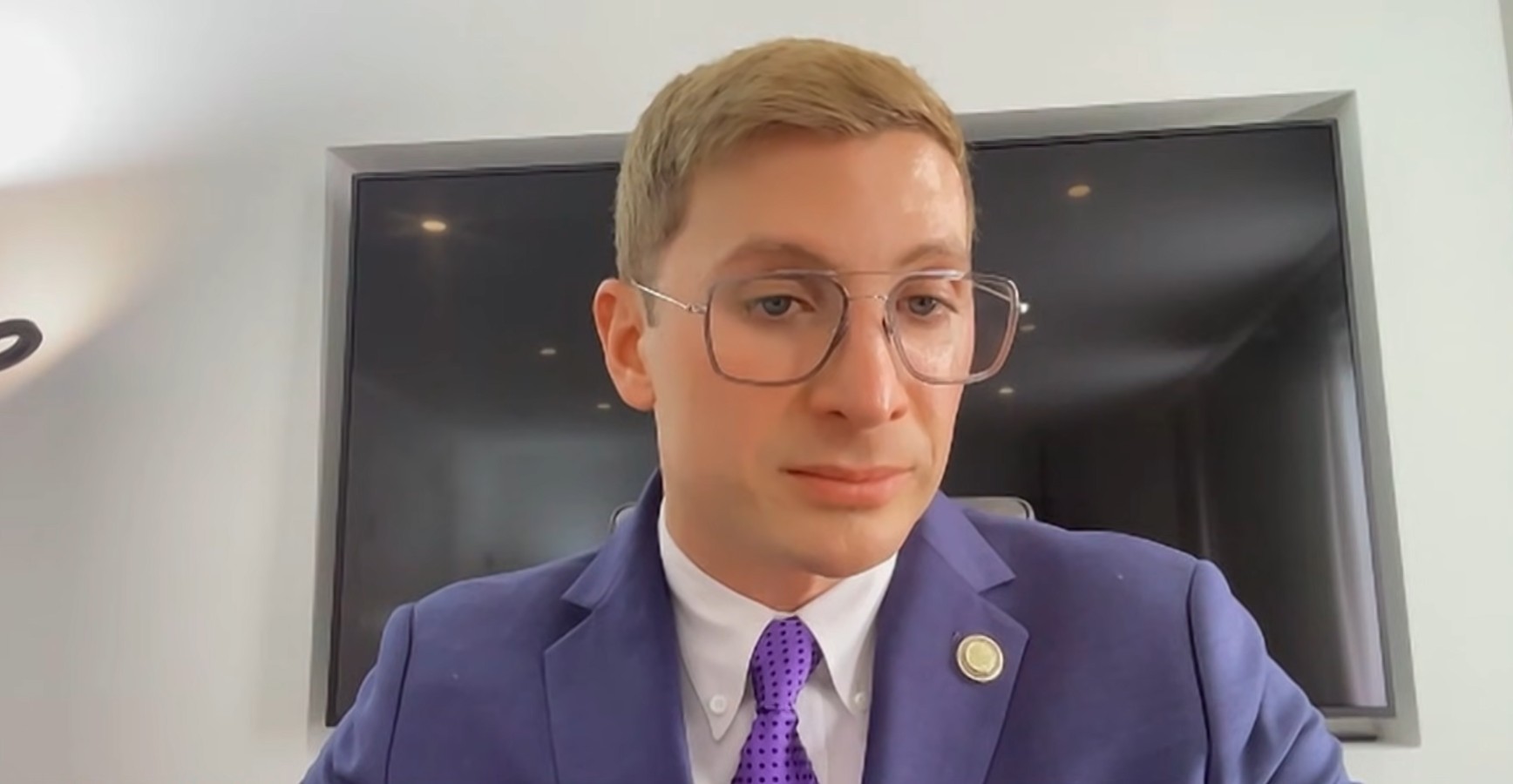
The United States is accelerating its efforts to decouple its artificial intelligence and semiconductor supply chains from China, a strategy Under Secretary of State Jacob Helberg described as a shift toward “Pax Silica.”
In a wide-ranging interview on “Bloomberg Tech,” Helberg outlined an aggressive economic security strategy that prioritizes “reindustrializing America” and deepening alliances with nations such as South Korea, Japan, and Australia. The initiative comes as the administration seeks to insulate the U.S. military and commercial sectors from geopolitical shocks, specifically regarding critical minerals and silicon.
Speaking to anchor Caroline Hyde, Helberg characterized the current geopolitical landscape as one where “economic security is national security, and economic policy is downstream of national security.”
The ‘Pax Silica’ Initiative
At the center of the State Department’s strategy is “Pax Silica,” a framework designed to secure the materials necessary for the industries of the future. Helberg highlighted a recent deal with Korea Zinc to establish a refining facility in Clarksville, Tennessee, as a “major milestone” in this effort.
“Pax Silica provides the framework that allows us to work with our allies and partners to make sure that we can secure our supply chains in order to lead in the industries of the future,” Helberg said. He noted that the initiative aims to leverage the unique competitive advantages of allies including the United Kingdom, Singapore, and Israel.
Defending State Intervention
When pressed by Hyde on whether the U.S. government taking equity stakes in private mineral companies—such as MP Materials and Vulcan Elements—contradicted free-market capitalist principles, Helberg offered a staunch defense rooted in constitutional obligation.
“It is in the preamble of our Constitution that it is a fundamental purpose of the US government to provide for the common defense,” Helberg stated. Referring repeatedly to the Pentagon by its historical moniker, the “Department of War,” Helberg argued that military readiness requires a reliable industrial base.
“The Department of War needs weapons… In order to get the weapons that it needs, it needs to be able to have an ecosystem of suppliers that are reliable in times of peace as well as in times of war,” he said.
Tensions with Europe
The interview also touched on the friction between Washington and Brussels regarding the aggressive nature of U.S. industrial policy. While acknowledging that the Netherlands, home to chip-equipment giant ASML, participated in the inaugural Pax Silica summit, Helberg delivered a sharp critique of the broader European regulatory environment.
Responding to European concerns that the U.S. strategy might threaten their economic model, Helberg described the situation as a “diagnosis” rather than an insult.
“Europe fundamentally has a choice between the loss of identity, the loss of industry, and the loss of borders, or they can choose regulatory simplification, energy abundance, and fair and reciprocal trade,” Helberg told Bloomberg. He contrasted the U.S. approach with what he termed Europe’s “managed decline” and “bureaucratic paralysis,” though he noted a “growing economic security consensus” forming across the Atlantic.
The AI Race and China
Despite the push for decoupling in critical sectors, Helberg maintained that the U.S. seeks a “constructive, stable, and positive relationship” with Beijing, provided it does not compromise American leadership.
Helberg emphasized that the administration is pursuing a “two-track approach” to artificial intelligence: expanding domestic compute capacity and exporting American technology to ensure global developers build on the U.S. stack.
“We want to win the AI race because we want to put America first,” Helberg said. “We are never going to apologize or back down from defending American interests.”