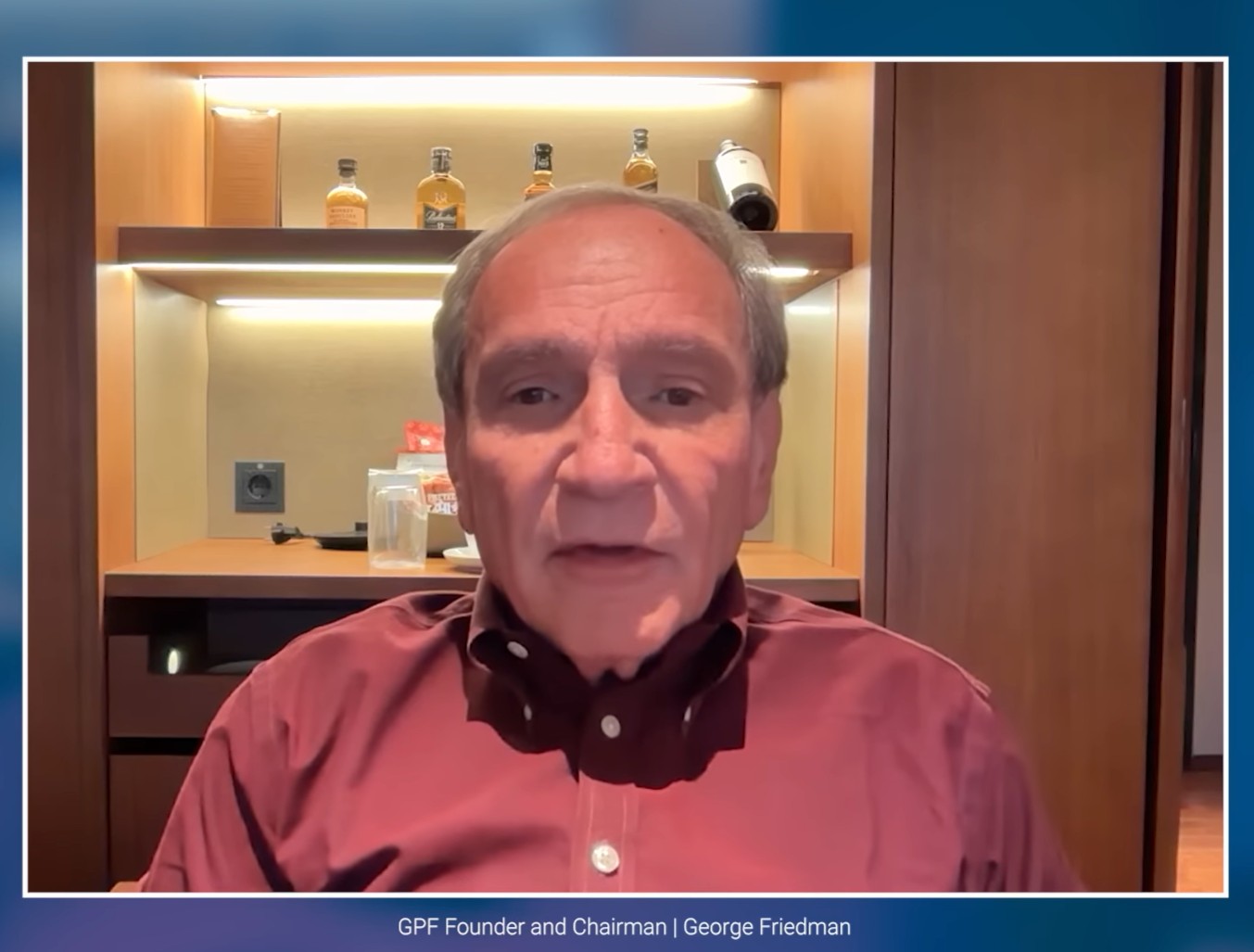
While the American public remains fixated on the immediate turbulence of the daily news cycle, a deeper, structural storm is gathering on the horizon. According to geopolitical strategist George Friedman, the United States is barreling toward a socioeconomic crisis driven not by politics, but by the math of demographics: a shrinking workforce squeezed between low birth rates and rapidly increasing life expectancy.
In a recent episode of the “Talking Geopolitics” podcast, produced by Geopolitical Futures, Friedman argued that the defining challenge of the coming decades will be a scarcity of labor. The Chairman and Founder of Geopolitical Futures told host Christian Smith that the world has entered uncharted territory where the fundamental models of industrial growth are being upended by population decline.
“We have reached a very radical point at this time, where there are more deaths than births,” Friedman stated. “The birth rate is way down, but at the same time life expectancy is far longer.”
This demographic inversion presents a specific economic danger. In previous centuries, high birth rates ensured a steady stream of new labor, while lower life expectancies meant fewer non-working years at the end of life. Today, that balance has flipped.
“We now have a situation where the elderly live a lot longer, but tend not to be so productive,” Friedman explained. “Whereas there are fewer children coming to build a workforce. So we’re going to have a contracting workforce, and we’re going to have a lot of people who consume without producing.”
The End of Cheap Labor
Friedman traces the root of this shift to the transition from agrarian to industrial societies. In an agricultural economy, children were economic assets who could work the farm; in an urban industrial economy, they became financial liabilities requiring years of education and care. This, combined with the widespread availability of birth control and the entry of women into the workforce, has fundamentally altered the population trajectory of the developed world.
The result is a looming labor shortage that threatens to stifle economic growth. While the current political climate in the United States and Europe is hostile toward migration, Friedman suggests that economic necessity will eventually force a reversal of these attitudes.
“There is a lot of pressure in certain industries,” Friedman noted, citing agriculture and the hospitality sector. “They depend very heavily on new immigrants who are willing… to enter the workforce at the lowest level.”
Friedman offered a historical perspective on the American relationship with immigration, noting that while the U.S. relies on it, the process has never been socially smooth.
“In the United States, there is the period of loathing,” Friedman said. “The price you pay for becoming an American is being held in contempt by the one whose family showed up 20 years before.”
However, he distinguished the American capacity for integration from that of Europe. While he predicts both regions will face the same labor shortages, he argues the U.S. is uniquely equipped to handle the influx. “The United States… has built itself on immigration,” Friedman said, whereas “the integration of cultures in Europe is very difficult.”
Technology: Medicine over AI
As the global workforce contracts, many analysts have looked to Artificial Intelligence (AI) and robotics to fill the productivity gap. Friedman, however, remains skeptical that silicon can fully replace human labor.
“Most jobs require the ability to deal with the unexpected,” Friedman argued. “I just don’t see [AI] as particularly creative in the way that a human being can be creative.”
Instead, Friedman posits that the most critical technological revolution of the next half-century will be in medicine and material science. If society cannot produce enough new workers, it must find a way to keep the existing population productive well into their 80s or 90s. The current model, where retirement lasts for decades of high consumption and zero production, is economically unsustainable.
“If there is going to be any technology that is going to be fundamentally needed, it will be medical technology to not only extend human life, but make it more productive,” Friedman asserted. He suggests that the “next major technology is not artificial intelligence,” but rather the convergence of medicine and material science to solve the physiological problems of aging.
A Turbulent Transition
Friedman’s analysis derives from his theory of overlapping historical cycles—a 50-year socio-economic cycle and an 80-year institutional cycle—both of which he argues are currently hitting a “bottom” in the United States. This convergence creates significant instability, as seen in current political polarization.
However, Friedman remains optimistic about the United States’ long-term ability to adapt compared to its global competitors. He believes that while the transition will be fraught with social friction, the economic imperative to stabilize the workforce will eventually override political resistance to immigration.
“It is a fundamental shift in the human condition,” Friedman concluded. “The United States both hates its immigrants and needs them deeply.”