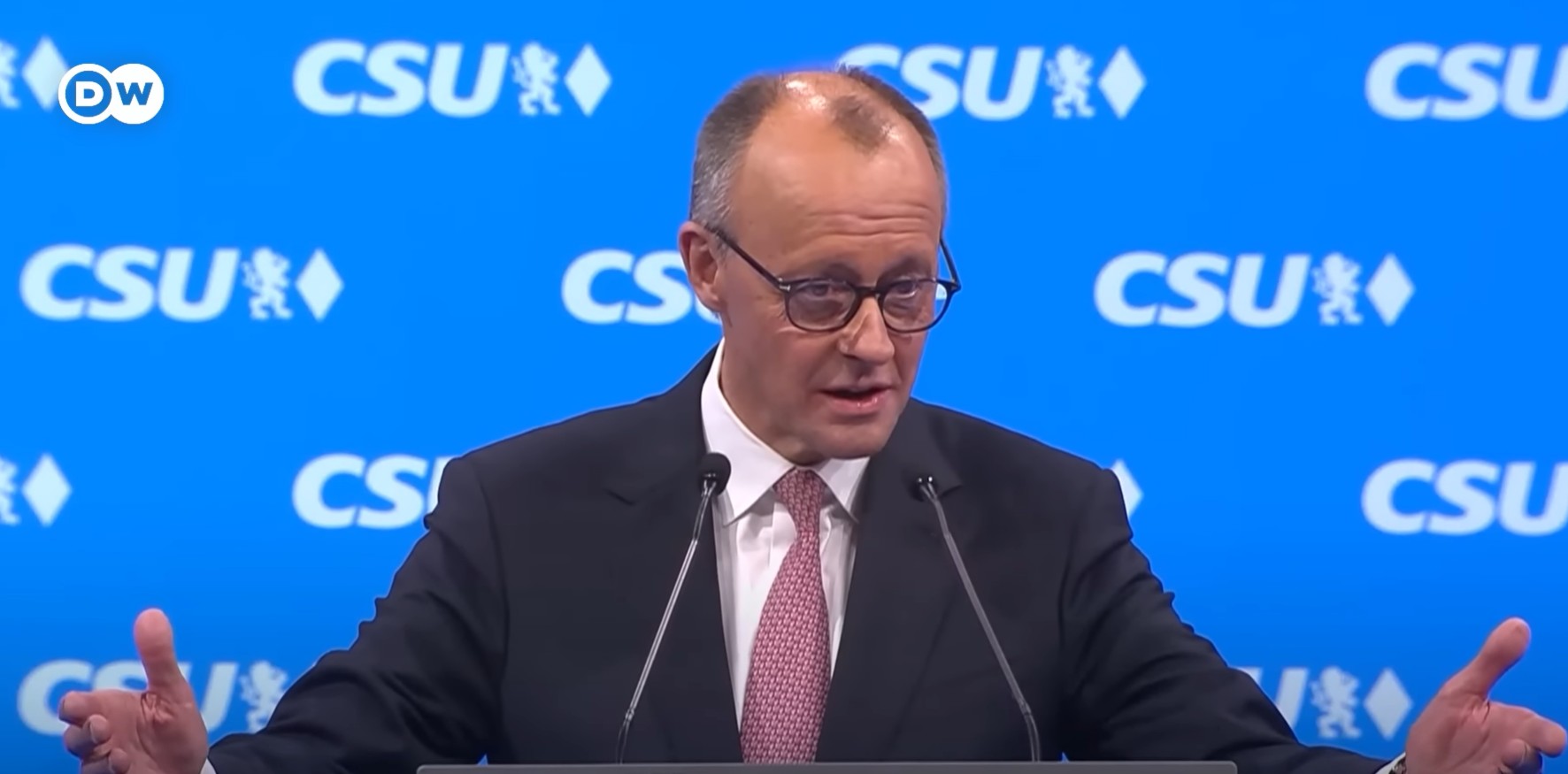
German Chancellor Friedrich Merz has delivered a stark assessment of the future of transatlantic relations, warning that the era of United States-led global stability is effectively over and that Europe must prepare to assert its own interests more aggressively.
Speaking ahead of high-stakes negotiations in Berlin aimed at ending the war in Ukraine, Merz struck a notably cautious tone regarding the long-term reliability of Washington. In footage broadcast by DW News, the Chancellor emphasized that the shift in American foreign policy extends beyond the influence of Donald Trump and represents a structural change in global geopolitics.
“Trump did not come about overnight, and this American policy will not simply disappear overnight,” Merz told an audience of Christian Social Union (CSU) delegates. He warned that the transatlantic dynamic could become even more complex in the future, urging Germany to accept a fundamental reality check.
“The decades of ‘Pax Americana’ are largely over for us in Europe, and also for us in Germany,” Merz declared. “It no longer exists as we knew it.”
The Chancellor dismissed any desire to look backward, arguing that sentimentality would not solve Europe’s strategic deficit. “Nostalgia is of no help here,” Merz said. He noted that the United States is currently pursuing its own national agenda “very, very vigorously,” and concluded that “the only response to this can be for us to pursue our own interests as well.”
Echoes of 1938 and the Specter of Appeasement
The Chancellor’s remarks signal a deepening of the strategic autonomy narrative that began under former Chancellor Angela Merkel, who famously stated in 2017 that Europe could no longer fully rely on its partners. However, analysts suggest Merz’s rhetoric reflects a far more precarious security environment.
According to DW Chief Political Editor Michaela Küfner, Merz has recently drawn parallels between the current geopolitical climate and 1938, referencing the appeasement policies regarding Nazi Germany’s annexation of parts of Czechoslovakia. The comparison suggests a fear that current peace efforts could lead to a fragile settlement that emboldens aggressors rather than securing lasting peace.
Intense Diplomacy in Berlin
The Chancellor’s warning comes amid intense diplomatic activity in the German capital. High-profile US figures, including real estate investor Steve Witkoff and Jared Kushner, the son-in-law of Donald Trump, are reportedly in Berlin to facilitate negotiations regarding the war in Ukraine.
Their presence suggests a drive by the former US administration’s circle to broker a swift conclusion to the conflict. However, concerns remain in Europe that a rushed deal may sacrifice Ukrainian territorial integrity for a peace agreement that lacks durability.
Ukrainian President Volodymyr Zelenskyy is expected to arrive in Berlin to join the talks, which are set to cover contentious issues including potential territorial concessions and the timeline for Ukraine’s accession to the European Union.